
Lawn
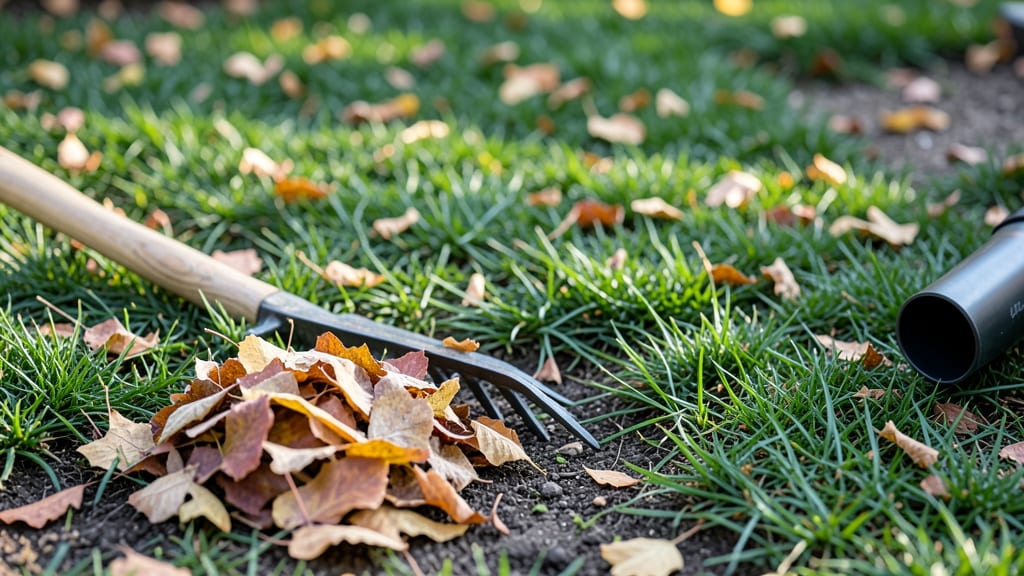
It is bad to leave leaves on your lawn only if they pile up too thickly—light layers actually help insulate grass from winter cold and preserve soil moisture, but thick accumulations suffocate roots, block sunlight, and create breeding grounds for pests and disease. Clear excessive buildup regularly to maintain a healthy lawn.
Whether it is bad to leave leaves on your lawn depends entirely on how much you have and how long they stay.
A ¼-inch layer acts like organic mulch, shielding grass from temperature swings and reducing water evaporation. 🌿 However, when leaves pile up beyond ½-inch thick, they create a suffocating mat that prevents air and water from reaching the soil, leading to brown patches and weakened turf.
The key is monitoring leaf depth—what works as winter protection in one season can become a problem if left too long.
Seasonal timing matters too. In fall, a light layer can help grass survive winter, but by early spring, those same leaves may trap moisture and encourage fungal growth. I always recommend raking or mulching leaves when they exceed ½-inch thickness, or using a leaf vacuum for quick cleanup.
This balance ensures your lawn gets the benefits without the risks.
💡 In This Article
- How Lawn Leaves Affect Grass Health Mechanically
- Smart Leaf Management Strategies for Lawn Care
How lawn leaves affect grass health mechanically
Leaves on your lawn create a dynamic interaction between insulation, decomposition, and oxygen exchange. When leaves form a thin layer—typically under ¼-inch thick—they act as a natural blanket, trapping heat near the soil surface during cold snaps and reducing moisture loss through evaporation.
This insulation effect can protect grass roots from temperature extremes, especially in winter when soil temperatures might drop below 32°F. The decomposition process also releases organic matter that slowly enriches the soil with nutrients like nitrogen and potassium.
The real damage happens when leaves accumulate beyond ½-inch thick. Here, the physics change dramatically: the dense mat blocks 90% of sunlight from reaching grass blades, disrupting photosynthesis. Oxygen levels in the soil drop as trapped moisture creates anaerobic conditions—similar to what happens in a landfill.
This oxygen deprivation forces grass roots to struggle, leading to yellowing patches and weakened turf. 🌱 What's worse, the trapped moisture becomes a breeding ground for fungal pathogens like snow mold, which thrives in damp, shaded conditions.
Seasonal timing amplifies these effects. In winter, a ¼-inch layer might help grass survive freezing temperatures by maintaining soil warmth, but by early spring, those same leaves can trap melting snow and create soggy conditions that promote disease.
The decomposition rate also varies: oak and maple leaves break down slowly (taking 3-6 months to decompose), while pine needles decompose much faster (1-2 months), creating different risk profiles for your lawn's health.
Another critical factor is soil pH. As leaves decompose, they release organic acids that can gradually acidify the soil, especially in clay-heavy soils.
While most grasses prefer a slightly acidic pH (6.0-7.0), prolonged leaf buildup can push the pH below 5.5, making nutrients like phosphorus and calcium less available to grass roots.
This chemical shift is subtle but measurable—soil tests often show a 0.2-0.5 pH drop in areas with chronic leaf accumulation.
Consider this real-world comparison: A ¼-inch layer of leaves might improve soil temperature regulation by 5-8°F during winter nights, while a 1-inch layer can reduce soil oxygen levels by 40% or more.
The difference between these scenarios isn't just theoretical—it's visible in your lawn's health within 2-4 weeks of leaf buildup. The key is monitoring leaf depth and acting before the mechanical and chemical processes tip toward harm rather than help.
What most people overlook is how leaf texture affects these processes. Broadleaf maple leaves create a dense mat that blocks sunlight more effectively than the loose structure of pine needles. This is why lawns under deciduous trees often suffer more from leaf buildup than those with evergreens.
Understanding these mechanical differences helps you predict which areas of your lawn might need more frequent maintenance.