
Lawn
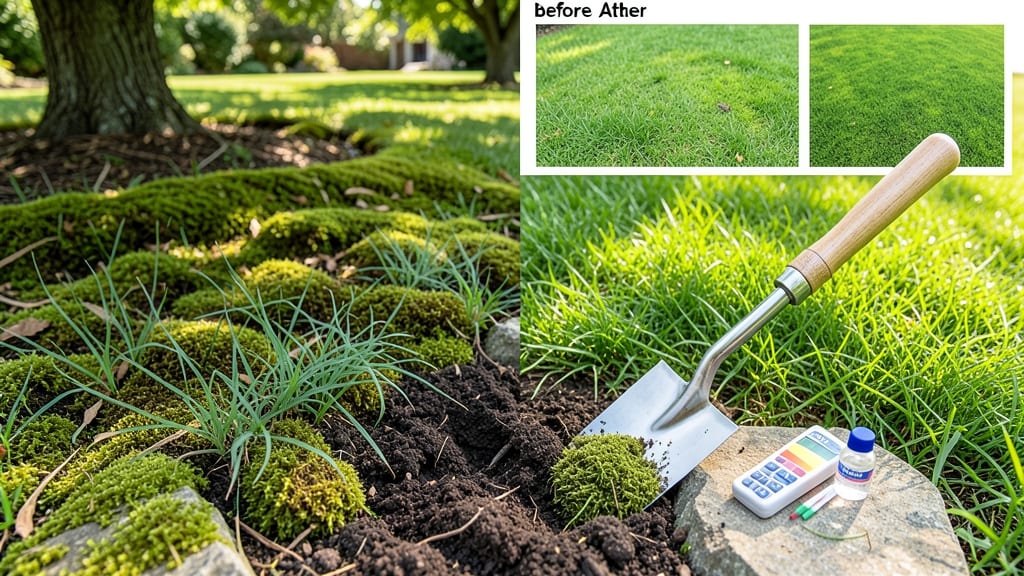
Moss itself isn't bad for lawns, but its presence often indicates underlying issues like compacted soil, poor drainage, or too much shade. While it won't kill grass directly, it steals nutrients and water, slowly weakening your turf unless you address the root problems with aeration, better sunlight exposure, and proper fertilization.
Moss thrives where grass struggles—think damp, shady spots with acidic soil. 🌱 The problem isn't the moss itself but what it reveals about your lawn's health. It outcompetes grass for resources, leaving patches thin and patchy over time.
The good news? Fixing the conditions that let moss take over (like improving drainage or adding sunlight) will naturally crowd it out as your grass recovers.
Think of moss like a lawn's early warning system. It doesn't cause damage directly, but ignoring it means missing chances to strengthen your turf. A little moss here and there is normal, but when it spreads aggressively, it's your lawn's way of saying, "Help me grow better!"
The key is balancing removal with long-term care—like aerating to relieve compaction and overseeding to thicken grass where moss has moved in.
💡 In This Article
- Why Moss Thrives in Lawns and Its Impact on Grass
- Natural and Chemical Methods to Remove Moss from Lawns
Why moss thrives in lawns and its impact on grass
Moss grows where grass can't—typically in areas with high moisture, low sunlight, and acidic soil (pH below 6.5). Unlike grass, moss doesn't have deep roots and thrives in shallow, damp conditions.
Its shallow root system (just 1-2 inches deep) allows it to absorb water and nutrients quickly, while grass roots (3-6 inches deep) struggle in waterlogged or compacted soil. This is why moss often appears in shady spots under trees or along sidewalks where foot traffic compacts the ground.
The real issue isn't moss itself but what it reveals about your lawn's health. Moss outcompetes grass by forming dense mats that block sunlight from reaching grass roots. Grass needs 4-6 hours of direct sunlight daily to photosynthesize, while moss can survive with as little as 2 hours.
When moss spreads, it creates a thick layer that smothers grass, reducing oxygen flow to the soil and increasing thatch buildup—both of which weaken turf over time. 🌱
However, moss does play a small ecological role. Its dense structure helps prevent soil erosion by holding moisture and reducing runoff. But for lawns, the trade-off is clear: while moss may protect soil, it also crowds out grass, leaving patches thin and vulnerable to weeds.
The key is understanding the balance—moss in small patches is normal, but when it dominates, it's a sign your lawn needs better drainage, aeration, or sunlight exposure to recover.
Here's what happens when moss takes over: grass roots weaken from nutrient competition, leading to brown patches. Over time, these areas become permanently thin unless you intervene. For example, in a shady yard with clay soil, moss can spread rapidly because water pools instead of draining.
The solution isn't just removing moss but fixing the conditions that let it thrive in the first place.
Consider this: a healthy lawn with 60% grass coverage can handle some moss, but when moss covers 30% or more, it's time to act. The longer moss dominates, the harder it is for grass to recover—roots become stunted, and the soil's structure degrades.
This is why many lawns with chronic moss issues need a combination of soil testing, aeration, and overseeding to restore balance.
Think of moss like a lawn's early warning system. It doesn't cause damage directly, but ignoring it means missing chances to strengthen your turf. For instance, if moss appears after heavy rainfall, your lawn may need better drainage.
If it spreads under trees, the issue might be too much shade. The goal is to create conditions where grass can outcompete moss naturally—like improving airflow with aeration or adding sunlight with strategic pruning. ✨