
Lawn
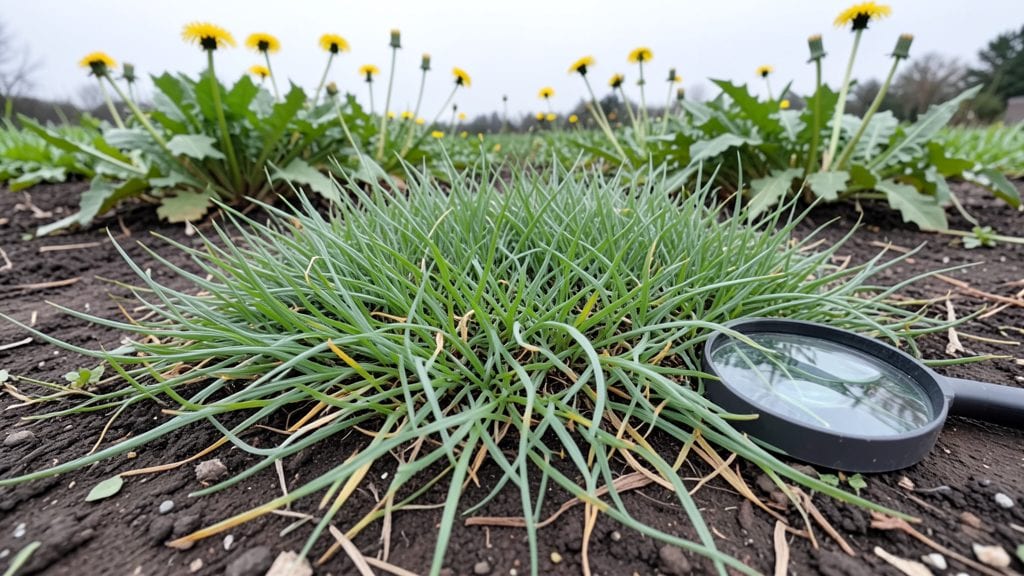
Weed grass is not marijuana—it refers to common lawn grasses like crabgrass or dandelions, which differ drastically in appearance, growth patterns, and chemical properties from cannabis plants. Marijuana has broad leaves with serrated edges and a distinct resinous smell, while weed grass lacks psychoactive compounds like THC.
When people ask "Is weed grass," they're usually confused about the stark differences between ordinary lawn weeds and actual cannabis. 🌱 The term "weed grass" specifically describes unwanted plants like crabgrass or chickweed, which thrive in lawns but have no psychoactive properties.
Unlike marijuana, these plants grow low to the ground, lack the characteristic pungent aroma, and don't produce the distinctive resinous buds.
Gardeners often mistake young cannabis plants for weed grass due to their similar early-stage appearance, but mature marijuana plants develop telltale finger-like leaves and a strong, skunky scent that sets them apart completely.
Understanding these distinctions is crucial for both homeowners and gardeners. Many common lawn weeds actually help identify soil conditions—like how dandelions indicate compacted soil—while marijuana requires specific growing conditions that weed grass simply can't match.
The confusion often stems from the term "weed" being used broadly, but botanically and legally, they're entirely different categories.
💡 In This Article
- Visual Differences Between Weed Grass and Marijuana
- How to Identify Marijuana Plants in a Garden
Visual differences between weed grass and marijuana
Marijuana plants and common weed grass exhibit fundamentally different leaf structures that serve as immediate visual identifiers.
Cannabis leaves display a distinctive palmate shape with 5-9 serrated leaflets that spread outward like fingers, while weed grass varieties like crabgrass or chickweed produce long, narrow blades with smooth edges and no subdivisions.
The serrations on cannabis leaves create a jagged outline when viewed from above, whereas weed grass leaves appear uniformly smooth under magnification.
The growth patterns also reveal key distinctions. Marijuana typically grows as a perennial plant reaching 4-12 feet tall with dense, bushy branching, while most weed grasses are annuals or biennials that stay under 2 feet and grow in low, spreading mats.
Cannabis stems develop a fibrous texture with resinous glands visible to the naked eye, while weed grass stems remain smooth and hairless. These structural differences become especially apparent when examining the seed heads - marijuana produces dense, clustered buds covered in trichomes, while weed grass develops simple, elongated seed spikes.
Color differences provide another clear indicator. Healthy marijuana leaves display a deep green hue with purple undertones when grown in full sun, while weed grass maintains a consistent green color year-round.
The stems of mature cannabis plants develop a woody texture and may show reddish or orange pigmentation, whereas weed grass stems remain uniformly green and herbaceous.
These visual markers help explain why gardeners often confuse young cannabis plants with weed grass - the early growth stages share similar slender stems and simple leaf structures.
The flowering patterns offer definitive separation. Marijuana develops dense, resinous flower clusters that appear in late summer, while weed grass produces sparse, airy seed heads that appear throughout the growing season.
The cannabis flowers contain trichomes that give them a frosted appearance under magnification, whereas weed grass flowers lack these structures entirely. These botanical differences explain why marijuana has such a distinctive aroma - the trichomes contain the aromatic compounds that produce that unmistakable skunky scent.
For practical identification, focus on these three key visual markers: leaf shape (palmate vs blade), growth habit (bushy vs spreading), and reproductive structures (dense buds vs sparse seed heads). These distinctions become more pronounced as plants mature, making late summer the best time for accurate identification.
The differences aren't just cosmetic - they reflect fundamental biological adaptations that determine how each plant interacts with its environment and produces its characteristic compounds.