
Landscaping
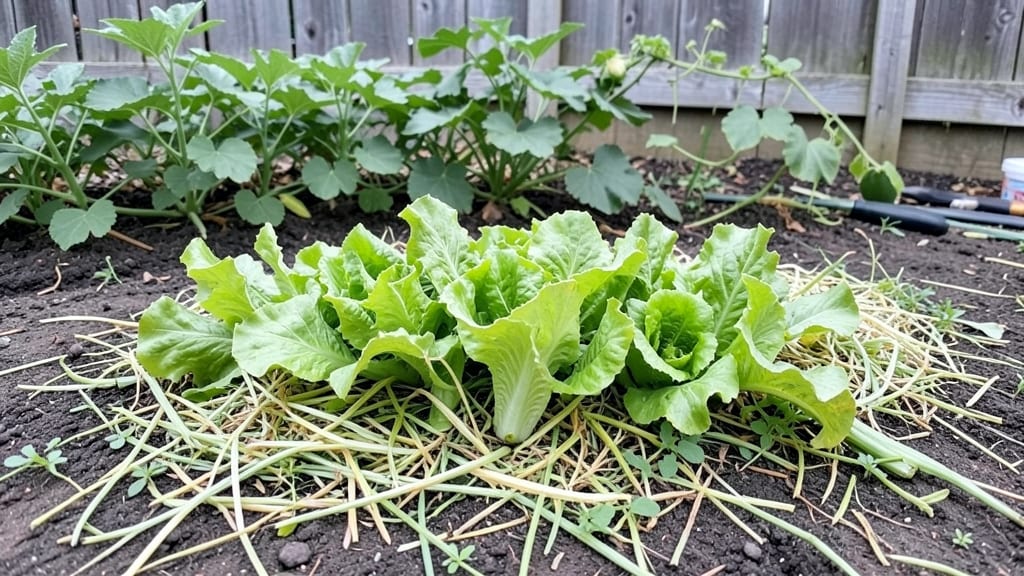
Lawn clippings as garden mulch returns nutrients to the soil while suppressing weeds and retaining moisture, but timing and method matter to avoid smothering plants or attracting pests. Apply thin layers after mowing, especially during active growing seasons, and mix with other organic matter for balance.
Grass clippings make one of nature's most efficient mulches because they decompose quickly, releasing nitrogen as they break down—a process called "greening." 🌱 This boosts soil fertility while creating a protective barrier that locks in moisture.
Unlike synthetic mulches, they won't wash away in heavy rains, but they do need proper prep: let clippings dry slightly before spreading to prevent matting. I've seen gardens thrive when I combine them with wood chips or straw for a balanced, pest-resistant layer.
For best results, focus on active growing seasons (spring and fall) when plants need extra nutrients. Avoid thick piles—just ½ to 1 inch spread evenly—since too much can smother roots or create anaerobic conditions that smell foul.
Pro tip: If your lawn gets chemical treatments, skip using those clippings—they can harm plants and soil microbes instead.
💡 In This Article
- How Lawn Clippings Break Down and Benefit Soil
- Best Practices for Applying Grass Clippings as Mulch
How lawn clippings break down and benefit soil
When grass clippings hit the soil, they begin decomposing through microbial action, a process called nitrogen immobilization. The clippings contain about 2-3% nitrogen by dry weight, which microbes temporarily "lock up" as they break down the cellulose and lignin in the grass.
This creates a temporary nitrogen deficit in the soil, which is why many gardeners recommend mixing clippings with compost or other nitrogen-rich materials like manure. 🔥 The decomposition typically takes 2-4 weeks depending on moisture and temperature, with warmer conditions speeding up the process significantly.
Here's what's actually happening at the microbial level: Soil bacteria and fungi colonize the clippings, secreting enzymes that break down complex carbohydrates into simpler sugars. This activity generates heat—sometimes raising soil temperatures by 5-10°F—while releasing carbon dioxide as a byproduct.
The resulting humus improves soil structure by binding particles together, creating pore spaces that enhance aeration and water retention. Unlike straw or leaves, which decompose more slowly, grass clippings provide a rapid nutrient boost that aligns perfectly with plants' active growth periods.
The nitrogen release dynamics make clippings particularly valuable for nitrogen-loving plants like tomatoes, corn, and leafy greens. Studies show that a ½-inch layer of clippings can supply up to 20 pounds of nitrogen per 1,000 square feet over a growing season—comparable to a light synthetic fertilizer application.
However, this benefit comes with a trade-off: Pure clippings can create a carbon-to-nitrogen ratio of 20:1 or higher, which may temporarily tie up nitrogen needed by plants. That's why blending them with carbon-rich materials like wood chips (which have a 50:1 ratio) creates an ideal 25:1 balance for decomposition.
What most people don't realize is how clippings affect soil moisture differently than other mulches. Their fine texture creates a microclimate that retains up to 30% more moisture than bare soil, while also reducing evaporation by 40-50% compared to straw.
The weed suppression comes from blocking sunlight—clippings can reduce weed seeds' germination by 70-80% when applied at ½-inch thickness. This is particularly effective against annual weeds like crabgrass, which compete aggressively with garden plants for nutrients and water.
Comparing nutrient content reveals why clippings stand out: They contain 0.5-1.5% phosphorus and 0.2-0.5% potassium, which complement their nitrogen content. Straw, by comparison, has negligible nutrient value (less than 0.1% nitrogen), while leaves provide only trace amounts of phosphorus and potassium.
The key advantage is that clippings deliver nutrients as they decompose, unlike composted materials that release nutrients more gradually. This makes them ideal for fast-growing plants that need immediate access to nitrogen during their peak growth phases.
For long-term soil improvement, the organic matter from clippings increases cation exchange capacity (CEC) by 10-20%, helping soils retain essential nutrients like calcium and magnesium. The improved structure also enhances root penetration, which is why I've seen deeper root systems develop in gardens where clippings are used regularly.
Over time, this creates a self-sustaining cycle where the soil becomes more fertile and requires fewer external inputs. 💫