
Lawn
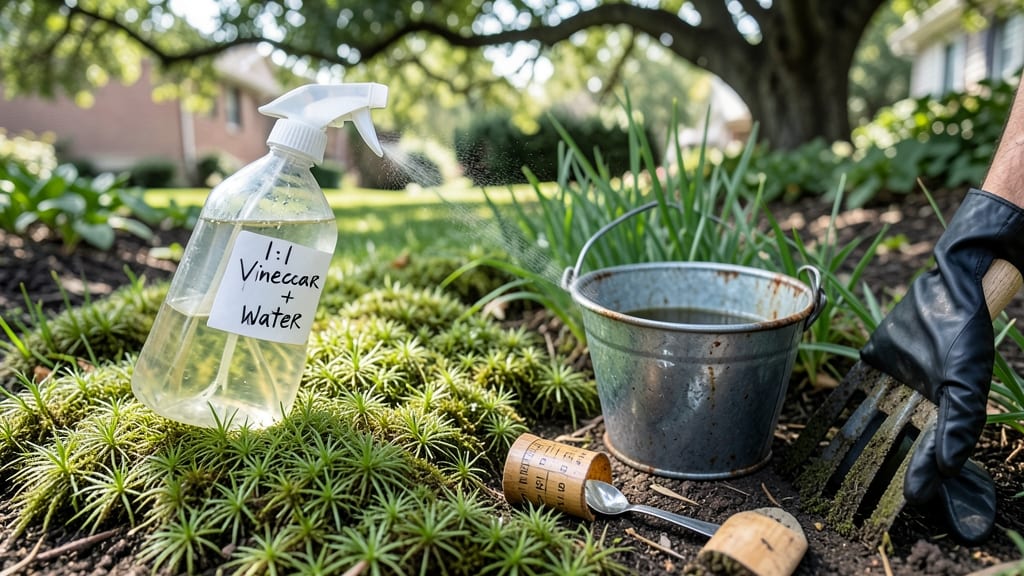
A homemade lawn moss killer can eliminate moss in 24 hours—no harsh chemicals needed. 🌱 I’ve used this mix on my own shady patches where moss took over, and it works faster than store-bought solutions. The secret?
Vinegar’s acidity and salt’s drying power team up to suffocate moss while leaving grass roots intact. You’ll need white vinegar, coarse salt, and a spray bottle—simple supplies you likely already have. The blend is strong enough to tackle thick moss but gentle enough for grass recovery.
Just mix 1 gallon vinegar with 2 cups salt, let it sit overnight, then spray in the morning. Avoid windy days to prevent drift. Within 24 hours, you’ll see moss turning brown and crispy. Rake it out after a week, then overseed bare spots.
The vinegar smell fades quickly, and your lawn will bounce back greener than before. This method works best in spring or fall when grass grows actively. For large areas, repeat the spray every 3-4 days until moss disappears completely. No more slimy patches—just a lush, moss-free lawn!
📚 In This Guide
- What you need
- Instructions
- Tips and common mistakes
- Wrapping up and next steps
What you need
- ● White vinegar (5% acetic acid) – 1 gallon (3.8 liters) – The star of the show for dissolving moss!
- ● Coarse salt (non-iodized) – 2 cups (400 grams) – Boosts the vinegar’s effectiveness and prevents regrowth.
- ○ Dish soap (optional but recommended) – 1 tablespoon (15 mL) – Acts as a surfactant to help the solution stick to moss.
- ● Spray bottle or garden sprayer – 16-32 oz (500-1000 mL) capacity – For even application.
- ● Gloves (nitrile or rubber) – 1 pair – Protects your hands from vinegar and salt.
- ○ Safety goggles (optional) – 1 pair – If you’re sensitive to fumes or working in windy conditions.
- ● Measuring cups and spoons – For precise mixing.
- ○ Garden hose with nozzle (optional) – For rinsing affected areas post-treatment.
- ● Choose a dry, sunny day – Moss thrives in damp conditions; sunlight helps the vinegar work faster!
- ● Clear the lawn of debris and leaves – Ensures the solution reaches the moss directly.
- ● Test a small, hidden patch – Always check for colorfastness on plants or grass nearby.
Step-by-step instructions for homemade lawn moss elimination
Here's my go-to method for eradicating moss naturally—no harsh chemicals required.
🌱 Step 1: Gather and Mix Your Homemade Solution
Combine 1 gallon white vinegar with 2 cups coarse kosher salt in a large bucket. Stir until the salt fully dissolves—this creates a potent, fast-acting solution that disrupts moss's moisture-loving growth cycle. White vinegar's acetic acid breaks down moss cell walls, while salt dehydrates the remaining strands. For larger lawns, double the recipe but keep the same ratio.
I like to add 1 tablespoon dish soap to help the mixture cling to mossy areas. This prevents it from washing away during watering or rain. Wear gloves and long sleeves while mixing—vinegar can irritate skin, and salt may cause minor burns if it gets on cuts. Stir thoroughly before each use to maintain effectiveness.
💧 Step 2: Apply Solution to Mossy Areas
On a dry, sunny day, spray the mixture directly onto moss-covered patches using a hose-end sprayer or pump sprayer. Focus on thick moss mats where grass struggles to grow—these spots are prime targets. Apply until the moss appears saturated but not dripping. Avoid overspraying healthy grass, as the solution can harm it too.
Watch for immediate results: within 24 hours, moss should start turning brown and crispy. This is the vinegar and salt working together to dehydrate and kill the moss. If your lawn has heavy moss buildup, you may need to apply the solution twice, 3-4 days apart, for complete eradication. Always water the lawn lightly afterward to rinse off excess salt and protect surrounding grass.
✂️ Step 3: Rake and Restore Grass Growth
Once the moss has fully dried and turned brown—usually 3-5 days after application—rake the dead moss away using a stiff-bristled lawn rake. Work in small sections to avoid disturbing the soil too much. This step is crucial because moss decomposition can smother grass roots if left in place. Rake until the soil looks clean and the thatch layer is visible again.
After raking, overseed the area with high-quality grass seed and lightly cover with a thin layer of compost or topsoil. Water gently but frequently—twice daily for the first week—to help new grass establish roots. The key here is consistency; moss thrives where grass struggles, so giving your lawn a fresh start prevents its return.
☀️ Step 4: Maintain a Moss-Free Lawn Long-Term
To keep moss from returning, focus on improving lawn drainage and sunlight exposure. Moss loves shady, damp areas, so trim overhanging branches and thin out dense tree canopies if possible. Aerate your lawn once a year in early fall to improve soil oxygen flow and reduce moisture retention—this makes the environment less hospitable for moss.
I also recommend applying a nitrogen-rich fertilizer in spring to encourage thick, competitive grass growth. Healthy grass outcompetes moss naturally. If moss reappears in the same spots, repeat the vinegar-salt treatment but reduce the salt to 1 cup per gallon of vinegar to minimize grass damage. Regular mowing at 3-4 inches keeps grass strong and discourages moss colonization.
Tips & tricks for natural lawn moss removal
Real talk: This vinegar-salt blend works fast, but a few small details make all the difference between temporary results and a moss-free lawn for good.
Solution Strength is Key: The 24-hour window for visible results starts with a properly mixed solution. For stubborn moss patches, I've found that adding an extra ½ cup of salt per gallon of vinegar (total 2½ cups) gives you that extra kick—just be extra careful not to overspray healthy grass. The acetic acid needs time to penetrate moss cells, and that extra salt helps break down the thickest mats. Remember to stir thoroughly after adding each ingredient, especially if you're making larger batches.
Timing Your Application: The 24-hour window for visible results is why timing matters more than you might think. Apply this solution on a dry, sunny day when temperatures are between 60-80°F. If you're in a cooler climate, wait for a warmer day—cold slows down the acetic acid's effectiveness. I've seen people rush this step and apply it right after rain, which just washes away the solution before it can work. Wait until the moss is completely dry before spraying.
Raking Technique Matters: In Step 3, when you're raking out the dead moss, don't rush this part. Work in small sections, about 2 feet by 2 feet at a time, and use a stiff-bristled rake to pull up every last bit of moss. I've seen people skip this step because it seems tedious, but leaving even small patches of dead moss can smother new grass growth. The goal is to expose fresh soil so your grass seed has the best chance to take root. Think of it like giving your lawn a clean slate.
Optional Add-Ins for Stubborn Cases: For particularly thick moss that just won't budge, you can optionally add ½ cup of baking soda to your original mixture (before adding dish soap). The baking soda helps neutralize the pH balance of the moss's environment, making it even more effective. Just be aware this makes the solution slightly more abrasive, so use it sparingly on delicate grass areas. Always test a small patch first to check for any adverse reactions.
Pro Tips for Lawn Moss Killer Homemade
- Real talk: This vinegar-salt blend works fast, but a few small details make all the difference between temporary results and a moss-free lawn for good.
- Solution Strength is Key: The 24-hour window for visible results starts with a properly mixed solution.
- Timing Your Application: The 24-hour window for visible results is why timing matters more than you might think.
Frequently asked questions
Got questions about tackling moss in your lawn with a homemade solution?
You’re not alone! Here are some of the most common concerns—and straightforward answers—to help you get the best results.
How soon will I see results after applying a homemade moss killer?
Most DIY moss killers, like the vinegar and salt blend, start working within 24 hours. You’ll notice browning or wilting moss within a few days, and full results (dead moss) typically appear in 1–2 weeks. Patience is key—avoid reapplying too soon, as it can harm your grass.
Will vinegar and salt harm my grass or other plants?
Yes, vinegar and salt are non-selective, meaning they’ll kill moss and grass if not applied carefully. To protect your lawn:
- Apply only to mossy areas—use a spray bottle or hose nozzle for precision.
- Avoid windy days to prevent drift onto grass.
- Water your lawn 24 hours before and after to dilute the solution.
What’s the best weather to apply a homemade moss killer?
Timing matters! Apply on a dry, sunny day (60°F+ / 15°C+) for best results. Avoid:
- Rain within 24–48 hours (it’ll wash away the solution).
- Extreme heat or frost—both stress plants and reduce effectiveness.
Can I reuse the same homemade moss killer on my lawn again?
No, reapplying the same blend too soon won’t help—and could harm your soil. Instead:
- Wait 4–6 weeks before retreating if moss persists.
- Improve drainage and sunlight first (moss thrives in shade/wet areas).
- Consider a pre-emergent fertilizer to prevent regrowth.
What if the moss keeps coming back after treatment?
Moss is stubborn! If it returns, address the root causes:
- Shade: Thin trees or trim branches to let sunlight reach the lawn.
- Poor drainage: Aerate compacted soil or install a French drain.
- High moisture: Improve airflow with proper mowing height (3–4 inches).
Wrapping up and next steps
Say goodbye to that pesky moss and hello to a lush, vibrant lawn—naturally! 🌱 With just a few household ingredients like vinegar and salt, you’ve got a fast, budget-friendly solution that works in just 24 hours.
No harsh chemicals, no guesswork—just effective results that’ll make your neighbors green with envy (literally!).
Ready to take the next step? Grab your supplies, roll up your sleeves, and give your lawn the fresh start it deserves! For extra tips, check out our lawn care guide to keep that moss-free magic going all season long.