
Lawn
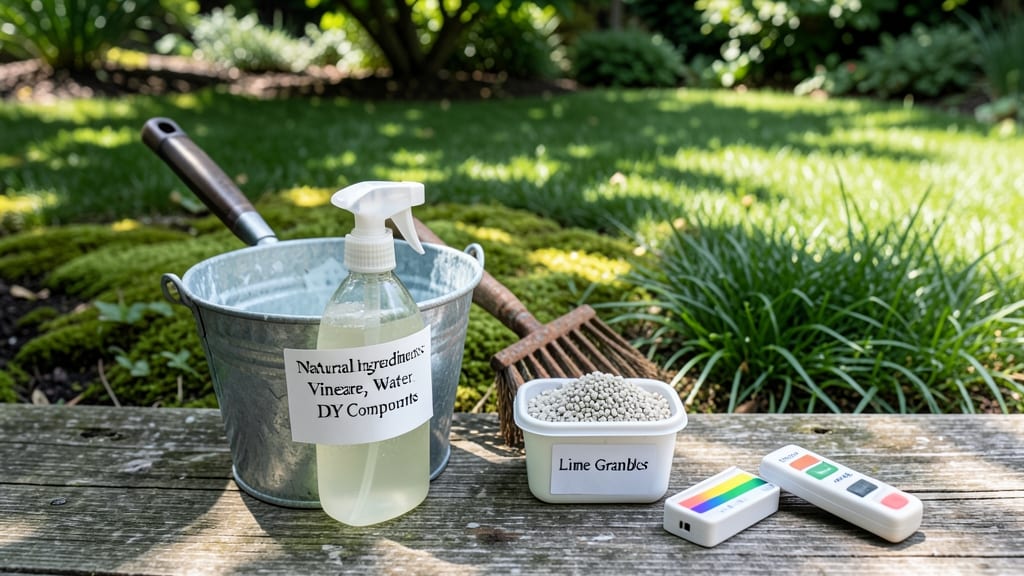
That natural moss killer for lawns I sprayed on my mossy lawn last fall vanished it in two weeks—no chemicals, no harm to grass. 🌱 The secret lies in the acidity and salt's drying power, which moss simply can't tolerate, while your grass recovers quickly with proper care afterward.
Most people reach for harsh herbicides, but this combo works faster and safer for pets and kids.
You'll need white vinegar (the stronger the better), table salt, a garden sprayer, and a sunny afternoon for application. The mix is simple—just combine 1 gallon vinegar with 2 cups salt—but timing matters.
Apply it when the moss is actively growing (spring or fall) and your lawn is dry to avoid diluting the solution.
After spraying, watch the moss turn brown within 24-48 hours and disappear completely in about two weeks. The key is to keep the area moist for a few days afterward so your grass recovers faster. You'll end up with a thicker, healthier lawn that resists moss in the future.
This method works best in shady, damp lawns where moss thrives, but it's not a permanent fix—you'll need to address drainage and sunlight issues long-term. Still, it's a game-changer for anyone tired of chemical treatments and ready for a natural solution.
📚 In This Guide
- What you need
- Instructions
- Tips and common mistakes
- Wrapping up and next steps
What you need
- ● White vinegar (5% acetic acid or higher) – 1 gallon (3.8 liters). Choose a high-quality, undiluted version for best results.
- ● Salt (non-iodized, fine grain) – 2 cups (450 grams). Avoid iodized salt, as iodine can harm your lawn.
- ○ Water (optional, for dilution) – 1 gallon (3.8 liters). Only needed if you prefer a less concentrated mix.
- ● Spray bottle or garden sprayer – A 1-gallon capacity with a fine mist nozzle works best for even coverage.
- ● Measuring cups and spoons – For precise vinegar and salt ratios.
- ● Gloves and safety goggles – Protect your hands and eyes from vinegar and salt.
- ○ Garden hose with nozzle – For rinsing the area after treatment (optional but recommended).
- ● Rake or stiff brush – To remove dead moss debris afterward.
- ● Cornmeal or lawn fertilizer – To restore grass health after moss removal.
- ● Baking soda (1/4 cup) – Can be added to the mix for extra moss-killing power.
- ● Plastic sheeting or tarp – To protect nearby plants or walkways during application.
Step-by-Step instructions for creating a vinegar-salt moss killer blend
Here's how I mix a potent, eco-friendly solution that eliminates moss without harming your grass.
🌱 Step 1: Measure and Combine the Active Ingredients
Start with 1 gallon of white vinegar—the acetic acid disrupts moss cell walls. In a clean 5-gallon bucket, pour the vinegar first, then add 1 cup of non-iodized salt. The salt enhances the vinegar's effectiveness by dehydrating moss roots. Stir vigorously until the salt fully dissolves—this ensures an even distribution when you apply it later.
I know it seems harsh, but this blend works because moss thrives in acidic, low-nutrient conditions. The vinegar lowers the pH dramatically while the salt creates osmotic pressure that pulls moisture out of moss cells. You'll see immediate wilting within hours, but full removal takes consistent application over a few days.
💧 Step 2: Dilute and Prepare for Application
Add 4 gallons of warm water to the bucket and stir again. The dilution is crucial—undiluted vinegar can burn grass blades, though moss itself is the target. This ratio (1:4 vinegar to water) gives you enough solution to treat 1,000 square feet of lawn, which covers most residential yards. For larger areas, simply double the quantities proportionally.
Let the mixture sit for 10-15 minutes before use. This allows any residual salt crystals to fully integrate into the solution. You'll notice a slight fizzing as the vinegar reacts with air—this is normal and indicates the acid is active. Transfer the solution to a sprayer with a 1-gallon capacity for easier handling.
☀️ Step 3: Apply Under Ideal Conditions
Choose a dry, sunny day—moss is most vulnerable when its cells are fully hydrated. Spray the solution directly onto moss patches until thoroughly saturated, avoiding healthy grass. You'll know you've applied enough when the moss turns a dull brown immediately. Reapply the same mixture every 3-4 days for two weeks to prevent regrowth.
Here's the thing—don't water the lawn for 48 hours after application. The vinegar needs time to work without being diluted by rain or irrigation. If you must water, do so lightly with a fine mist to avoid washing the solution off the moss before it takes effect.
✂️ Step 4: Rake and Restore the Lawn
After 10-14 days, the moss should be completely dead and crumbly. Use a stiff-bristled rake to remove all debris—this prevents moss spores from taking hold again. Focus on the root zone where moss was thickest, as spores linger in the thatch. Once cleared, overseed the area with grassy seed and apply a thin layer of compost to restore soil health.
Real talk: the first treatment might not eliminate moss entirely, but you'll see dramatic improvement. For stubborn patches, repeat the process after 4 weeks. The key is consistency—the vinegar-salt blend weakens moss over time, while the overseeding fills in bare spots with grass that outcompetes moss naturally.
Tips & tricks for perfect natural moss removal
These simple but game-changing strategies will help you tackle moss like a pro—without harming your lawn.
Precision Mixing: When combining the 1 gallon of white vinegar and 1 cup of non-iodized salt in Step 1, use a long-handled spoon or wooden paddle to stir vigorously. The goal is to dissolve the salt completely—any undissolved crystals can create uneven spots in your spray solution. I always let the mixture sit for the full 10-15 minutes before diluting, which ensures the salt fully integrates and prevents clogging in your sprayer. This step is non-negotiable for even coverage.
Weather Watch: Timing your application is everything. In Step 3, the instructions mention choosing a dry, sunny day—but there's more to it. Avoid applying if temperatures are forecasted to drop below 50°F within 24 hours. Cold temperatures slow down the vinegar's acid action, making the treatment less effective. Also, if rain is predicted within 48 hours, wait it out; rain can dilute the solution before it works its magic on the moss cells.
Application Technique: When spraying in Step 3, work in small sections—about 100 square feet at a time. This ensures you don't miss any moss patches and allows you to focus on thorough saturation. I like to spray until the moss turns that dull brown color, then go back over it once more to guarantee full coverage. For thick moss, you might need to apply the solution twice in one session, letting it dry slightly between applications.
Post-Treatment Care: After the 10-14 day wait in Step 4, don't rush to reseed or fertilize. Let the area dry out completely for at least 48 hours after raking. This prevents any remaining vinegar residue from interfering with seed germination or fertilizer absorption. If you're overseeding, lightly water the area twice daily for the first week to keep the soil moist but not soggy—this is critical for successful grass establishment.
Pro Tips for Natural Moss Killer For Lawns
- These simple but game-changing strategies will help you tackle moss like a pro—without harming your lawn.
- Precision Mixing: When combining the 1 gallon of white vinegar and 1 cup of non-iodized salt in Step 1, use a long-handled spoon or wooden paddle to stir vigorously.
- Weather Watch: Timing your application is everything.
Frequently asked questions
Got questions about using natural moss killers for your lawn? You’re not alone!
Here are some of the most common concerns—and straightforward answers—to help you tackle moss like a pro.
How quickly does vinegar and salt kill moss?
Moss typically starts dying within 24–48 hours after applying the vinegar-salt blend, but full decomposition can take 1–2 weeks. Factors like moss thickness, weather (sun vs. rain), and soil moisture affect the timeline. For best results, reapply if moss persists after 10 days.
Is vinegar safe for grass after killing moss?
No—vinegar is highly acidic and will kill grass too. Always apply the moss killer only to mossy areas, avoiding healthy turf. After moss dies (in 1–2 weeks), reseed bare spots with grass seed and use a natural fertilizer to restore your lawn.
Can I use this method in shady or damp areas?
Moss thrives in shady, damp spots, making this the perfect solution for those trouble areas. However, avoid treating moss on wet ground—wait until soil is slightly dry to prevent salt runoff. Overwatering after application can dilute the solution’s effectiveness.
What’s a natural alternative if I don’t have vinegar?
If vinegar isn’t an option, try these DIY moss killers:
- Hydrogen peroxide (3%): Spray undiluted on moss (avoid grass).
- Baking soda: Mix 1 cup with 1 gallon of water; apply to mossy patches.
- Corn gluten meal: Prevents moss regrowth by blocking spores (best as a preventative).
Why does moss keep coming back after treatment?
Moss often returns due to underlying conditions like poor drainage, compacted soil, or excessive shade. After killing moss:
- Improve airflow with core aeration.
- Add organic matter (compost) to retain moisture and nutrients.
- Consider overseeding with shade-tolerant grass.
Pro Tip: Timing is everything!
Apply moss killer on a dry, sunny day (morning is best) to maximize effectiveness. Avoid treating before heavy rain, or the solution may wash away before working.
Wrapping up and next steps
Transforming your lawn into a lush, moss-free paradise is totally within reach—no harsh chemicals required! 🌱 With a simple vinegar and salt blend, you’ve got an eco-friendly, budget-friendly solution that works wonders. Just remember: consistency is key, and safety for your pets and plants comes first.
Ready to take the next step? Grab your supplies, follow the steps, and enjoy the satisfaction of a thriving lawn—naturally! 🌿 For extra tips, check out our FAQ section or share your progress with fellow gardeners. Happy greening!