
Lawn
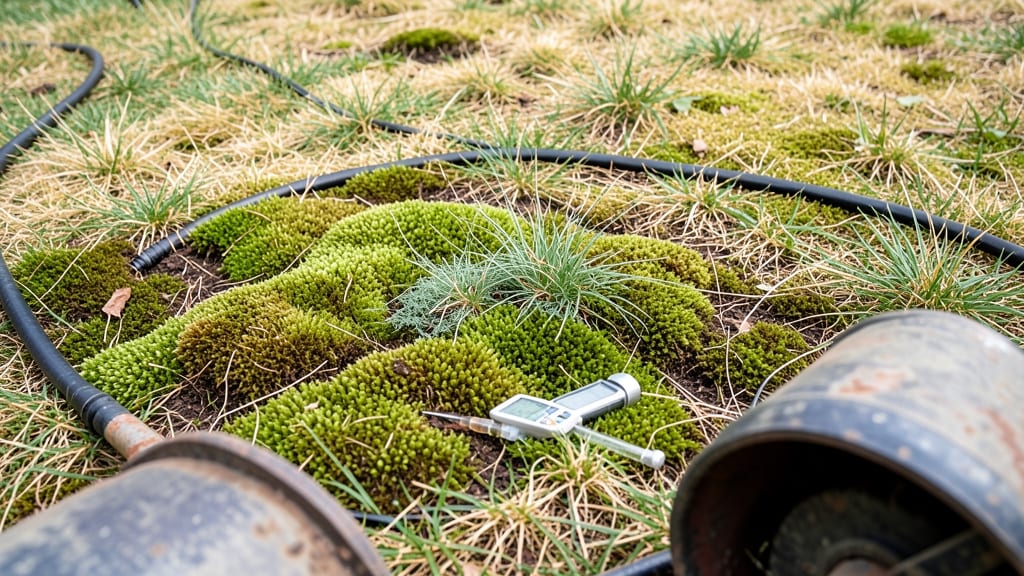
Moss in grass lawns isn't the enemy—it's nature's way of telling you something needs to change. 🌿 I've spent years watching my own lawn go from patchy to thriving by listening to what moss reveals about soil, sunlight, and water.
The good news? Fixing it is simpler than you think, and you'll end up with a lawn that's healthier than ever.
Moss thrives where grass struggles: in shady spots, compacted soil, or when the pH drops too low. That soft green carpet isn't lazy—it's a sign your lawn needs better airflow, sunlight, or a little pH adjustment.
The first step is identifying which of these three factors is letting moss take over, because the solution changes depending on the cause.
Within three weeks of the right approach, you'll see grass outcompeting moss naturally. Aerate to break up compacted soil, overseed with shade-tolerant varieties, and add lime if your soil's too acidic. The key is working with your lawn's natural conditions, not fighting them.
This method works for any lawn—whether you're dealing with a small shady patch or a whole yard full of moss. The best part? Once you restore balance, moss stays away for good. Let's get that grass growing back strong.
Hidden Causes Behind Lawn Moss
Moss thrives in lawns not by accident but because your grass is sending out a silent SOS—often ignored until those lush green patches take over. Understanding why moss invades helps you address the root issues (literally) and restore a vibrant turf. Here’s the science behind the spread:
Moss loves soggy conditions because it’s a thallophyte—a plant without true roots—meaning it thrives in waterlogged soil where grass struggles to breathe. When your lawn sits in standing water or compacted soil, oxygen can’t reach grass roots, weakening them.
Moss, on the other hand, absorbs moisture directly through its leafy surface, making it the dominant player in damp environments.
- Signs: Puddles lingering for >24 hours, spongy ground when walked on, or moss clustering in low-lying areas.
- Fix: Test drainage with a percolation test (dig a 12" hole, fill with water, time how long it drains). Amend soil with sand or compost (50/50 mix) to improve aeration. For severe cases, consider French drains or swales to redirect water.
Most lawn grasses (cool-season types like Kentucky bluegrass) need 4–6 hours of sunlight daily to photosynthesize. In shaded areas (under trees, fences, or buildings), grass grows slowly and thinly, leaving bare spots where moss—a shade-tolerant opportunist—takes hold.
Moss can photosynthesize at just 10% sunlight, outcompeting weak grass.
- Signs: Moss thriving under tree canopies, along north-facing walls, or near dense shrubs.
- Fix:
- ✅ Choose shade-tolerant grasses like fine fescue or creeping red fescue (they survive with <3 hours of sun).
- ✅ Thin tree canopies strategically (remove <30% of branches) to increase light penetration.
- ✅ Mulch heavily around trees to block moss spores from settling.
Moss prefers acidic soil (pH 4.5–6.0), while most lawn grasses thrive in neutral to slightly alkaline soil (pH 6.0–7.5). When soil pH drops, grass struggles to uptake phosphorus and nitrogen, turning yellow and sparse.
Moss, however, absorbs nutrients efficiently in acidic conditions, creating a feedback loop where it crowds out grass.
- Signs: Yellowing grass, orange-brown soil (indicating high iron/manganese), or moss spreading uniformly across the lawn.
- Fix:
- 💡 Test your soil with a DIY pH kit (aim for 6.0–7.0 for most grasses).
- 🔥 Raise pH with lime:
Soil pH Lime Needed (per 1,000 sq ft) Below 5.5 20–30 lbs dolomitic lime 5.5–6.0 10–15 lbs - ✨ Avoid over-fertilizing with nitrogen—it can lower pH over time.
Foot traffic, heavy machinery, or clay-heavy soil compresses the top layer, reducing air and water infiltration. Compacted soil strangles grass roots, leaving them unable to spread or absorb nutrients. Moss, with its low nutrient demands, fills the void, forming dense mats that physically block grass growth.
- Signs: Lawn feels "hard as a rock," grass grows in clumps, or water pools in tire tracks.
- Fix:
- 🔥 Aerate aggressively (rent a core aerator, pull plugs 2–3" deep, 3–4" apart). Do this in fall or spring when soil is moist.
- 🌡️ Top-dress with sand/compost (¼" layer) to loosen soil and improve structure.
- 🎯 Reduce foot traffic on high-use areas; use stepping stones or paths.
Moss spreads via spores (not seeds), which lie dormant in soil until conditions are perfect. If your lawn is thin, weak, or bare (due to poor mowing, drought, or disease), moss spores germinate rapidly because there’s no grass to outcompete them.
Even a 5% moss cover can signal grass is struggling to recover.
- Signs: Patchy grass, bare soil between blades, or moss appearing after drought/overwatering.
- Fix:
- 💡 Overseed thin areas with high-quality grass seed (e.g., tall fescue for durability).
- 🔪 Dethatch if moss is >1" thick (use a rake to remove the mat before reseeding).
- ⏰ Water deeply but less often (1–1.5" per week) to encourage deep grass roots.
Revive Your Lawn Naturally
Moss thriving in your grass lawn isn’t just an eyesore—it’s a sign your yard needs a little TLC. The good news? With the right approach, you can restore a lush, healthy lawn without harsh chemicals.
Below are targeted solutions for the most common causes of moss, along with prevention tips to keep your grass thriving long-term.
If moss has taken over shady or tightly packed areas, your lawn needs better airflow and sunlight.
How to Fix It: 🔥 Aerate the Soil – Rent a core aerator or use a manual garden fork to create holes (3–4 inches deep) every 3–6 inches. This loosens compacted soil, allowing grass roots to breathe and water to penetrate.
🍳 Top-Dress with Compost – Spread a ¼-inch layer of organic compost over the aerated areas. This improves soil structure and provides nutrients grass loves but moss doesn’t.
👨🍳 Overseed with Shade-Tolerant Grass – Choose grasses like fine fescue or creeping red fescue, which thrive in low-light conditions. Spread seed after aerating and keep the soil moist for 4–6 weeks.
🥘 Improve Drainage – If water pools in low spots, create gentle slopes or install French drains to redirect excess moisture.
💡 Pro Tip: Test your soil’s pH—moss prefers acidic soil (pH < 6.0). If needed, apply lime to raise the pH to 6.0–7.0, making conditions less hospitable for moss.
Moss loves dampness, so if your lawn stays soggy, it’s an open invitation for it to spread.
How to Fix It: ⏰ Adjust Your Watering Schedule – Water deeply 2–3 times per week (early morning is best) and avoid light, frequent watering. Let the top inch of soil dry between sessions.
🔪 Fix Drainage Issues – If water pools after rain, consider:
- Sand Top-Dressing – Mix coarse sand into compacted areas to improve drainage.
- Install a French Drain – For severely waterlogged spots, bury a perforated pipe surrounded by gravel to redirect water.
🌡️ Use a Moisture Meter – If your lawn stays damp for days, it’s a sign of poor drainage. Act fast before moss spreads further.
💡 Pro Tip: If your yard has heavy clay soil, mix in gypsum (calcium sulfate) to break up compacted layers and improve water absorption.
Moss spreads when grass is weak or sparse. Give your lawn the competitive edge it needs.
How to Fix It: 🌱 Fertilize Smartly – Use a slow-release, nitrogen-rich fertilizer (like 24-0-4) in early spring and fall. Moss doesn’t need much nitrogen, so healthy grass will outgrow it.
🍃 Mow Higher in Shady Areas – Set your mower to 3–4 inches in shaded spots. Taller grass shades out moss and develops deeper roots.
🔄 Renovate Thin Patches – For bare or moss-covered spots:
- Remove moss (rake or smother with cardboard + rocks for 4–6 weeks).
- Aerate & Overseed with a mix of grass types suited to your sun/shade.
- Apply a Starter Fertilizer to encourage rapid growth.
💡 Pro Tip: Corn gluten meal (a natural pre-emergent) can suppress moss while feeding grass—apply in early fall before moss spores germinate.
Once moss is under control, keep it from coming back with these easy maintenance habits:
✅ Mow Regularly – Keep grass at the right height for your climate (usually 2.5–4 inches). ✅ Dethatch Annually – If thatch (dead grass layer) is ½-inch thick or more, dethatch to improve airflow. ✅ Test Soil Every 2–3 Years – Adjust pH and nutrients as needed to keep grass competitive. ✅ Avoid Heavy Foot Traffic – Compacted areas invite moss—use stepping stones or paths in high-traffic zones. ✅ Leave Grass Clippings – They return nutrients to the soil, strengthening grass roots.
Final Thought: Moss doesn’t have to be a permanent problem—with proactive care, your lawn can bounce back stronger than ever. Start with one or two fixes this season, and watch your grass reclaim its space naturally! 🌿✨
Frequently asked questions
Why does moss grow faster than my grass?
Moss outcompetes grass because it thrives in conditions where grass struggles—shady areas, compacted soil, or acidic pH. Unlike grass, moss doesn’t need deep roots or sunlight to survive. It absorbs moisture directly through its leaves, making it the dominant plant in damp, low-light environments. Healthy grass with proper aeration and sunlight will naturally outgrow moss over time.
Can I just remove moss and expect grass to grow back?
No, simply raking moss away often leaves the underlying issues (like poor drainage or compacted soil) unchanged. Moss returns quickly if the conditions that allowed it to grow persist. The key is to address the root causes—like aerating, improving drainage, or adjusting soil pH—before reseeding. Without these fixes, new moss will take over within weeks.
Is lime really necessary if my soil pH is only slightly acidic?
Even a slightly acidic pH (below 6.0) can stress grass over time, making it vulnerable to moss. Lime helps raise the pH to the ideal range of 6.0–7.0, which grass thrives in. For minor adjustments, a light application of 10–15 lbs of dolomitic lime per 1,000 sq ft can make a noticeable difference. Test your soil first to avoid overcorrecting.
How long does it take to see grass replace moss?
With the right approach—like aerating, overseeding, and improving soil conditions—you’ll typically see new grass sprouting within 2–3 weeks. However, full coverage may take 6–12 weeks, depending on your climate and the severity of moss infestation. Consistency in watering and maintenance is key to long-term success.
Will fertilizing my lawn help stop moss?
Yes, but use the right type! A slow-release, nitrogen-rich fertilizer (like 24-0-4) strengthens grass, making it more competitive against moss. Avoid quick-release fertilizers, which can lower soil pH over time and create conditions moss loves. Apply fertilizer in early spring or fall for best results.