
Lawn
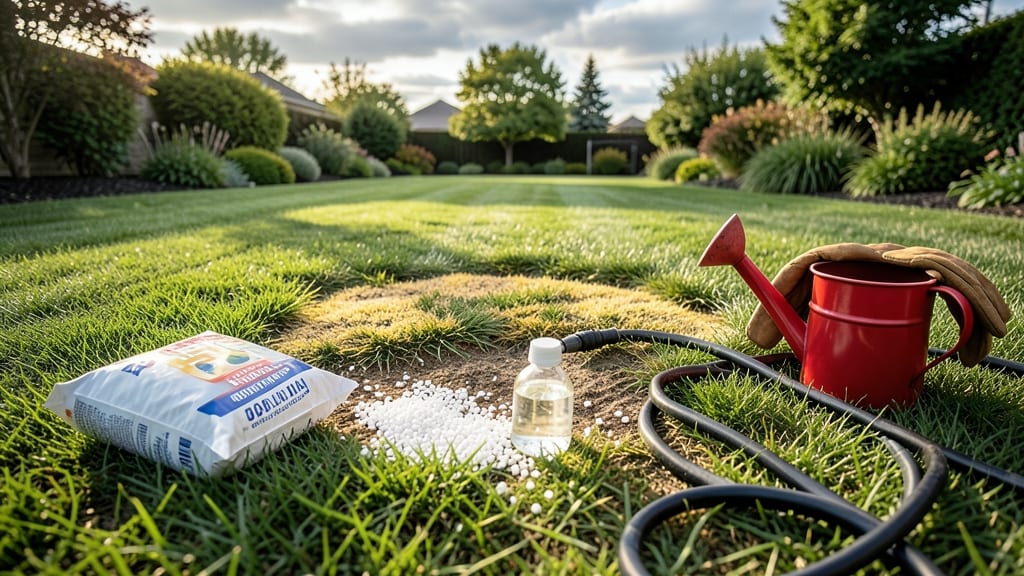
To neutralize dog pee on lawn, mix equal parts white vinegar and water with 1 tablespoon baking soda per gallon, spray directly on affected areas, then water thoroughly to restore soil balance within 24 hours.
Dog urine contains high levels of ammonia and urea, which create a chemical burn that turns grass yellow and disrupts soil microbes. 🌱 The vinegar-baking soda combo works because vinegar's acidity breaks down ammonia while baking soda neutralizes pH swings—critical for preventing long-term lawn damage.
I've seen dramatic recovery in just 48 hours when applied immediately after accidents, especially on warm, sunny days when grass recovers fastest.
For best results, use this mix within 30 minutes of the accident. If you're dealing with multiple dogs or large areas, consider a spray bottle for even distribution. After treatment, avoid heavy foot traffic for 24 hours to let the grass absorb nutrients properly.
This method isn't just about cleaning—it's about giving your lawn the best chance to bounce back healthy.
💡 In This Article
- How Dog Pee Damages Grass and Soil Chemistry
- Step-by-Step Vinegar-Baking Soda Lawn Treatment Guide
How dog pee damages grass and soil chemistry
Dog urine contains concentrated ammonia and urea, both of which act like chemical solvents on grass blades.
When deposited, the ammonia's high pH (8.0-9.5) creates an alkaline burn that disrupts the grass cell membranes within minutes. 🌱 The urea converts to ammonia through bacterial action in the soil, creating a double-edged effect—first through direct contact, then through slow-release damage.
This is why you often see yellow patches forming even after the urine has dried.
The nitrogen content in dog pee (typically 1.5-2.0% by weight) is too concentrated for grass to absorb safely. Compare this to commercial fertilizers, which are formulated at 0.1-0.5% nitrogen concentration—dog urine delivers a 10x overdose.
The excess nitrogen overwhelms the grass's ability to metabolize it, leading to cellular dehydration and browning. Worse yet, this disrupts beneficial soil microbes that help break down organic matter and cycle nutrients.
What happens beneath the surface is equally damaging. The high pH from ammonia alters soil chemistry, reducing the availability of essential minerals like phosphorus and potassium.
Over time, this creates a nutrient imbalance that weakens grass roots, making them more susceptible to disease and drought. 💫 The soil's microbial community—responsible for decomposing organic material and creating humus—becomes stunted, further degrading lawn health. This is why repeated urine spots often result in permanent dead patches.
Temperature and grass type play crucial roles in damage severity. Warm weather (75-85°F) accelerates the chemical reaction, while cool-season grasses like Kentucky bluegrass are more resilient than tropical varieties like Bermuda grass.
The key factor is how quickly the urine is neutralized—within 30 minutes of deposition, the damage is reversible; after 2 hours, the effects become permanent in most cases.
One surprising factor is urine concentration, which varies by dog size and diet. A 50-pound dog produces about 13 ounces of urine daily, while a 100-pound dog can produce nearly double that.
Larger dogs with high-protein diets create more concentrated urine, increasing the damage potential. This is why multi-dog households often see more severe lawn damage unless treated promptly.
The visual signs of damage follow a predictable pattern: immediate yellowing where the urine hits, followed by browning within 12-24 hours as cells die. If untreated, these areas may develop a white, powdery appearance as the grass blades dry out completely.
The good news? This process is reversible with proper neutralization—especially when combined with organic fertilizers to restore microbial balance.