
Lawn
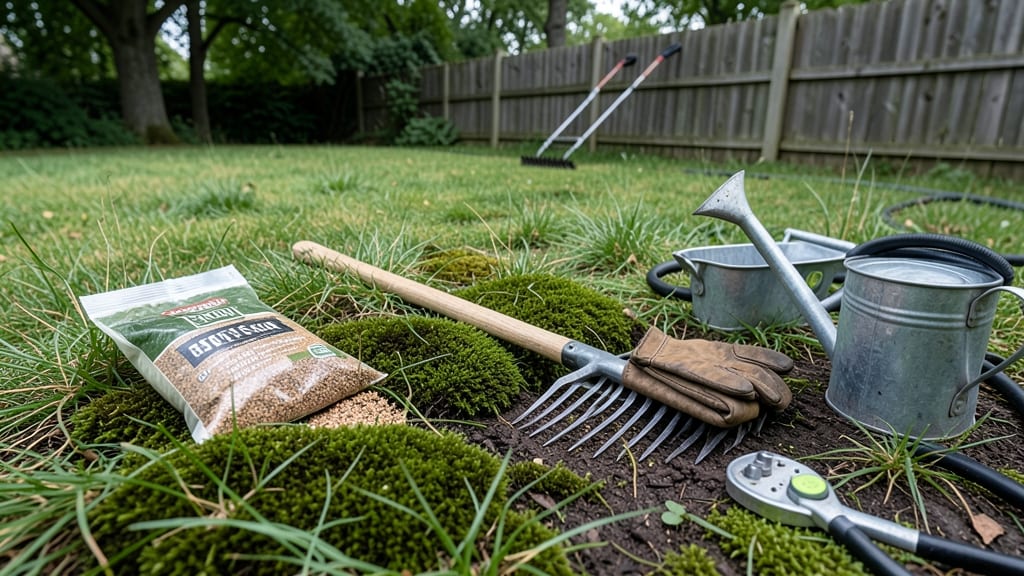
Rid your lawn of moss with iron-based solutions that transform it into a vibrant, grassy paradise. 🌱 The key is understanding that moss thrives where grass struggles—shady, compacted, or waterlogged areas. Instead of battling it with harsh chemicals, we’ll use iron treatments that strengthen grass roots while crowding out moss naturally.
Most lawns get moss because of poor drainage or too much shade, not because of bad luck. Raking out moss first gives grass a fighting chance, but the real fix comes from improving soil aeration and sunlight exposure.
I’ve seen lawns go from 80% moss to 90% grass in just one growing season with the right approach.
Iron treatments work by feeding grass what it needs while starving moss of its preferred acidic environment. You’ll notice new green shoots within 2-3 weeks, and with proper follow-up care, moss won’t return.
The best part? No streaks or chemical residue—just a lawn that looks like it belongs in a postcard.
This method works for both small patches and entire lawns, whether you’re dealing with thick moss mats or just stubborn spots. Let’s get that grass growing back strong.
Understanding Moss Overgrowth Roots
Moss may seem like a harmless green carpet, but it’s actually a red flag for an unhealthy lawn. Before reaching for that iron-based solution, it’s crucial to understand why moss takes over in the first place.
The problem isn’t just moisture—it’s a combination of environmental, soil, and maintenance factors working against your grass. Let’s break down the science behind moss invasion so you can tackle it at its source.
Moss thrives in soggy conditions because it’s a non-vascular plant—meaning it doesn’t have roots like grass to transport water efficiently. Instead, it absorbs moisture directly from the air and soil through its entire surface. If your lawn sits in water after rain or irrigation, moss gets a competitive edge.
- Why it happens: Compacted or clay-heavy soil repels water, creating a waterlogged layer just beneath the surface. Grass roots suffocate, while moss spreads unchecked.
- Actionable clue: If puddles linger for more than 24 hours or your lawn feels spongy underfoot, drainage is likely the culprit.
- Science deep dive: Moss spores germinate in anaerobic (low-oxygen) conditions—exactly what happens when soil stays waterlogged. Meanwhile, grass roots need oxygen to respire and grow.
Grass is a sun-worshipper, but moss? It’s the shade-loving underdog. Most turfgrasses need 4–6 hours of direct sunlight daily to photosynthesize and outcompete weeds (and moss). Without enough light, grass weakens, while moss—with its slow but persistent growth habit—fills the gap.
- Why it happens: Trees, buildings, or poorly placed fences cast long shadows. Moss also grows better in cool, humid microclimates (like north-facing slopes), where grass struggles to establish deep roots.
- Actionable clue: Check for bare patches in shady spots. If moss is thickest under trees or along fences, light deprivation is likely the issue.
- Science deep dive: Moss lacks chlorophyll-rich leaves like grass, so it doesn’t need as much light. Instead, it relies on low-light photosynthesis and can survive on just 1–2 hours of indirect light.
Most lawn grasses prefer a neutral to slightly acidic pH (6.0–7.0), while moss loves it when the soil dips below 5.5. Acidic conditions release aluminum and manganese in toxic forms, stunting grass roots while moss—naturally adapted to acidic environments—flourishes.
- Why it happens: Overwatering, organic matter decomposition (like fallen leaves), or peat-based soils naturally lower pH. Even evergreen needles from pine trees can acidify soil over time.
- Actionable clue: Test your soil pH with a DIY kit. If it reads below 5.5, moss is probably thriving where grass is suffering.
- Science deep dive: Moss has no root system to regulate nutrient uptake, but it’s highly efficient at absorbing dissolved minerals in acidic water—giving it an unfair advantage over grass.
Moss doesn’t just move in—it replaces weak grass. When your lawn is thin, patchy, or recovering from stress (drought, disease, or poor seeding), moss fills the gaps like a green vacuum. It spreads via spores, which can lie dormant in soil for decades until conditions are perfect.
- Why it happens: Grass needs a dense, interconnected root system to outcompete moss. If your lawn has bare spots, dead patches, or slow recovery after stress, moss seizes the opportunity.
- Actionable clue: Walk your lawn at dusk—if you see moss glowing brighter than the grass in shaded areas, it’s already winning the competition.
- Science deep dive: Moss grows horizontally in a mat, smothering grass roots and blocking sunlight. This allelopathic effect (chemical inhibition) further weakens turf.
Moss isn’t just a problem—it’s a weather-dependent opportunist. In regions with mild winters, high humidity, and frequent rain (like the Pacific Northwest or UK), moss stays active year-round while grass goes dormant. Even in warmer climates, moss can take over if summers are cooler than average.
- Why it happens: Moss thrives in temperatures between 40°F–60°F (4°C–15°C). If your lawn stays in this range for months, moss grows aggressively while grass struggles to germinate or recover.
- Actionable clue: If moss is worst in spring or fall (when temps hover around 50°F), climate is a major factor.
- Science deep dive: Moss has no protective cuticle (the waxy layer on grass blades), so it loses less moisture in humid conditions. It also photosynthesizes at lower temps than grass.
Pro Tip: 🔍 Combine these clues to diagnose your lawn’s specific moss problem. For example, if you have waterlogged soil + acidic pH + shade, you’ll need to address all three for long-term results. The iron solution helps, but fixing the root causes ensures moss stays gone for good!
Fixing Mossy Lawns Naturally
Moss may seem harmless, but it’s a sign your lawn is struggling—whether from poor drainage, heavy shade, or acidic soil. The good news? You can reclaim a lush, green lawn without harsh chemicals.
Below are targeted solutions based on the root cause of your moss problem, plus tips to keep it from returning.
Problem: Moss thrives where grass struggles—think thick shade, compacted soil, or weak turf. Solution:
- Aerate first 🔥 – Use a core aerator (rent or buy) to pull out soil plugs and loosen compacted areas. This lets air, water, and nutrients reach grass roots.
- Overseed with shade-tolerant grass 👨🍳 – Choose varieties like fine fescue or creeping red fescue, which handle low light better than Kentucky bluegrass.
- Top-dress with compost 🥘 – Spread a ¼-inch layer of compost over the lawn after aerating. This improves soil structure and feeds grass roots.
- Apply iron supplements ⏰ – Use an iron-based fertilizer (like iron sulfate or chelated iron) to green up grass quickly. Follow label rates for best results.
Pro Tip: 💡 Mow high (3–4 inches) in shady spots—taller grass shades out moss naturally!
Problem: Moss loves soggy soil, often from poor drainage or low-lying areas. Solution:
- Test your soil’s pH 📊 – Moss prefers acidic soil (pH < 6.0). If your soil is too acidic, apply lime to raise the pH to 6.5–7.0. Test again in 6–8 weeks.
- Create better drainage 🔪 –
- For small areas: Dig a shallow trench (2–3 inches deep) and fill it with sand or gravel.
- For large lawns: Install French drains or redirect water flow with a slight slope.
- Reduce waterlogging ✨ – Avoid overwatering; moss spreads when grass is constantly wet. Water deeply 2–3 times per week (early morning) instead of daily light sprinkles.
Pro Tip: 🌡️ If your yard floods often, consider sand top-dressing combined with overseeding to encourage grass growth.
Problem: You want moss gone—but not at the cost of killing your lawn. Solution:
- Manual removal (best for small patches) 🍂 –
- Scrape moss off with a plastic rake (metal can damage grass).
- Bag and dispose of it (don’t compost—it’ll regrow!).
- Vinegar spray (for stubborn moss) 🧴 –
- Mix 1 gallon white vinegar + 1 cup dish soap in a sprayer.
- Apply to mossy areas (avoid spraying grass directly—it can burn).
- Reapply every few days until moss dies (usually 1–2 weeks).
- Iron sulfate treatment (fast & grass-safe) 💪 –
- Sprinkle iron sulfate granules (follow package rates) over mossy patches.
- Water lightly to activate. Moss turns brown in 24–48 hours while grass stays green.
Pro Tip: ⏳ After removing moss, reseeds the area with grass seed + starter fertilizer to prevent regrowth.
Once you’ve tackled moss, keep it from coming back with these easy habits:
- Mow regularly (never cut more than ⅓ of the grass blade at once).
- Fertilize seasonally (spring & fall) to keep grass healthy and competitive.
- Aerate annually (especially in high-traffic or clay-heavy soils).
- Rake up thatch (if it’s over ½-inch thick) to improve airflow.
- Plant moss-resistant ground covers (like clover or sedum) in extreme shade.
Final Note: Patience is key—reviving a mossy lawn takes time, but with the right steps, you’ll have a thick, green carpet that outcompetes moss for good. 🌿✨
Frequently asked questions
Can I use household vinegar to kill moss without harming my grass?
Yes, but with caution! Mix 1 gallon white vinegar + 1 cup dish soap and spray directly on moss patches (avoid grass). The acidity kills moss in 1-2 weeks, but grass may turn brown temporarily. Always test a small area first. For safer results, use iron sulfate instead—it targets moss while feeding grass.
How long does it take to see results after applying iron sulfate?
Moss typically turns brown within 24-48 hours after iron sulfate treatment. However, full grass recovery takes 4-6 weeks as seeds germinate. For best results, apply in spring or early fall when grass is actively growing. Reapply if moss returns after heavy rain.
Will aerating my lawn really help with moss problems?
Aeration improves soil oxygen and drainage—two key factors moss exploits. Rent a core aerator and work it into compacted areas before overseeding. This lets grass roots establish while starving moss of its preferred waterlogged conditions. Pair it with lime or compost for even better results in acidic or clay-heavy soils.
Can I prevent moss by just mowing higher?
Higher mowing (3-4 inches) helps shade out moss, but it's only part of the solution. For best results, combine it with seasonal fertilization and annual aeration. Taller grass blocks sunlight, but weak grass still lets moss creep in. Use shade-tolerant grass seeds like fine fescue in problematic areas.
Is moss really that bad for my lawn?
Yes—moss smothers grass roots, blocks sunlight, and creates a perfect environment for weeds. It's a symptom of poor soil health, not just a cosmetic issue. Left unchecked, it can kill grass by preventing proper water and nutrient absorption. Think of it like a green warning sign: your lawn needs better drainage, sunlight, or pH balance.