
Watering
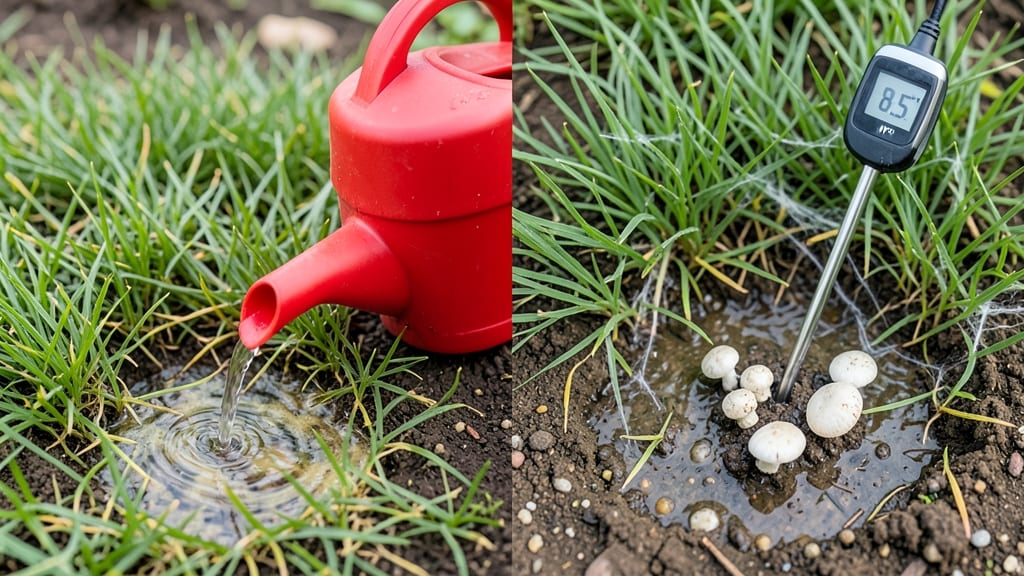
Your lawn might be drowning in water, showing the clearest signs of an overwatered lawn—and it’s not thriving. 🌱 Overwatered grass shows up in sneaky ways—yellow patches, spongy soil, or worse, mushroom spikes popping up like unwanted guests.
I’ve seen it turn a lush yard into a soggy mess in just a few weeks, and the fix isn’t as simple as cutting back on water. The real culprits? Poor drainage, compacted soil, or watering at the wrong times.
Your grass can’t breathe when it’s constantly soggy, and that’s when fungi and weeds move in. The good news? Adjusting your watering schedule and improving airflow can revive it faster than you think.
Within 2-3 weeks of proper care, you’ll see firmer soil, fewer yellow spots, and grass that stands tall instead of wilting. The key is watering deeply but less often—think 1-1.5 inches per week, not daily sprinkles. This works for any lawn, from small backyards to large open spaces.
Let’s get that grass breathing again!
Root Causes Of Soggy Grass
An overwatered lawn isn’t just a result of random rain or a misplaced hose—it’s often the outcome of specific environmental, mechanical, or human factors. Understanding these causes helps you adjust your approach before your grass turns into a swamp. Here’s why your lawn might be drowning in its own moisture.
Soil composition plays a massive role in how water moves through your lawn. If your yard has clay-heavy soil, water struggles to drain because clay particles pack tightly, trapping moisture like a sponge.
Even sandy soil can cause issues if it’s too fine—water drains too quickly at first but then pools beneath the surface, suffocating roots.
Another red flag? Compacted soil from foot traffic, heavy machinery, or construction. When soil is compressed, air pockets disappear, and water has nowhere to go but upward—leading to surface puddles and soggy patches. Test your soil: Dig a small hole (6 inches deep) and fill it with water.
If it drains in under 30 minutes, you’re likely fine. If it sits for hours? That’s your warning sign.
Most homeowners assume “more water = greener grass,” but frequency and duration matter more than you think. Watering lightly but often (e.g., daily for 10 minutes) encourages shallow root growth, while deep, infrequent watering (e.g., 1–1.5 inches per week) promotes stronger roots that can handle moisture fluctuations.
Here’s the kicker: Automatic sprinklers can overwater without you realizing it. If your system runs on a timer without soil sensors, it might drench your lawn even after rain. Pro tip: Use a rain shutoff device or switch to smart irrigation controllers that adjust based on real-time weather data.
Common mistakes:
- Watering at dawn or dusk (increases evaporation loss and fungal risks).
- Ignoring slope or terrain—low spots naturally collect water.
- Using sprinklers with poor coverage, leading to uneven watering.
Not all grass loves the same amount of water. Cool-season grasses (like Kentucky bluegrass or fescue) thrive in moist conditions but rot if waterlogged. Meanwhile, warm-season grasses (like Bermuda or Zoysia) prefer drier soil and can suffocate in excess moisture.
If you live in a humid climate (e.g., Southeast U.S.), drought-tolerant grasses like Buffalo grass or Centipede grass are better suited to handle natural rainfall. Reverse the problem: If your lawn is struggling, it might be time to audit your grass type and consider a more resilient variety.
Underground French drains, tiles, or storm sewers are designed to redirect excess water away from your yard. But if they’re clogged with debris, roots, or sediment, water has nowhere to go—leading to ponding and waterlogged turf.
Signs of drainage failure:
- Water pools in the same spots after rain.
- You notice soggy soil near sidewalks or driveways.
- Your basement or crawl space gets damp after heavy rain.
Fix it: Inspect your yard for low-lying areas and consider installing swales (shallow trenches) or dry wells to redirect water. If your drainage system is old, a professional hydroseeding or pipe inspection might be needed.
Sometimes, Mother Nature is the villain. Heavy, prolonged rain (especially in hurricane or monsoon seasons) can overwhelm even the best-drained soil. Frost or snowmelt can also saturate lawns, preventing proper drainage until temperatures rise.
Other environmental triggers:
- High humidity slows evaporation, keeping soil damp longer.
- Shady areas dry out slower than sunlit spots.
- Newly installed sod or seed needs careful watering—too much too soon can drown young roots.
Actionable tip: If your area is forecasted for multiple rainy days, reduce watering and let the soil dry naturally. Use a soil moisture meter to track levels—aim for 40–60% moisture (not soggy).
How to solve it
If your lawn is showing signs of overwatering—like soggy patches, yellowing grass, or those pesky mushroom spikes—don’t panic. With the right steps, you can turn things around and restore a healthy, vibrant lawn.
The key is addressing the root cause (literally!) and adjusting your watering habits. Below are practical solutions tailored to the most common issues, along with tips to keep your lawn thriving long-term.
If your lawn feels spongy underfoot or puddles linger for hours, drainage is the culprit. Poor drainage suffocates grass roots and invites fungus, pests, and weeds.
Step 1: Test Your Drainage 🔍
- Walk across your lawn after watering. If your footprints stay visible for more than a few minutes, drainage is poor.
- Dig a small hole (6 inches deep) to check soil moisture.
If water sits at the surface, you’ve got a drainage problem.
Step 2: Improve Soil Aeration 🌱
- Rent a core aerator (or hire a pro) to create holes in compacted soil. This helps water and air reach the roots.
- Top-dress with sand or compost (50/50 mix) to loosen heavy clay soil.
Spread a thin layer (¼ inch) over the lawn and lightly rake it in.
Step 3: Adjust Watering Schedule ⏰
- Water deeply but infrequently—aim for 1–1.5 inches per week, including rain. Break it into 2–3 sessions (e.g., 30 minutes every other day).
- Water in the early morning (4–8 AM) to reduce evaporation and fungal growth.
💡 Pro Tip:
If your yard has low spots, consider installing French drains or swales (shallow trenches) to redirect water away from problem areas.
Overwatering weakens grass, leading to yellow patches. The good news? Most grass recovers quickly with proper care.
Step 1: Stop Watering and Let It Dry 🚰
- Skip watering for 3–5 days to allow excess moisture to evaporate. This helps prevent further stress on the roots.
- Mow higher (3–4 inches) to shade the soil and reduce evaporation.
Step 2: Fertilize for Recovery 🌿
- Apply a slow-release, balanced fertilizer (like 16-4-8) to replenish nutrients lost from overwatering.
- For cool-season grasses (e.g., Kentucky bluegrass), fertilize in early fall or spring.
- For warm-season grasses (e.g., Bermuda), fertilize in late spring or early summer.
Step 3: Aerate and Overseed 🌱
- Aerate to relieve compacted soil and improve root access to oxygen.
- Overseed bare or thinning patches with the same grass type. Use a starter fertilizer to help new seeds germinate.
💡 Pro Tip:
If yellowing persists, test your soil for nutrient deficiencies (like nitrogen or potassium) or pH imbalances. A simple soil test kit (available at garden centers) can guide you.
Mushrooms thrive in damp, shaded, and overwatered lawns. While they’re not harmful, they’re a sign your lawn needs better airflow and less moisture.
Step 1: Remove Mushrooms Completely 🧹
- Pull them at the base (including the root) to prevent regrowth. Avoid cutting them—they’ll just grow back.
- Disinfect your tools with rubbing alcohol to prevent spreading spores.
Step 2: Improve Airflow and Sunlight ☀️
- Thin out dense grass by mowing higher or aerating to reduce shade.
- Trim overhanging trees or bushes to let more sunlight reach the lawn.
- Rake up thick thatch (layer of dead grass) to improve airflow.
Step 3: Adjust Watering and Soil 💧
- Water less frequently but more deeply to dry out the soil faster.
- Add compost or sand to improve drainage in mushroom-prone areas.
- Consider a fungal treatment (like copper fungicide or baking soda spray) if mushrooms keep returning.
💡 Pro Tip:
Mushrooms often appear in shady, low-lying areas. If they keep coming back, consider replacing that spot with clover, moss, or ground cover that tolerates moisture better.
The best way to fix an overwatered lawn is to stop the problem before it starts. Here’s how to keep your lawn happy and healthy:
🌡️ Check Soil Moisture Regularly
- Stick your finger 2 inches into the soil—if it’s damp, wait before watering.
- Invest in a soil moisture meter for accuracy.
⏳ Water Smartly
- Early morning (4–8 AM) is ideal—it reduces evaporation and fungal growth.
- Use a rain gauge to track weekly watering (1–1.5 inches total, including rain).
- Upgrade to smart sprinklers that adjust based on weather forecasts.
🌿 Maintain Healthy Grass
- Mow high (3–4 inches) to encourage deep roots and shade the soil.
- Aerate once a year (spring or fall) to prevent compaction.
- Fertilize seasonally to keep grass resilient.
🌧️ Prepare for Rainy Seasons
- If your area gets consistent rain, reduce watering by half.
- Divert runoff from driveways or roofs away from the lawn to prevent pooling.
With these steps, your lawn should bounce back from overwatering damage in 2–4 weeks. Stay consistent with maintenance, and you’ll enjoy a lush, green carpet that’s the envy of the neighborhood! 🌱💚
Frequently asked questions
Why does my lawn get soggy even after just a little rain?
Poor drainage is usually the culprit. Clay soil or compacted ground traps water, preventing it from seeping down. Try the "percolation test": Dig a 6-inch hole, fill it with water, and time how long it drains. If it takes over 30 minutes, your lawn needs aeration or soil amendments like sand or compost to improve drainage.
Can I fix an overwatered lawn by just stopping watering?
Not always—stopping watering helps, but the real fix depends on the damage. For yellow patches, let the soil dry out completely (3–5 days) and aerate to improve airflow. If mushrooms appear, pull them by the root and reduce shade. The key is balancing moisture and airflow—aim for 40–60% soil moisture, not soggy.
Are mushroom spikes harmful to my lawn?
Mushrooms themselves aren’t harmful, but they’re a red flag for overwatering and poor drainage. They thrive in damp, shaded areas where grass struggles. Pull them completely (roots and all) and improve airflow by mowing higher or trimming nearby trees. For persistent issues, consider a copper fungicide or replacing the area with clover.
How often should I water my lawn to avoid overwatering?
Water deeply but infrequently—1–1.5 inches per week (including rain), broken into 2–3 sessions. Early morning (4–8 AM) is best to reduce evaporation and fungal risks. Use a rain gauge or soil moisture meter to track levels. Most grasses prefer dry spells between waterings to develop deep roots.
Will aerating my lawn help with overwatering issues?
Aeration creates air pockets in compacted soil, helping water drain properly and roots breathe. Rent a core aerator or hire a pro to pull small plugs from the lawn. Follow up by top-dressing with a 50/50 sand-compost mix to further improve drainage. Aerate in spring or fall for best results.