
Lawn
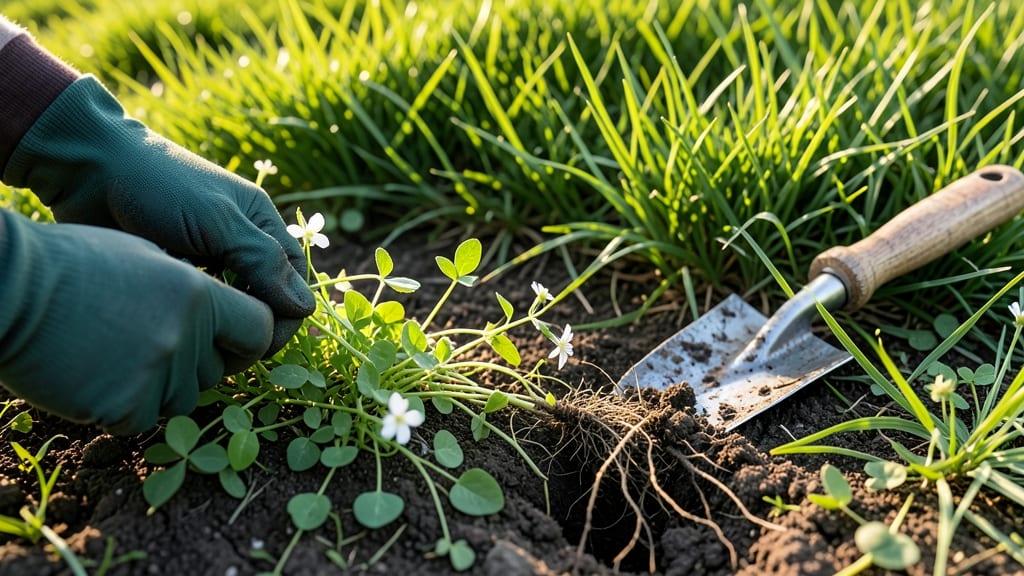
Those painful sticker weeds are ruining your barefoot lawn fun. 🌱 I’ve battled spurge and sandbur in my own yard, and vinegar spray is the fastest way to eliminate them without harsh chemicals—just be ready for some elbow grease and patience.
The trick is timing: apply the spray on a dry, sunny day when weeds are actively growing. You’ll need a simple mix of white vinegar, dish soap, and water, plus a spray bottle. It kills weeds by burning their leaves, but you’ll need to repeat treatments for stubborn patches.
Within 3-5 days, you’ll see the weeds turn crispy and brown—no more painful surprises when kids (or pets) run across the lawn. The best part? This method works on driveways and sidewalks too, not just grass.
For long-term results, focus on improving your lawn’s health with proper watering, mowing, and occasional overseeding. A thick, healthy lawn leaves fewer gaps for weeds to take hold in the first place.
The Hidden Triggers Behind Stubborn Weeds
Sticker weeds—those pesky, clingy invaders with their sharp, seed-covered pods—don’t just appear overnight. They thrive because of specific conditions in your lawn, often tied to how you (or nature) manage the space.
Understanding these triggers is the first step to stopping them before they spread. Here’s why these weeds keep showing up in your yard.
Sticker weeds, like many broadleaf weeds, love lawns that are weak and imbalanced. Here’s why:
- Compacted or thin soil: Heavy foot traffic, machinery, or clay-heavy soil compresses the top layer, making it hard for grass roots to access nutrients and water. Weeds like sticker weeds (often Galium aparine) fill these gaps because they’re shallow-rooted and fast-growing.
- Low organic matter: Soil lacking compost or decomposed plant material struggles to retain moisture and nutrients. Sticker weeds thrive in these dry, nutrient-poor conditions because they’re adapted to survive with minimal resources.
- pH imbalances: Most lawn grasses prefer a pH between 6.0 and 7.0. If your soil is too acidic (<6.0) or alkaline (>7.5), grass weakens while weeds like sticker weeds—tolerant of a wider pH range—take over.
💡 Pro Tip: Test your soil annually (DIY kits are cheap and easy). Amend with compost or sulfur (for high pH) to restore balance before weeds get a foothold.
Sticker weeds are opportunistic—they exploit any sign of weakness in your lawn. Here’s how neglect helps them:
- Infrequent mowing: Tall grass blocks sunlight, creating a damp, shaded microclimate that sticker weeds adore. Their seeds germinate best in partial shade and moist conditions.
- Skipped aeration: Aerating relieves soil compaction, allowing grass roots to breathe. Without it, thatch builds up, smothering grass and giving weeds like sticker weeds an easy entry point.
- Delayed weed removal: Sticker weeds spread via their burr-like seeds, which cling to pets, shoes, and tools. If you don’t pull or spray them early, one plant can become hundreds in a season.
🔥 Actionable Fix: Mow regularly (never removing more than ⅓ of the blade height) and aerate in spring/fall. Pull weeds immediately when you spot them—don’t let them go to seed!
Watering your lawn too much—or too little—can create the perfect sticker weed paradise. Here’s how:
| Problem | Why It Helps Weeds |
|---|---|
| Overwatering | Excess moisture drowns grass roots but keeps soil saturated, ideal for shallow-rooted weeds like sticker weeds. It also washes away nutrients, further weakening your lawn. |
| Underwatering | Drought-stressed grass turns brown and sparse, leaving bare patches where weeds take hold. Sticker weeds germinate quickly in dry soil if rain or irrigation follows. |
| Inconsistent watering | Uneven moisture creates "stress zones" where grass recovers slowly, while weeds thrive in the damp pockets. Drip irrigation or soaker hoses are better than sprinklers for even coverage. |
🌡️ Watering Rule: Aim for 1–1.5 inches of water per week (including rain). Water deeply 2–3 times per week rather than daily shallow sessions.
Sticker weeds often cluster in spots where grass struggles to grow. These "weak zones" include:
- Under trees or fences: Dappled shade reduces grass density, and fallen leaves or debris create a seedbed for weeds. Sticker weed seeds hitchhike on animals or tools into these areas.
- Newly seeded or sodded lawns: Young grass is vulnerable until its root system establishes (4–6 weeks). Sticker weeds germinate quickly in disturbed soil, outcompeting tender grass.
- Construction or repair sites: Digging, tilling, or even aerating exposes fresh soil, which sticker weed seeds (often dormant in the soil for years) seize as a chance to sprout.
✨ Prevention Tip: Overseed shady areas with shade-tolerant grass like fine fescue. Apply a pre-emergent herbicide in early spring to block sticker weed seeds before they germinate.
Now that you know why sticker weeds take over, the next step is how to kick them out for good. The key? Attack the root causes—soil, water, and maintenance—while using targeted solutions like vinegar sprays to stop their spread.
How to Fix Stubborn Lawn Weeds
Sticker weeds (like clover, creeping Charlie, or ground ivy) can turn your lush lawn into a battleground, but the good news? You don’t need harsh chemicals to win. With the right approach—whether it’s natural, manual, or targeted—you can reclaim your yard without breaking the bank or harming the environment.
Below, we break down cause-specific solutions, step-by-step fixes, and smart prevention tips to keep your lawn weed-free for good.
If your lawn is dominated by broadleaf weeds (like dandelions or plantain), these methods will help you eliminate them without damaging grass.
🔥 Step 1: Spot-Treat with Vinegar (Fast & Chemical-Free)
Vinegar is a powerful, non-toxic weed killer when used correctly.
Here’s how: - Mix: 1 gallon of white vinegar (20-30% acetic acid), 1 cup of dish soap (as a surfactant), and 2 tbsp of salt (optional for extra potency). - Apply: Spray directly on weeds (avoid grass) on a sunny, dry day—vinegar works best when it can evaporate quickly. - Wait: Weeds should wilt within hours and die in 1-3 days. - Reapply: For stubborn weeds, repeat in 5-7 days.
✨ Pro Tip: Test a small area first—some grasses may yellow slightly, but they’ll recover.
🍳 Step 2: Manual Removal (For Small Patches)
If weeds are scattered, pulling them by hand is the most eco-friendly method.
- Best time: Pull after rain or watering (soil is soft).
- Tool up: Use a weed puller or digging fork for deep roots.
- Twist & tug: Grab the weed at the base and twist to break the root.
- Dispose properly: Bag weeds to prevent reseeding.
💡 Pro Tip: Wear gloves—some weeds (like stinging nettle) can irritate skin!
👨🍳 Step 3: Pre-Emergent Herbicide (Prevent Future Growth)
If weeds keep returning, a pre-emergent herbicide (like corn gluten meal) can block seeds from sprouting.
- When to apply: Early spring (before weeds germinate).
- How to use: Spread 10 lbs per 1,000 sq ft and water lightly.
- Bonus: It also feeds soil as it breaks down.
Weeds like creeping Charlie or ground ivy spread aggressively. The key is starving them of sunlight and nutrients.
🥘 Step 1: Thicken Your Grass (Shade Out Weeds)
A dense lawn is the best weed deterrent. Follow these steps: 1. Mow high (3-4 inches) to shade soil and crowd out weeds.
- Overseed bare spots with shade-tolerant grass (like fine fescue).
- Fertilize properly—weeds thrive in weak, thin grass.
🌡️ Pro Tip: Aerate compacted soil in fall to help grass roots grow deeper.
🔪 Step 2: Solarize Weedy Areas (For Extreme Cases)
If a section is over 50% weeds, solarization can kill everything (weeds + grass) so you can replant clean.
- When: Mid-summer (when soil is hottest).
- How:
- Lay clear plastic sheeting over the area.
- Secure edges with soil or bricks.
- Leave for 4-6 weeks (sun + plastic = 100°F+ soil).
- Weeds die, and you can reseeds with fresh grass.
⚠️ Warning: This kills all vegetation—only use in small, problematic patches.
⏰ Step 3: Vinegar + Salt Combo (For Persistent Creepers)
For tenacious spreaders like creeping Charlie:
- Mix: 1 gallon vinegar, 1 cup salt, 1 tbsp dish soap.
- Apply: Directly on weeds (avoid grass).
- Reapply: Every 3-4 days until weeds turn crispy and brown.
🎯 Pro Tip: Water the area first—moisture helps the solution penetrate roots.
The best defense is a strong offense. Here’s how to stop weeds before they start:
| Prevention Method | How to Do It | Best Time |
|---|---|---|
| Mow high (3-4 inches) | Set mower blade never below 3 inches | Spring & Fall |
| Water deeply & less often | 1 inch per week (encourages deep roots) | All season |
| Aerate & overseed | Rent an aerator or top-dress with compost | Early Fall |
| Use mulch in borders | 2-3 inches of mulch (blocks sunlight) | Spring & Fall |
| Apply corn gluten meal | 10 lbs per 1,000 sq ft as pre-emergent | Early Spring |
💡 Bonus Tip: Walk on your lawn less—foot traffic compacts soil, making it easier for weeds to take root.
Final Thought: Weeds don’t stand a chance against a healthy, well-maintained lawn. Whether you spray, pull, or smother, consistency is key. Start with one method, monitor results, and adjust as needed—your lawn will thank you! 🌿✨
Frequently asked questions
Why do sticker weeds keep coming back after I remove them?
Sticker weeds spread through tiny, sharp seeds that cling to pets, shoes, and tools. Even a single seed left in the soil can produce dozens of new plants. Plus, their deep roots fragment when pulled, leaving pieces that regrow. Always wear gloves, bag the weeds, and treat the area with vinegar spray to kill any remaining roots or seeds.
Will vinegar harm my grass if I accidentally spray it?
Vinegar can damage grass, especially if applied directly. Always spray only on weeds and avoid overspray. For safety, use a dropper or small spray bottle to target individual weeds. If you accidentally hit grass, rinse the area with water immediately to dilute the vinegar.
How long does it take for vinegar to kill sticker weeds?
You’ll see results within 24 hours—weeds will start wilting—but complete death takes 3-5 days. For stubborn patches, reapply every 5-7 days until the weeds turn brown and crispy. The best time to spray is on a sunny, dry day for maximum effectiveness.
Can I use vinegar spray on my driveway or sidewalk?
Yes! Vinegar is safe for concrete, pavers, and gravel. Just avoid spraying on painted surfaces or delicate materials like wood. For stubborn weeds in cracks, use a small brush or dropper to apply the vinegar directly to the roots. Repeat as needed until the weeds disappear.
What’s the best time of year to prevent sticker weeds?
Apply pre-emergent herbicides like corn gluten meal in early spring (before weeds sprout) to block seeds from germinating. In fall, focus on aerating, overseeding, and improving soil health to strengthen your grass so it outcompetes weeds naturally. Regular mowing and proper watering year-round also help.