
Lawn
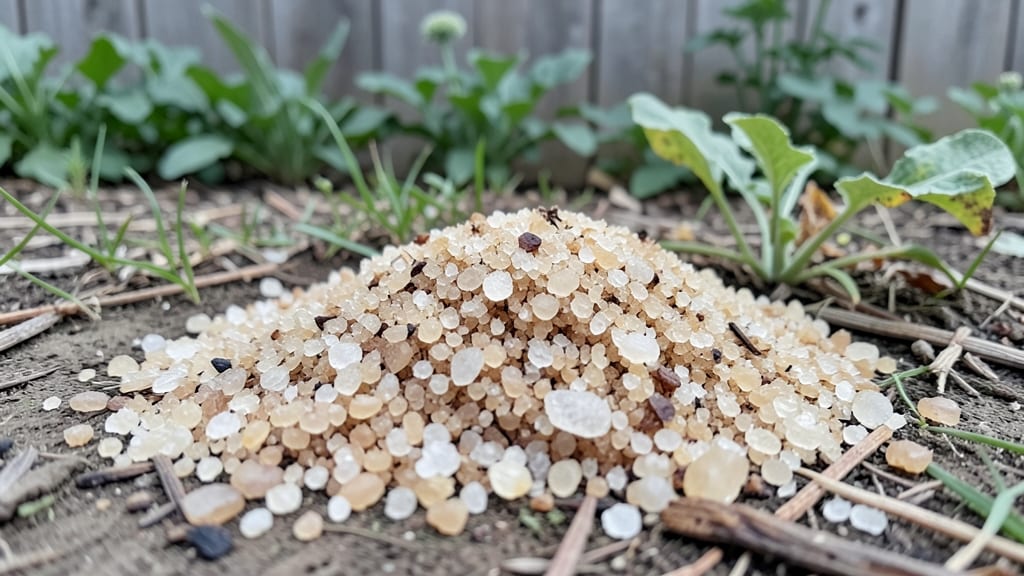
Sugar appearing on lawns is usually caused by ants secreting honeydew—a sticky, sugary substance—as they feed on plant sap. This residue hardens over time, creating white or brownish deposits that can smother grass and encourage mold growth. Addressing it promptly with water and vinegar solutions prevents long-term damage to your lawn.
This sticky residue isn't just unsightly—it's a sign your lawn's ecosystem is out of balance. 🌱 Ants produce honeydew when they farm aphids or other sap-sucking insects, leaving behind a sugary film that crystallizes on grass blades.
The problem worsens in humid conditions, where mold spores latch onto the sticky surface, creating black sooty mold that blocks sunlight from reaching grass roots. Without intervention, this cycle can weaken your lawn over time, making it more susceptible to disease and browning.
What's interesting is how quickly this problem can escalate. A single ant colony can produce gallons of honeydew per season, turning your once-lush lawn into a sticky mess. The good news? You can break this cycle with simple solutions like targeted ant control and regular lawn maintenance.
Understanding the root cause—literally—helps you take proactive steps before the sugar buildup becomes a full-blown infestation.
💡 In This Article
- How Ants Cause Lawn Sugar Buildup
- Natural Ways to Remove and Prevent Lawn Sugar
How ants cause lawn sugar buildup
Here's what's actually happening beneath your lawn's surface: ants don't produce honeydew directly—they farm it. These tiny farmers cultivate aphids, which pierce plant stems to extract sap. As the aphids feed, they excrete excess sugars through their rear ends in a process called honeydew secretion.
A single aphid can produce up to 100 micrograms of honeydew per day, and with thousands of aphids in a colony, that adds up to visible sticky deposits on grass blades.
The sugar crystallizes because of environmental conditions. When temperatures drop below 75°F at night or humidity rises above 70%, the honeydew's water content evaporates, leaving behind dry, white or brownish sugar crystals.
This transformation happens fastest in shaded areas where grass stays moist longer. 🌡️ The stickiness also makes it a perfect breeding ground for sooty mold—a black fungal growth that coats blades like varnish, blocking sunlight and suffocating grass.
What most people don't realize is how this creates a feedback loop. The sugar attracts more ants, which bring more aphids, creating a self-sustaining cycle. In extreme cases, this can lead to 20-30% reduction in grass photosynthesis within just 2-3 weeks of heavy infestation.
The mold doesn't just look bad—it physically blocks 40-50% of sunlight from reaching the grass below, starving it of energy.
The biological process involves three key players: the aphid (sugar producer), the ant (sugar protector), and the sooty mold (sugar consumer). The ants actually stroke the aphids with their antennae to stimulate more honeydew production—a behavior called trophallaxis.
This mutualistic relationship explains why ant colonies grow larger when aphid populations thrive, creating more sugar deposits on your lawn.
Temperature plays a crucial role in how quickly this becomes visible. In 80-90°F conditions with 60% humidity, you might see sugar deposits within 3-5 days of heavy aphid activity. The higher temperatures accelerate the evaporation process, while humidity keeps the sugar in a sticky state longer.
This is why late summer and early fall often see the worst outbreaks—perfect conditions for both ant activity and sugar crystallization.
This isn't just about aesthetics—it's a biological arms race. The sugar attracts not just ants and mold, but also wasps, flies, and even some beetles that feed on the fungal growth. Each new species adds another layer of damage to your lawn's ecosystem.
The good news? Understanding this process helps you target interventions at the right stage—whether that's breaking the ant-aphid relationship or preventing the mold from taking hold.