
Lawn
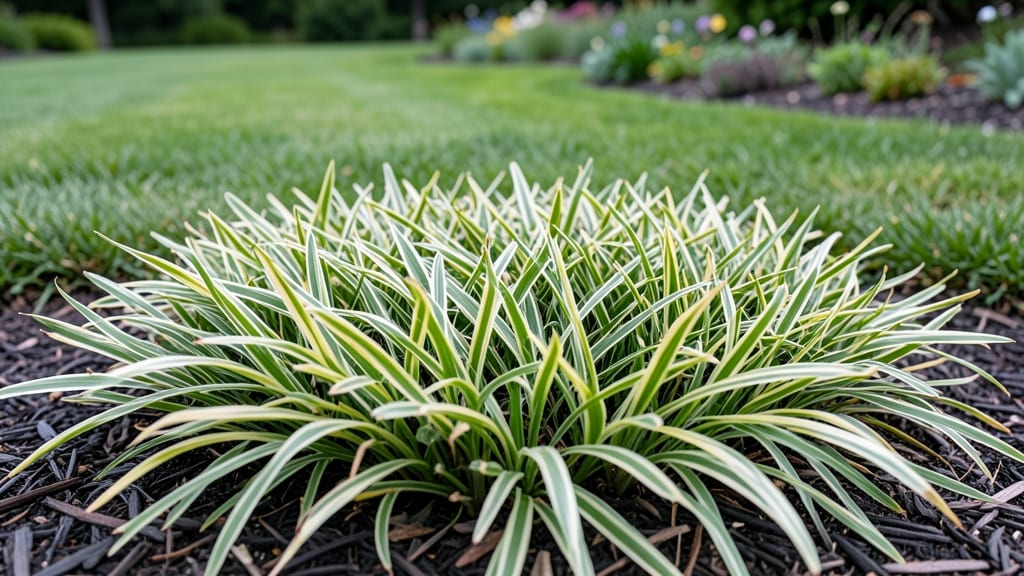
Your lawn could look like an artist's masterpiece instead of a sea of green. ✨ Variegated lawn grass transforms ordinary turf into a striking, striped landscape that turns heads—and requires less water and mowing than traditional grass.
The secret lies in its bold, natural patterns that thrive with minimal effort once you get the setup right.
This isn't your grandfather's lawn. Varieties like 'Sun & Shade' striped fescue or 'Zebra Grass' grow in bold white-and-green stripes that stay vibrant with 4-6 hours of sun daily and 1-1.5 inches of water per week.
The soil prep is simple: loosen the ground, mix in compost, and level it—no fancy amendments needed. Most homeowners see those signature stripes emerge within 3-4 weeks of planting.
Mowing becomes an art form—set your blade to 2.5-3 inches to preserve the stripes and encourage dense growth. The real magic? This grass stays 30-50% greener than regular turf in droughts and needs fewer fertilizers because it grows slower.
Neighbors will ask how you did it; you'll just smile and say, "Less grass, more style."
Perfect for modern landscapes, pollinator gardens, or anywhere you want low-maintenance drama. The only catch? Avoid heavy foot traffic—those stripes are delicate but stunning. Ready to ditch the boring green?
📚 In This Guide
- What you need
- Instructions
- Tips and common mistakes
- Wrapping up and next steps
What you need
- ● Variegated lawn grass seed: Choose a high-quality blend (e.g., Zoysia japonica 'Variegata' or St. Augustine 'Floratam Variegated'). Quantity: 10–20 lbs per 1,000 sq. ft., depending on coverage goals.
- ● Lawn soil test kit: Ensures optimal pH (6.0–7.0) and nutrient levels for striped grass.
- ● Garden rake: Heavy-duty (8–12 teeth) for aerating and leveling soil.
- ○ Broadcast spreader: For even seed distribution (optional: handheld or tow-behind models).
- ● Lawn roller (100–150 lbs): Lightweight to press seed into soil without compacting.
- ○ Organic compost or topsoil: 2–3 inches for nutrient-rich base (optional: mix with slow-release fertilizer like 10-10-10).
- ● Watering system: Hose with adjustable nozzle: For gentle watering (e.g., showerhead setting).
- ○ Drip irrigation kit (optional): For consistent moisture post-planting.
- ● Mulch or straw: Light layer (¼ inch) to retain moisture and protect seeds.
- ● Soil conditioners: Gypsum (for clay soil) or perlite (for sandy soil).
- ● Pre-emergent herbicide: Apply after seeding to prevent weeds (e.g., corn gluten meal).
- ● Lawn edging tools: For crisp borders if designing patterns.
- ● Garden gloves & knee pads: Comfort is key for larger projects!
- ● Seed germination blanket: Biodegradable for cold climates.
Step-by-Step guide to establishing a stunning variegated lawn
Here's how I transform ordinary lawns into eye-catching striped masterpieces—no green carpet, just bold patterns.
🌱 Step 1: Select and Prepare Your Grass Varieties
Choose variegated grass blends like 'Striped Grass' (Zebrina pendula) or 'Silver Stripe' fescue that naturally develop contrasting stripes. I always buy certified disease-free plugs rather than seed—it ensures uniform growth patterns. For a 4,000 sq ft lawn, you'll need about 1,200 sq ft of plugs spaced 12 inches apart in a checkerboard pattern.
Test your soil pH before planting—variegated grasses thrive in 6.0-7.0 range. If your soil tests acidic, amend with lime at 10 lbs per 1,000 sq ft. I like to work the soil 6-8 inches deep to loosen compacted layers, which helps roots establish faster. The goal is fluffy, aerated soil that won't suffocate those delicate striped blades.
🪴 Step 2: Plant Plugs in Strategic Patterns
Lay out your plugs in a staggered grid pattern—this creates the most natural-looking stripes. For a classic look, plant two rows of variegated grass for every one row of regular grass. I mark my layout with stakes and string to maintain perfect spacing, especially when working with larger areas.
Dig planting holes twice as wide as the root ball but only as deep as the container. Gently remove each plug and tease the roots outward slightly before placing it in the hole. Backfill with native soil, firming lightly around the edges. Water immediately after planting to eliminate air pockets—this prevents transplant shock.
☀️ Step 3: Maintain Consistent Light and Water
Variegated grasses need full sun (6+ hours daily) to maintain their striking patterns. If your lawn gets afternoon shade, choose shade-tolerant varieties like 'Shadow Stripe' fescue. I water deeply 2-3 times per week rather than daily shallow watering—this encourages deep root growth that keeps stripes vibrant.
Check moisture by digging 2 inches deep—soil should feel damp but not soggy. The first month is critical: keep the area consistently moist to help roots establish. I set a reminder to check irrigation weekly, especially during heatwaves, because variegated grasses show stress faster than solid green varieties.
✂️ Step 4: Mow and Fertilize for Pattern Retention
Wait 4-6 weeks before first mowing—let the grass establish strong roots. Then mow high (3-4 inches) to protect the striped blades. I use a sharp mulching mower set to its highest setting, which chops clippings into fine pieces that return nutrients to the soil. Never remove more than one-third of the blade height at once, or you'll stress the plants.
Fertilize twice yearly with a slow-release, low-nitrogen formula (10-0-10 ratio). Over-fertilizing causes rapid green growth that washes out the variegation. I apply fertilizer after mowing in early spring and late summer, always watering in immediately to activate the granules.
🌿 Step 5: Monitor and Adjust for Long-Term Beauty
Watch for uneven growth patterns—this often means inconsistent watering or soil compaction. I aerate my lawn annually in fall using a core aerator to prevent soil compaction that smothers the striped blades. For extra definition, I occasionally edge with a string trimmer to maintain crisp borders between grass types.
If stripes fade, it's usually due to nutrient imbalance or shade creep. I take soil samples every 2-3 years to check pH and adjust as needed. The key is patience—full variegation often takes 2-3 growing seasons to develop, but the wait is worth the dramatic contrast against traditional lawns.
Tips & tricks for perfect variegated lawn grass
Here's what nobody tells you about creating that showstopping striped lawn—details that separate eye-catching patterns from ordinary turf.
Pattern Precision: When laying out your plugs in Step 2, use a laser level to ensure perfectly straight rows. I've learned this the hard way—crooked patterns look amateurish no matter how good your grass is. For extra precision, snap chalk lines between stakes before planting. The staggered grid pattern should create diagonal stripes that catch the eye from any angle.
Soil Science Matters: The 6.0-7.0 pH range in Step 1 isn't just a suggestion—it's critical for maintaining those vibrant stripes. I've seen variegated grass lose its pattern when soil pH drifts outside this range. Test your soil before planting, and if you need to amend, spread lime evenly and work it into the top 4 inches of soil. Don't just sprinkle it on top—those striped blades need proper nutrition at the root level.
Watering Wisdom: The deep watering routine in Step 3 is non-negotiable for stripe retention. I've noticed that many people water too lightly, which encourages shallow root growth and washes out the variegation. Use a moisture meter to check that your water penetrates 6 inches deep after each watering session. Early morning is the best time to water—this prevents fungal issues that can make stripes appear dull.
Mowing Mastery: That 3-4 inch height recommendation in Step 4 isn't just about length—it's about protecting the delicate striped blades. I've ruined several lawns by mowing too short too soon. Wait the full 4-6 weeks before first mowing, and always use a sharp blade. Dull mower blades tear grass rather than cleanly cut it, which can damage the variegation pattern. Consider investing in a reel mower for even more precise cuts that enhance the stripes.
Pro Tips for Variegated Lawn Grass
- Here's what nobody tells you about creating that showstopping striped lawn—details that separate eye-catching patterns from ordinary turf.
- Pattern Precision: When laying out your plugs in Step 2, use a laser level to ensure perfectly straight rows.
- Soil Science Matters: The 6.0-7.0 pH range in Step 1 isn't just a suggestion—it's critical for maintaining those vibrant stripes.
Frequently asked questions
Got questions about keeping your variegated lawn grass looking its best? Here are some of the most common concerns—plus simple solutions to keep your striped lawn stunning year-round!
Is variegated grass harder to maintain than regular turf?
Not necessarily! While it has unique patterns, variegated grass follows the same care basics as standard turf—mowing, watering, and fertilizing. The key difference is precision: Avoid over-trimming the stripes by adjusting your mower height slightly higher (around 3–4 inches) to preserve the variegation. Pro tip: Use a sharp mower blade to prevent tearing the blades!
How long does it take for variegated grass to show its stripes?
Patience is key! Newly seeded variegated grass typically shows subtle stripes in 4–6 weeks, with full color contrast developing in 8–12 weeks. If you’re overseeding, expect visible patterns within 6–8 weeks under ideal conditions (sunlight, moisture, and proper soil prep). Cold weather? Stripes may fade but return once temperatures rise.
Does variegated grass need more water than regular grass?
Yes—but not much more! The white or light-green stripes (often Fescue or Bluegrass varieties) are less drought-tolerant than dark green blades. Water deeply 2–3 times per week (early morning) to keep roots hydrated, but avoid soggy soil. Test your soil: Stick a screwdriver in—if it goes in easily, you’re golden!
Can I mix variegated grass with other types for a unique look?
Mixing variegated grass with clover, moss, or wheatgrass creates a textured, eco-friendly lawn. Just ensure all varieties thrive in your climate. For example, pair Variegated Fescue (cool-season) with Buffalo Grass (drought-resistant) in warmer zones. Pro tip: Stagger planting dates to blend growth patterns seamlessly!
Why are my variegated stripes turning brown or patchy?
Brown patches usually signal disease, pests, or stress. Check for:
- Fungal issues: Overwatering or humidity? Try a fungicide or improve airflow by mowing higher.
- Grubs/weevils: Inspect for larvae—treat with beneficial nematodes or milky spore.
- Shade stress: Variegated grass needs 4–6 hours of sun daily. Thin trees or relocate to sunnier spots.
Bonus: Can I dye variegated grass for extra pop?
While dyeing isn’t recommended (it can harm plants), you can enhance stripes naturally! Sprinkle white sand or crushed seashells over light areas for contrast. For a temporary boost, use grass-safe, UV-protectant sprays (like those for athletic fields) to brighten colors—just reapply every 4–6 weeks.
Wrapping up and next steps
Transforming your lawn into a variegated masterpiece isn’t just about aesthetics—it’s about creating a vibrant, low-maintenance space that turns heads! 🌿 Whether you’re drawn to the bold stripes of Zebra Grass or the delicate patterns of Variegated Blue Fescue, the key is choosing the right grass, preparing your soil, and giving it the care it deserves.
With patience and the right techniques, your lawn will stand out as a living work of art.
Ready to take the next step? Start small—plant a few patches or a border to test what thrives in your climate. Once you’ve mastered the basics, expand your design with contrasting textures and colors for an even more striking effect.
Your future lawn will be the envy of the neighborhood! 🌟