
Lawn
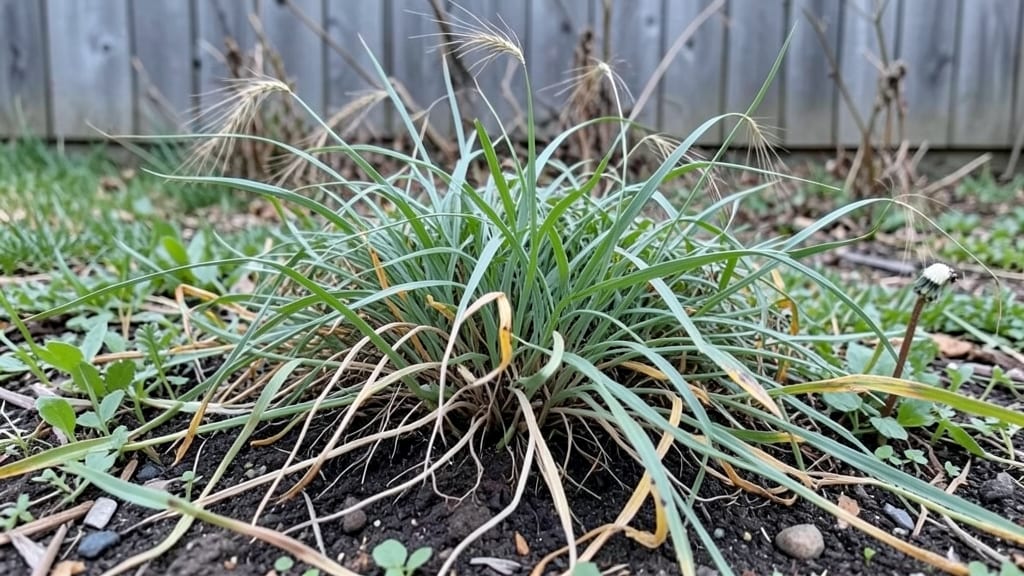
Couch grass is a hardy, invasive perennial weed with long, creeping rhizomes and narrow, ribbed leaves, often mistaken for ornamental grass but highly disruptive in lawns and gardens. Its deep root system makes it difficult to eradicate without persistent control methods.
Couch grass, also known as digitaria or crabgrass, thrives in lawns and gardens because of its aggressive growth habits and sprawling underground stems. 🌱 The rhizomes spread rapidly, choking out desirable plants and leaving behind unsightly patches that resist traditional mowing.
Unlike decorative grasses, this weed adapts quickly to various soil types and climates, making it a persistent nuisance for homeowners and landscapers alike.
What sets couch grass apart is its ability to regenerate from even small root fragments left behind during removal attempts. This resilience means spot treatments often fail—you’ll need a combination of manual extraction, targeted herbicides, or organic solutions like boiling water or vinegar applications to break its cycle.
The key is catching it early before it establishes a dense network underground.
💡 In This Article
- How to Identify Couch Grass in Lawns and Gardens
- Effective Couch Grass Removal Techniques for Home Gardeners
How to identify couch grass in lawns and gardens
Couch grass, scientifically known as Digitaria ischaemum, stands out with its distinctive ribbed, boat-shaped leaves that grow in clusters from a central stem. These leaves typically measure 3-10 inches long and 1/16-1/8 inch wide, with a rough texture that feels slightly coarse to the touch.
The key visual clue is how the leaves grow in a fan-like pattern from the base, creating a dense, tufted appearance that contrasts with the more uniform spread of ornamental grasses.
The seed heads are another critical identifier—couch grass produces open, feathery panicles that appear in late summer to early fall, reaching 4-12 inches tall.
These seed clusters resemble tiny bottlebrushes and turn a pale golden color as they mature, often catching sunlight in a way that makes them visibly distinct against green lawns.
Unlike Bermuda grass, which has a prostrate growth habit and forms dense mats, couch grass grows more upright, with stems that can spread up to 2 feet in diameter if left unchecked.
What most people overlook is the rhizome structure—couch grass spreads via underground stems that grow horizontally just below the soil surface. These rhizomes can extend 12-18 inches deep and produce new shoots at nodes every 6-12 inches, creating a network that regenerates even after mowing or partial removal.
This underground system is why it outcompetes desirable plants, forming thick patches that resist traditional lawn care methods. 🌱
Seasonal growth patterns also help distinguish it: couch grass germinates in early spring when soil temperatures reach 55-60°F, thriving in full sun but tolerating partial shade. By late summer, its growth slows due to heat stress, but the rhizomes remain active, ensuring survival through drought.
In contrast, quackgrass (another invasive weed) has broader leaves and produces knee-high seed heads in early summer, while Bermuda grass stays low to the ground with a fine-textured, carpet-like appearance.
Habitat preferences offer another clue—couch grass favors disturbed soils, such as construction sites, sidewalks, and poorly maintained lawns. It’s often found along driveways or near curbs where grass is thin, as it exploits gaps left by foot traffic or erosion.
The combination of its ribbed leaves, feathery seed heads, and aggressive rhizome spread makes it unmistakable once you know what to look for. A simple test: pull up a tuft—if you find a sprawling root system with multiple nodes, it’s likely couch grass.
For a quick field comparison, hold a suspect plant next to a known sample of Bermuda grass. Couch grass leaves will feel stiffer and more rigid, while Bermuda’s blades are softer and more flexible.
The seed heads also differ—Bermuda’s are denser and shorter, rarely exceeding 6 inches, whereas couch grass’s panicles are airy and elongated. These distinctions are critical for accurate identification before choosing removal methods. ✨