
Lawn
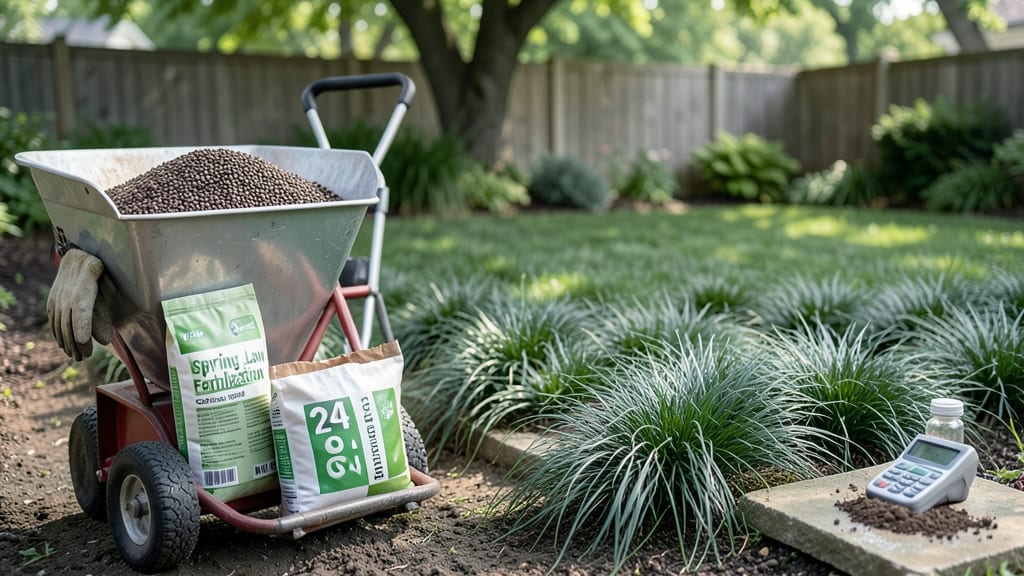
The best time to fertilize lawn in spring is when soil temperatures hit 40°F–55°F for cool-season grasses like fescue or Kentucky bluegrass 🌱 — a window most homeowners miss by weeks.
Spring is your lawn’s second chance to thrive—but timing your fertilizer application wrong can waste money and harm grass growth. The secret? Soil temperature, not just the calendar.
In USDA Zone 6, that means waiting until mid-April for most regions, after the last frost but before the grass grows too aggressively. Too early, and nutrients get washed away; too late, and you miss the early growth boost.
Below, I’ll show you how to test your soil, adjust for your grass type, and avoid the five mistakes that ruin spring fertilization—so you get a lush lawn without the guesswork.

Best soil temperature for spring lawn fertilization (exact guidelines)
Spring fertilization is all about timing, and the soil temperature is your most reliable guide—not the calendar. Cool-season grasses like Kentucky bluegrass and fescue need 40°F–55°F soil to activate root growth, while warm-season types like Bermuda or Zoysia wait until 60°F+.
Get it wrong, and you’ll either waste fertilizer or stress your lawn.
Why? Because grass roots only absorb nutrients when soil is warm enough to support microbial activity. Too cold, and your fertilizer just sits there like a wasted investment.
Too hot, and you risk burning tender spring shoots. Let’s break down the exact ranges and how to test your soil before applying.
🌱 PRO TIP: Use a soil thermometer (available for $10–$20) to check temps at 4-inch depth—that’s where roots are most active. Morning is best for reading accuracy.
For cool-season grasses, aim for 40°F–55°F soil—this triggers root growth without overwhelming new shoots. If your soil is colder, wait. If it’s warmer, you’ve missed the window. Warm-season grasses like Bermuda or Zoysia need 60°F+ to avoid fertilizer burn during their dormant phase.
Regional tweaks matter: In Zone 4, wait until May for cool-season grasses, while Zone 7 gardeners can fertilize as early as March. Use a soil thermometer for accuracy—don’t guess based on air temperature. Pro tip: Morning readings are most reliable since soil cools overnight.
If your soil is too cold, your fertilizer won’t activate. If it’s too warm, you risk burning grass blades. Test your soil’s pH (6.0–7.0 ideal) too—low pH locks out nutrients. Use a lawn calculator to adjust rates if your soil is acidic or alkaline.
🌡️ ACTION STEPS:
- Check soil temp at 4-inch depth (use a soil thermometer).
- Wait for 40°F–55°F (cool-season) or 60°F+ (warm-season).
- Aerate 2–3 days before fertilizing to improve absorption.
- Apply in early morning to avoid evaporation and burn.
Skipping this step? You’re gambling with wasted fertilizer and stunted growth. A $20 thermometer saves you from $100+ fertilizer mistakes. Plus, healthy roots mean drought-resistant grass all summer.
Need a backup? Watch for grass growth signs: If shoots are 2–3 inches tall and dark green, it’s time. No growth? Wait another week. Soil temp > grass activity—trust the thermometer, not the calendar.
Step-by-step spring fertilizer schedule by grass type (cool vs. warm season)
Not all grass is created equal—and neither are their spring fertilizer needs. Cool-season grasses like Kentucky bluegrass and fescue wake up early, while warm-season types like Bermuda and Zoysia prefer waiting for heat.
Misjudging their schedules can lead to weak growth or wasted fertilizer. Let’s break down the exact steps for each type, including when to apply pre-emergent herbicides and slow-release fertilizers.
The key difference? Cool-season grasses need feeding when soil temps hit 40°F–55°F, while warm-season grasses wait until soil reaches 60°F+. For most U.S. regions, this means early spring for cool-season types and late spring for warm-season.
Let’s dive into your grass type’s ideal timeline, including post-application care to lock in results.
For cool-season grasses, I recommend a two-step approach: Start with a light application in early spring (March) to jumpstart growth, then follow up with a higher-nitrogen feed in April.
This mimics natural growth cycles—think of it as giving your grass a spring vitamin boost before summer stress. Always use a slow-release formula to avoid nitrogen runoff, which harms local waterways.
Warm-season grasses like Bermuda and Zoysia are late bloomers, so hold off until soil warms to 60°F+. Apply pre-emergent herbicide in late spring (May) to block weeds, then fertilize in June with a balanced NPK ratio.
Pro tip: Mow high (3–4 inches) after fertilizing to retain moisture and shade out weeds. Avoid fertilizing in peak summer heat, as it can stress the grass.
Post-application care is just as critical as timing. After fertilizing, water deeply 3 times within 48 hours to activate nutrients. For cool-season grasses, overseed bare spots in early spring to fill gaps.
Warm-season grasses benefit from light mowing (never remove more than 1/3 of blade height) to encourage dense growth. Finally, test soil pH every 2 years—ideal ranges are 6.0–7.0 for most grasses, but Bermuda prefers 5.5–6.5.
One common mistake? Applying too much nitrogen too soon. This can lead to fungal growth or burned grass. Stick to the 1 lb per 100 sqft rule and split applications if your lawn is large.
And remember: Fall fertilization (early September) is just as important for cool-season grasses—it builds roots for winter resilience.
🌱 Ready to fertilize? Grab your soil thermometer, pick your grass type, and follow the schedule above. Your lawn will thank you with lush, vibrant growth all season long!