
Lawn
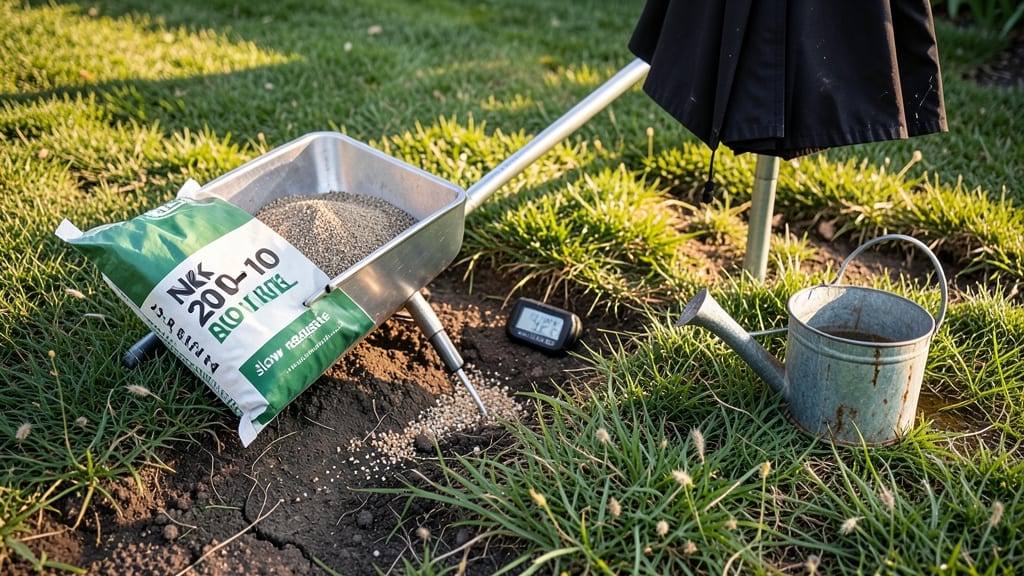
It's too hot to fertilize lawn when temperatures exceed 85°F, as this causes stress to grass roots and reduces nutrient absorption. Stop fertilizing when daytime highs consistently hit 90°F or higher to prevent heat shock and lawn damage.
When temperatures climb above 85°F, grass plants go into survival mode, slowing down growth and shutting down nutrient uptake to conserve energy. 🌡️ This is why fertilizing in extreme heat can actually harm your lawn—what should be nourishment becomes a stressor.
The soil itself gets hotter, accelerating microbial activity that can burn roots when fertilizer is applied. I've seen many lawns suffer from brown patches after summer fertilizing, which is why I always wait until early morning or late evening to apply anything when temps are borderline.
For best results, aim for 60-85°F daytime temperatures when fertilizing, as this gives grass the ideal conditions to absorb nutrients without stress. Cool-season grasses like Kentucky bluegrass need even cooler conditions, while warm-season grasses like Bermuda can handle slightly higher temps—but never push it past 90°F.
Slow-release fertilizers can help if you must fertilize in warm weather, as they minimize the risk of burns while still providing nutrients over time.
💡 In This Article
- How Heat Affects Lawn Fertilizer Absorption and Grass Health
- Best Fertilization Times for Summer Lawn Care
How heat affects lawn fertilizer absorption and grass health
When temperatures climb above 85°F, grass plants trigger a survival response called "heat stress," where their metabolic processes slow dramatically. This causes roots to shrink and cell membranes to stiffen, making it nearly impossible for them to absorb water or nutrients—even from well-intentioned fertilizer applications.
The problem worsens because high heat accelerates soil microbial activity, causing fertilizer salts to concentrate near root zones and essentially "burn" tender root tips. 🔥
Scientifically, this occurs because grass roots rely on active transport mechanisms to uptake nutrients like nitrogen, phosphorus, and potassium. At 90°F+, these transport proteins denature, shutting down nutrient absorption while simultaneously increasing respiration rates.
This creates a vicious cycle: the grass tries to burn more energy to survive, but has fewer resources available. Studies show that lawns fertilized during heatwaves can experience up to 40% reduction in nutrient uptake efficiency compared to cooler conditions.
The visual signs of this stress appear within 24-48 hours: grass blades turn yellow at the tips, then brown patches form in high-traffic areas where roots are most vulnerable. What looks like drought damage is actually fertilizer burn disguised as water stress.
The irony? You're trying to feed your lawn, but the heat is making it reject the nutrients entirely. Even organic fertilizers can cause this problem when applied during peak afternoon heat.
Soil temperature plays an equally critical role. When surface temps exceed 80°F, the top 2-3 inches of soil—where most grass roots reside—can reach 95°F+, creating a thermal barrier that prevents nutrient penetration.
This is why early morning or late evening applications (when soil temps are 75°F or below) are far more effective. The cooler temperatures allow roots to remain active and absorb nutrients before the day's heat sets in.
Different grass types react uniquely to heat stress. Cool-season grasses like Kentucky bluegrass and fescue go dormant at 85°F, while warm-season grasses like Bermuda and Zoysia can tolerate up to 95°F but still suffer from fertilizer burns.
The key difference lies in their root depth: shallow-rooted cool-season grasses are more vulnerable to heat-induced nutrient blockages than deep-rooted warm-season varieties. This explains why southern lawns often look healthier in summer—they're adapted to the heat, but still need proper timing for fertilization.
What most people don't realize is that even slow-release fertilizers have limitations in extreme heat. While they reduce immediate burn risks, the microbial breakdown of granules still generates heat that can stress roots.
The safest approach is to wait until temperatures drop below 85°F consistently for at least 5-7 days, giving your lawn time to recover its natural nutrient absorption capacity. This patience pays off with greener, more resilient grass in the long run. ✨