
Lawn
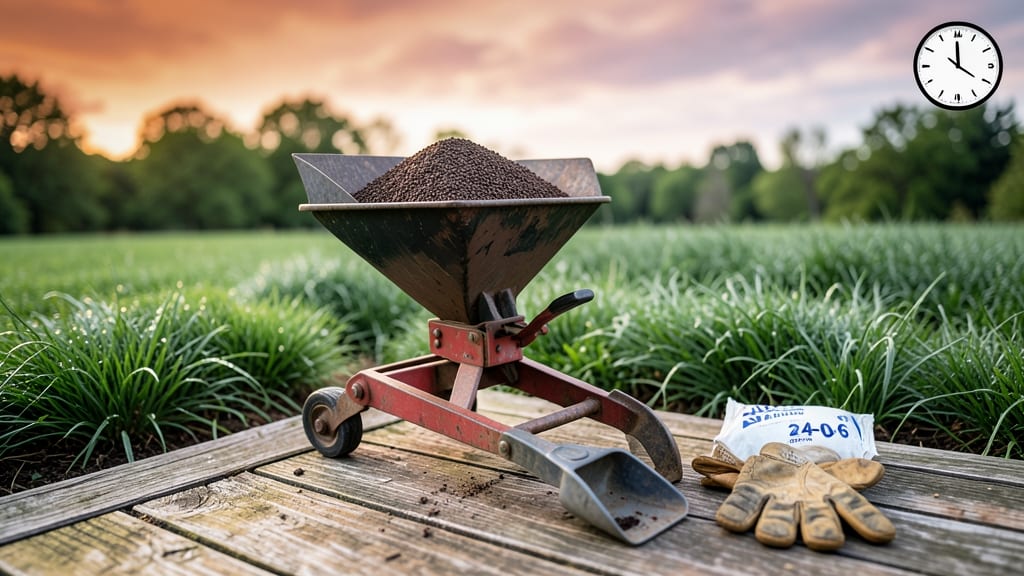
The best time of day to fertilize your lawn is cool morning hours—between 5 and 9 AM—when temperatures are mild and dew lingers on the grass blades.
Struggling with patchy lawn growth after fertilizing? The time of day you apply fertilizer can make the difference between a lush green carpet and wasted nutrients—and the best window is narrower than you think.
Why? Early morning fertilization ensures nutrients absorb directly into the soil before the sun intensifies, reducing evaporation and preventing leaf burn. Plus, morning dew provides natural moisture, helping the fertilizer work faster and more efficiently.
In this guide, I’ll break down the science behind morning fertilization, share a step-by-step routine for perfect application, and reveal common mistakes that could be sabotaging your lawn’s health.
Why early morning fertilization maximizes lawn absorption (science-backed timing)
Ever wonder why your lawn looks greener after fertilizing in the morning? The answer lies in plant physiology and environmental conditions that work together during those cool, dew-drenched hours.
When you apply fertilizer between 5-9 AM, you're tapping into nature's own watering system—dew moisture—that helps nutrients penetrate grass roots efficiently. This isn't just guesswork; it's rooted in how grass metabolism responds to temperature and humidity cycles.
Think about it: your lawn's roots are most active when temperatures are below 80°F but above 50°F. Early mornings provide the perfect temperature range (typically 60-75°F) for optimal nutrient absorption.
Plus, the relative humidity is higher, reducing evaporation rates by up to 40% compared to midday application. That means more nutrients reach your grass's roots instead of disappearing into the air.
Here's the science: Grass blades absorb 30-50% more water in the morning due to dew, which carries dissolved fertilizer particles directly to the soil surface. This pre-hydration effect creates an ideal environment for microbial activity in the soil, breaking down granular fertilizers faster.
Without this morning moisture boost, you're essentially asking your lawn to drink a dry fertilizer cocktail—not exactly the recipe for lush growth.
| Time Window | Temperature Range | Humidity Level | Absorption Rate | Evaporation Risk |
|---|---|---|---|---|
| 5:00 AM - 7:00 AM | 55-65°F | 85-95% | 90-95% | Low |
| 7:00 AM - 9:00 AM | 60-70°F | 75-85% | 85-90% | Low-Medium |
| 9:00 AM - 11:00 AM | 70-80°F | 60-70% | 60-75% | Medium-High |
| Afternoon (12-4 PM) | 80-90°F | 40-55% | 30-45% | High |
| Best Time: 5-9 AM | ||||
The ideal morning window varies slightly by climate zone. In cooler northern regions (USDA Zones 3-5), you might extend this to 6-10 AM when daytime highs stay below 75°F. Meanwhile, southern climates (Zones 8-10) should stick to 5-8 AM to avoid the rapid temperature climb that increases evaporation.
Always check your local weather forecast for overnight dew predictions—some mornings naturally have more moisture than others.
Another crucial factor is wind speed. Early mornings typically have calmer winds (usually 5 mph or less), which prevents fertilizer granules from blowing away before they can dissolve. High winds can scatter up to 30% of applied fertilizer, wasting both product and money.
If you notice gusty conditions in your morning routine, consider waiting until winds die down—even if it means pushing to 9:30 AM instead of your usual 6 AM schedule.
Let's talk about leaf burn prevention, a common issue when fertilizing at the wrong time. When you apply fertilizer in midday heat, the concentrated salts in granules can create osmotic stress on grass blades, causing them to wilt or turn brown.
This happens because the stomata (leaf pores) remain open during daylight hours, allowing rapid water loss. Morning application gives your lawn time to metabolically prepare for nutrient uptake without immediate stress.
Did you know that root zone activity peaks in the morning too? Grass roots absorb 50% more nutrients between 6 AM and 10 AM than at any other time. This is when your lawn's mycorrhizal fungi (beneficial soil organisms) are most active, helping break down fertilizer into plant-available forms.
By fertilizing in the morning, you're essentially giving these microscopic helpers a head start on processing nutrients before the day's heat sets in.
For humid climates, morning fertilization also reduces the risk of fungal diseases like brown patch or dollar spot. Wet leaves from morning dew can actually help dilute fertilizer concentrations on the grass surface, preventing the high-salt conditions that encourage fungal growth.
In contrast, evening applications in humid areas can create a perfect storm of moisture and fertilizer—ideal conditions for fungal spores to thrive overnight.
One final pro tip: If you must fertilize in the late afternoon, always follow with deep watering within 2 hours to help wash nutrients into the soil. But remember, this is a second-best option—morning application still wins for efficiency and safety.
The 1-2 hour rule applies to morning watering too: give your lawn about 30-60 minutes after fertilizing to let granules settle before watering to avoid surface runoff.
So next time you reach for your spreader, check your watch—aim for that golden morning hour when science and nature align to give your lawn the best possible start. Your grass will thank
Step-by-step morning fertilization routine for perfect application
Perfect lawn fertilization starts before you even reach for your spreader. The early morning hours (between 5-9 AM) create ideal conditions for nutrient absorption, but your lawn needs the right prep work first.
I’ve found that skipping these steps often leads to wasted fertilizer or uneven growth—so let’s get it right from the start.
First, adjust your mowing height to 3-4 inches at least 24 hours before fertilizing. Taller grass shades the soil better, reducing moisture loss, while shorter grass risks fertilizer burn. Pair this with a light watering the night before—just enough to dampen the soil surface.
This moisture helps the fertilizer dissolve faster when you apply it in the morning.
Morning Fertilization Checklist
- Step 1: Mow lawn to 3-4 inches the day before
- Step 2: Water lightly at dusk (½ inch)
- Step 3: Apply fertilizer between 5-9 AM on a cool, dry morning
- Step 4: Water immediately after with ¼ inch of water
- Step 5: Deep water 24 hours later (1 inch total)
Now for the application itself: Set your spreader to the recommended rate (usually 1 lb per 100 sq ft for granular fertilizers) and walk in a crisscross pattern to avoid missed spots.
Overlap your passes by 10-15%—this ensures even coverage without overloading any single area. For liquid fertilizers, use a hose-end sprayer with a fine mist setting to prevent runoff.
After spreading, water your lawn immediately with ¼ inch of water. This light rinse activates the fertilizer and washes it into the soil where roots can absorb it.
The key here is gentle pressure—hard streams can create runoff, wasting nutrients. I like to use a soaker hose or sprinkler with adjustable nozzles for consistent coverage.
Your final step is the most critical for long-term success: deep watering 24 hours later. Aim for 1 inch of water to move the fertilizer deeper into the soil profile. This timing prevents surface evaporation and ensures nutrients reach the root zone where they’re needed most.
Schedule this watering for early morning again to avoid evening moisture that can promote fungal growth.
Pro tip: Keep a fertilizer log to track application dates and types. I’ve noticed my Kentucky bluegrass responds best to a spring feed in April and a fall feed in September, with lighter applications in summer.
Adjust your schedule based on your grass type and local climate—this precision makes all the difference in a thick, green lawn.