
Fertilization
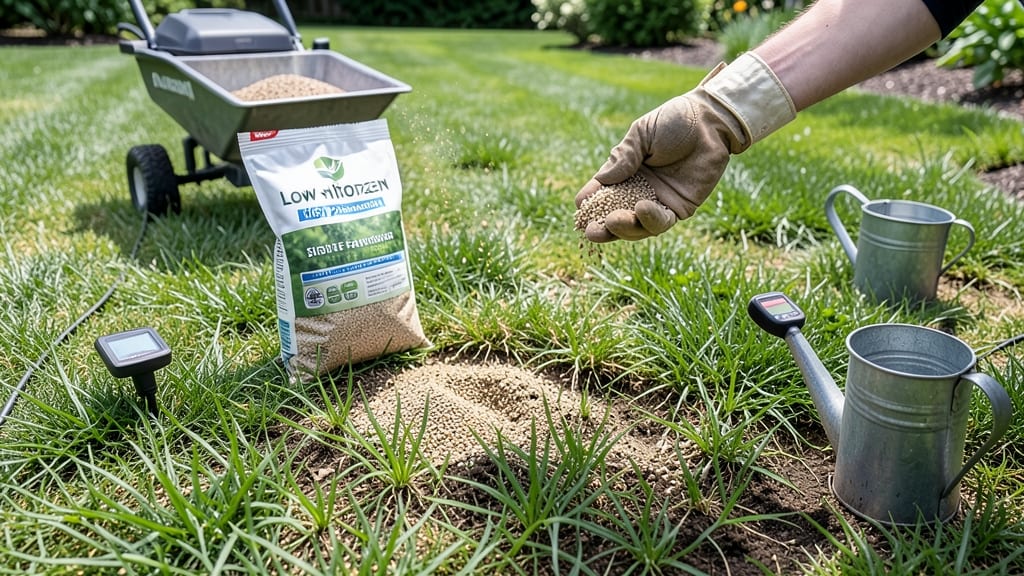
Fertilizing lawn after overseeding too soon can smother your new grass seedlings 🌱 and leave you with patchy, weak growth instead of the lush carpet you were hoping for.
You’ve just put in the effort to overseed—spreading seeds, covering them gently, and keeping them moist—but now you’re staring at that bag of fertilizer wondering, When is it safe to use it? The answer isn’t just a date on the calendar; it’s about giving those delicate roots the time they need to establish before they can handle extra nutrients.
Most gardeners make the mistake of rushing fertilizer, thinking more food means faster results. But new grass seedlings need a 6-8 week window without high-nitrogen feeds to avoid stunting their growth or even burning their tender leaves.
In fact, applying fertilizer too early is one of the fastest ways to turn your overseeding investment into a costly lesson.
Below, I’ll break down the exact timing—why the 6-8 week rule works, how to tell when your grass is ready, and what to do if you’ve already fertilized too soon. Spoiler: there’s still hope, but you’ll want to act fast.
The 6-8 week rule: why timing fertilizer after overseeding matters
When you overseed your lawn, those tiny grass seeds are like newborns—fragile and demanding just the right care. Rushing fertilizer can overwhelm them, while waiting too long means missed growth opportunities.
The 6-8 week rule exists for a reason: it aligns with how grass seedlings develop roots and compete for nutrients. Let’s break down why this window is non-negotiable for healthy, dense lawns.
Right after overseeding, seeds focus all their energy on germination and early root growth. During these first 4-6 weeks, seedlings develop a delicate root system that’s only 1-2 inches deep.
Applying fertilizer too soon delivers a nutrient shock that can burn tender roots or trigger excessive top growth at the expense of root strength. Think of it like giving a toddler a double espresso—it might seem like a boost, but it’s actually harmful.
The 6-8 week window allows seedlings to transition from germination phase (weeks 1-4) to root establishment phase (weeks 5-8). By week 6, roots typically reach 2-3 inches deep, and the grass has developed enough resilience to handle fertilizer without stress.
This timing also coincides with cooler fall temperatures in many regions, which slow down nutrient uptake and reduce burn risks.
Here’s the science behind it: Nitrogen, the primary nutrient in lawn fertilizers, stimulates rapid top growth. While that sounds great, it can create a nutrient competition between your existing lawn and new seedlings. If both are vying for the same nitrogen, the seedlings often lose.
The 6-8 week rule ensures your new grass has built a strong enough root system to compete effectively and absorb nutrients without stress.
Soil temperature plays a crucial role too. In cooler climates (USDA zones 3-6), fall overseeding benefits from 50-70°F soil temps, which slow nutrient uptake and prevent burn. Warmer climates (zones 7-10) may need to adjust to 60-80°F, but the principle remains: wait until roots are established before fertilizing.
Rushing it in heat can turn your lawn into a crispy, yellow mess overnight.
Another critical factor is seedling height. By week 6, new grass should be 2-3 inches tall with a dense, uniform stand. This height indicates the roots have grown enough to support fertilization.
If you fertilize before this stage, you risk fertilizer burn, where salt buildup in the soil damages cell walls, causing brown patches or stunted growth. It’s like giving a plant a sunburn—sudden and irreversible damage.
Let’s address the elephant in the room: What if I see bare spots and want to fix them fast? Patience is key. Those bare spots won’t fill overnight, but skipping the 6-8 week rule can set you back weeks or even kill new growth.
Instead, focus on consistent watering (1 inch per week) and light raking to ensure good seed-to-soil contact. The right timing now means a thicker, healthier lawn next spring.
Now that you understand the why, let’s talk how. If you’ve been waiting patiently and your new grass meets the 2-3 inch height and dense stand markers, it’s time to fertilize.
But here’s the catch: use a slow-release, low-nitrogen fertilizer (like 24-0-10) to avoid overstimulating growth. Think of it as a gentle wake-up call for your lawn, not a jolt of caffeine.
One common mistake is assuming starter fertilizer at seeding time replaces the 6-8 week rule. While starter fertilizer helps initial germination, it’s not a substitute for the root establishment phase. The nutrients in starter fertilizer are designed for seeds, not 2-inch-tall seedlings.
Skipping the recovery period means your lawn might look lush above ground but weak below—like a skyscraper with shallow foundations.
Pro tip: Test your soil before fertilizing. A simple pH test (aim for 6.0-7.0) and nutrient analysis can reveal if your lawn needs fertilizer at all. Some soils are already nutrient-rich, and adding fertilizer could do more harm than good. It’s like giving someone who just ate a feast another
Step-by-step fertilization timeline after overseeding (with visual guide)
After overseeding, your lawn needs time to establish strong roots before fertilization. The 6-8 week rule ensures new seedlings aren't overwhelmed by nutrients. During these weeks, focus on watering consistency and monitoring growth rather than feeding.
Skipping this step can lead to fertilizer burn or stunted growth, leaving your lawn patchy and weak.
Each week brings critical changes in your grass's development. By week 4, seedlings should be 1-2 inches tall with roots reaching 1-2 inches deep.
This is when you’ll start preparing your soil for fertilization. The key is balancing nutrient timing with seedling resilience to avoid shocking tender new growth.
- Grass height: ½–1 inch
- Root depth: ½ inch
- Focus: Keep soil moist (1 inch/week)
- Avoid: Fertilizer or heavy foot traffic
- Grass height: 1–2 inches
- Root depth: 1–2 inches
- Task: Test soil pH (ideal: 6.0–7.0)
- Add: Light compost if needed
- Grass height: 2–3 inches
- Root depth: 2–3 inches
- Use: Slow-release 24-0-10 fertilizer
- Apply: 1 lb per 1,000 sqft (early morning)
- Water: ½ inch immediately after
- Mow: Only if grass reaches 3–4 inches
- Monitor: Watch for yellowing (sign of over-fertilization)
Fertilizing too early can cause nutrient overload, leading to yellow patches or mold. Wait until your grass reaches 2–3 inches tall and has 2–3 inches of roots—this ensures it can handle the nutrients without stress.
Use a slow-release fertilizer to avoid spikes in nitrogen that can harm delicate seedlings.
After applying fertilizer, water deeply to help nutrients penetrate the soil. Avoid heavy foot traffic for 24–48 hours to let the grass recover. In northern climates, aim to fertilize by early October to support root growth before winter dormancy.
In southern regions, late fall fertilization can extend into November.
Consistent monitoring is key. If your grass turns yellow or develops dark brown spots, you’ve likely fertilized too soon. In this case, water thoroughly and avoid fertilizing for another 4–6 weeks. Patience during these early stages pays off with a thicker, healthier lawn next season.
Pro tip: Mark your calendar 6–8 weeks post-overseeding to remind yourself when it’s time to fertilize. This simple step ensures your new grass gets the nutrients it needs at the perfect moment for optimal growth.