
Fertilization
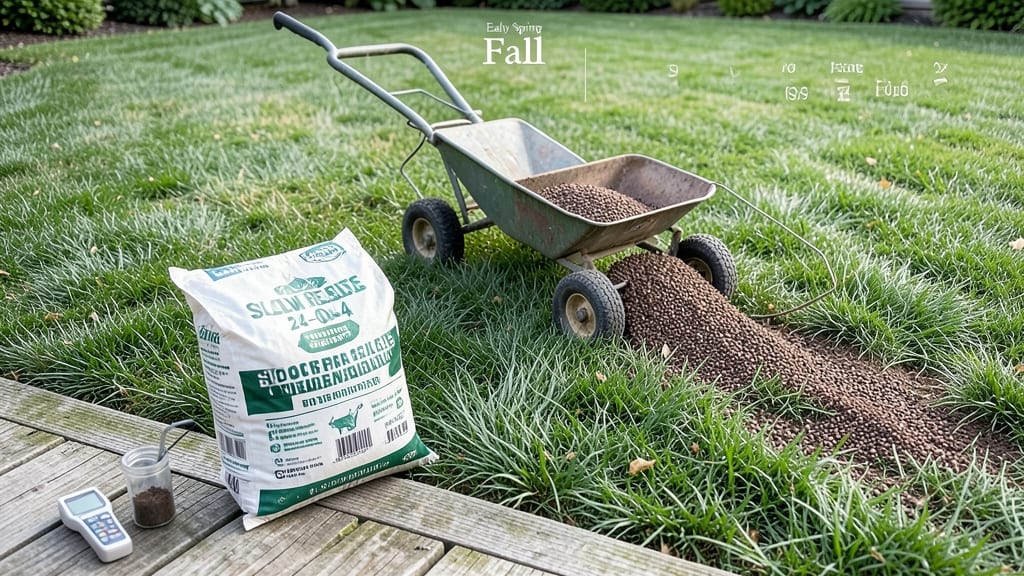
Fertilizing your lawn in Massachusetts at the right time can mean the difference between a lush green carpet and a patchy, struggling yard.
Massachusetts homeowners know a healthy lawn is the envy of the neighborhood—but timing your fertilizer wrong can waste money and harm grass growth. Whether you're battling cool-season weeds or preparing for summer heat, knowing when to fertilize is just as important as how you do it.
With USDA zones 5b-7a and unpredictable spring rains or early fall frosts, the window for feeding your lawn is narrower than you might think. Too early, and nutrients wash away; too late, and your grass misses its growth surge.
The key is aligning your schedule with soil temperatures, frost dates, and your grass type—whether it's cool-season fescue or Kentucky bluegrass.
Below, I’ll break down the exact timing for spring and fall feeds, how to adjust for Massachusetts’ regional microclimates, and the one pre-fertilization step that saves half the product you’d otherwise waste.
Massachusetts fertilizer schedule: best spring & fall timing for cool-season grass
Massachusetts' cool-season grasses like tall fescue and Kentucky bluegrass thrive when fertilized at the right times—typically early spring and fall. These seasons align with your grass's natural growth cycles, ensuring lush, disease-resistant turf.
But timing isn't one-size-fits-all: northern MA (USDA zones 5b-6a) needs adjustments compared to southern MA (zone 7a). Let’s break down the optimal windows and why they matter.
Your first fertilization should happen in early spring (late March to early April), just as grass breaks dormancy. This kickstarts growth after winter and helps outcompete weeds. Skip fertilizing too early—if soil temps are below 50°F, nutrients won’t activate properly.
For crabgrass prevention, apply a pre-emergent herbicide once soil reaches 55°F (usually mid-April), but wait 4-6 weeks after your first fertilizer application to avoid burn.
A summary-table below outlines the exact timing for each fertilization window, including soil temperature triggers and weather considerations specific to MA. Pro tip: Use a soil thermometer ($10 at garden centers) to track temps—it’s your secret weapon for perfect timing.
After your early spring feed, wait 6–8 weeks before applying a second fertilization in late May. This timing aligns with your grass’s rapid growth phase and helps it recover from winter stress.
For crabgrass control, apply a pre-emergent herbicide in mid-May—but only if soil temps are consistently above 55°F for 7+ days. Use a corn gluten meal (organic option) if you prefer non-toxic weed prevention.
Fall fertilization is critical for winter hardiness. Aim for a light feed in late August to early September, using a low-nitrogen, high-potassium blend (e.g., 10-0-20). This helps grass store nutrients for winter and resist disease.
In southern MA, you can push this to early September, but northern MA should finish by mid-September to avoid frost damage.
One common mistake is fertilizing too late in fall—grass can’t absorb nutrients if temps drop below 50°F. Another is overapplying nitrogen, which leads to weak roots and winterkill.
Always follow the label rates (typically ½–1 lb per 1,000 sq ft) and water deeply after applying to activate nutrients. Pro move: Test your soil in early spring (kits cost ~$20) to adjust pH if needed—MA’s soils are often acidic (pH < 6.5), which locks out nutrients.
For overseeding (best done in late summer/early fall), apply a starter fertilizer (high phosphorus) when planting new seed. This helps roots establish quickly before winter. In northern MA, overseed by mid-September; in southern MA, you can go until early October.
Pair this with a light watering schedule (daily for 10–15 mins) to keep seeds moist until germination.
Remember: Weather is your enemy in MA. Heavy spring rains can leach nutrients from soil, while summer droughts stress grass. Always water after fertilizing to wash granules into the soil, and
How Massachusetts weather affects fertilizer timing: rain, heat, and frost risks
Massachusetts' unpredictable weather can turn a well-planned fertilizer schedule into a guessing game if you're not prepared. Spring rains in northern MA can wash away nutrients before they're absorbed, while summer droughts in southern regions may cause nutrient burn.
Even early fall frosts can disrupt your grass's ability to utilize fertilizers properly. Adjusting your timing based on these factors is key to avoiding wasted money and stressed grass.
Northern MA's cooler climate (USDA zones 5b-6a) means frost risks linger later into spring and arrive earlier in fall. Southern MA (zones 6b-7a) experiences warmer microclimates, extending the growing season by 2-3 weeks on either end.
These differences directly impact when you should apply fertilizer—what works in Boston might fail in Springfield.
Spring rains: Wait 48 hours after heavy rain before fertilizing to prevent runoff.
Summer heat: Apply fertilizer early morning or evening to avoid nutrient burn from midday sun.
Fall frosts: Stop fertilizing 6 weeks before first frost for proper winter dormancy.
In northern MA, aim to fertilize in late April to early May when soil temperatures reach 50°F. The region's high rainfall means you'll need to monitor weather forecasts closely—delay applications if 1+ inches of rain is predicted within 24 hours.
For late summer, apply a light feed in August to strengthen grass before winter.
Southern MA's warmer climate allows for earlier spring and later fall fertilization. Start as early as March when soil thaws, but pause if temperatures dip below 45°F—cool weather slows nutrient uptake.
In summer, the region's drought risks mean you should use slow-release fertilizers to prevent stress. Always water deeply after applying to help nutrients penetrate the soil.
Watch for early fall frosts, which can arrive as early as mid-October in northern MA. Stop fertilizing 6 weeks before the first frost to allow grass roots to harden off.
In southern MA, you may extend fertilization until late October, but always check your local frost date and adjust accordingly. A good rule of thumb: no fertilizer after October 1st unless you're in the warmest microclimates.
Use a soil moisture meter to check conditions before fertilizing—wet soil can't absorb nutrients properly, while dry soil increases the risk of burn. For organic options, compost or manure teas release nutrients slowly, reducing runoff risks during rainy periods.
Always follow the 3-1-1 rule: 3 parts nitrogen, 1 part phosphorus, and 1 part potassium for balanced growth.