
Lawn
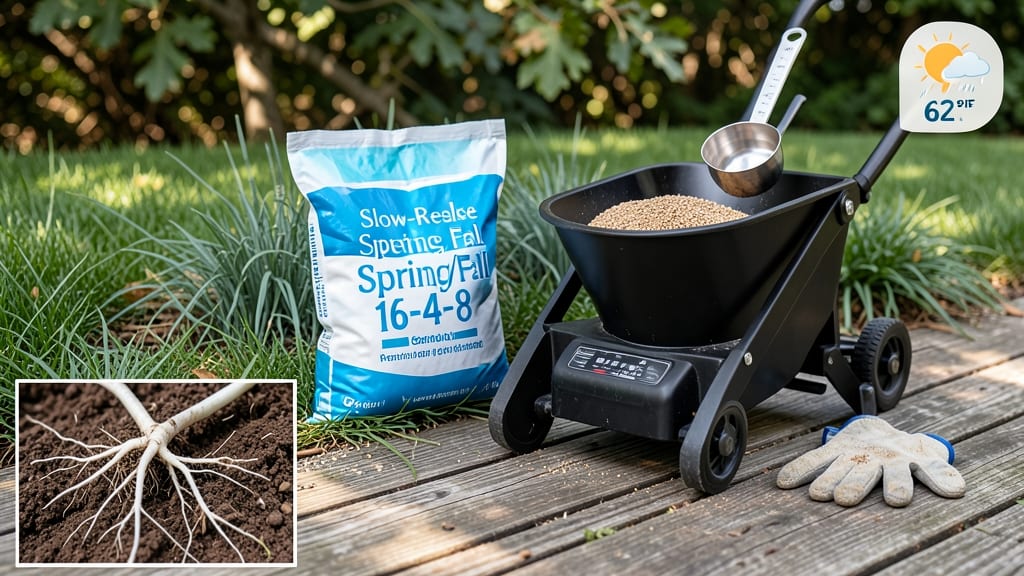
Fertilizing lawns in Indiana works best in early spring (March-April) and late fall (October-November) to align with grass growth cycles, with soil testing in early spring to guide nutrient adjustments for optimal results.
Timing matters because Indiana's climate creates distinct growth windows for cool-season grasses like Kentucky bluegrass and fescue—your lawn's workhorses. 🌱 Early spring fertilization jumpstarts root development before summer heat arrives, while late fall applications fortify grass against winter stress.
I always test soil in March to check pH and nutrient levels, as Indiana's clay-heavy soils often need phosphorus boosts for strong root systems.
What's interesting is how temperature thresholds affect nutrient absorption—ideal soil temps should be between 55°F and 65°F for spring applications. This means waiting until after the last frost but before summer's intense heat sets in.
For fall, aim for 60°F soil temps or lower to prevent fertilizer burn before dormancy begins.
💡 In This Article
- Indiana’s Ideal Fertilizing Seasons Explained
- Step-by-Step Indiana Lawn Fertilization Schedule
Indiana’s ideal fertilizing seasons explained
Indiana’s climate creates two distinct windows for lawn fertilization that align with grass growth patterns. Cool-season grasses like Kentucky bluegrass and tall fescue—which dominate Indiana lawns—enter their most active growth phase in early spring when soil temperatures rise above 55°F.
This is when roots begin absorbing nutrients aggressively, making March-April the perfect time to apply a balanced fertilizer (10-10-10 ratio) to kickstart recovery from winter dormancy.
The key mechanism here is that cooler temperatures slow microbial activity in the soil, allowing nutrients to remain available for grass uptake rather than being broken down too quickly.
What most people don’t realize is how critical soil temperature thresholds are for nutrient absorption. For spring applications, aim for soil temps between 55°F and 65°F—any hotter and you risk fertilizer burn, where salts in the fertilizer dehydrate grass roots.
You can check this with a soil thermometer inserted 4 inches deep. In late fall (October-November), the goal shifts to strengthening roots for winter resilience when soil temps drop below 60°F.
At this point, grasses slow their top growth but continue developing deeper roots, which is why slow-release fertilizers work so well—they provide steady nutrients over 6-8 weeks as the grass prepares for dormancy.
Rainfall patterns in Indiana also play a crucial role. Spring fertilization benefits from the region’s average 3-4 inches of rain per month, which helps distribute nutrients evenly through the soil profile.
However, if you’re applying fertilizer in late summer or early fall, you’ll need to water immediately after application to prevent nutrient loss from heavy rainfall.
The science here involves understanding how water-soluble fertilizers behave: without proper irrigation, up to 50% of nitrogen can be lost through runoff or leaching before grass roots can absorb it.
Another important factor is how Indiana’s clay-heavy soils interact with fertilizers. These soils have poor drainage and tend to compact easily, which means nutrients often get trapped near the surface where they can’t reach grass roots. That’s why aeration—especially in late summer before fall fertilization—becomes essential.
Core aeration creates channels that let nutrients penetrate 3-4 inches deep, where most grass roots reside. Without this step, your fertilizer might as well be spread on concrete, because the grass simply can’t access it.
Seasonal timing also affects weed control strategies. Early spring applications often include pre-emergent herbicides to prevent crabgrass and other warm-season weeds from germinating when soil temps reach 55-60°F. The herbicide creates a chemical barrier just below the soil surface that stops weed seeds from sprouting without harming cool-season grasses.
This is why timing is so precise—apply too early and the herbicide degrades before weeds emerge; apply too late and you miss the window entirely.
For homeowners, understanding these seasonal cues means you can avoid common mistakes like fertilizing during drought conditions or when grass is already stressed from heat or foot traffic.
The best approach is to think of fertilization as a three-phase process: early spring for growth, late summer for weed prevention, and fall for winter hardening. Each phase requires different nutrient ratios and application techniques tailored to Indiana’s unique growing conditions.