
Fertilization
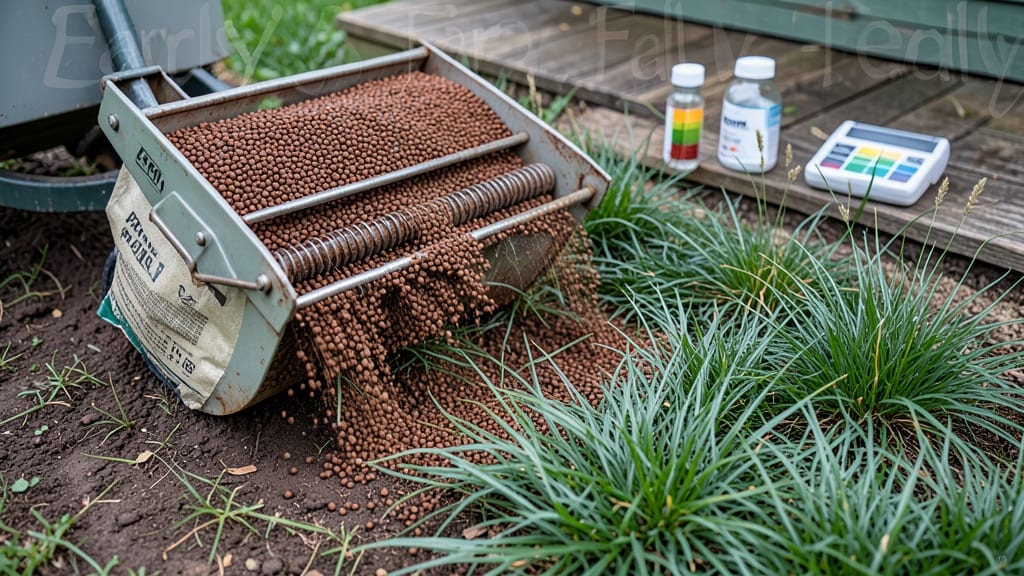
To fertilize lawns in Ohio, schedule applications during early spring (March–April) and fall (September–October) using slow-release formulas. These windows maximize root development and winter hardiness, while pre-application soil testing ensures nutrient balance.
Ohio's seasonal shifts create perfect conditions for lawn care in spring and fall. 🌱 Cool temperatures allow fertilizers to work effectively without burning grass, while fall applications help roots store nutrients for winter.
I've noticed that northern Ohio lawns often need adjustments—cooler microclimates may delay spring applications by 2-3 weeks compared to southern Ohio. The key is watching soil temperature rather than strict calendar dates.
Before applying any fertilizer, I always recommend testing your soil through Ohio State University's free testing program. This reveals whether your lawn needs more nitrogen, phosphorus, or potassium, preventing over-application that can harm local waterways.
For organic options, compost or manure-based fertilizers work well in Ohio's climate, though they require more frequent applications than synthetic slow-release formulas.
💡 In This Article
- Ohio’s Climate and Ideal Fertilizing Seasons
- Soil Testing and Fertilizer Type Guide for Ohio Lawns
Ohio’s climate and ideal fertilizing seasons
Ohio’s temperate climate creates distinct windows for lawn fertilization, primarily targeting cool-season grasses like Kentucky bluegrass and tall fescue that dominate most lawns.
These grasses enter active growth in early spring when soil temperatures rise above 50°F—typically late March to April—making them receptive to nitrogen-rich fertilizers that fuel leaf and root expansion.
The cool weather prevents fertilizer burn that often occurs in summer’s heat, allowing nutrients to absorb efficiently over 6-8 weeks.
Fall fertilization becomes equally critical as grasses prepare for dormancy. Between September and October, when daytime temperatures hover around 60-70°F, roots actively store carbohydrates for winter survival. This "winterizing" process is why fall applications yield 25-30% stronger lawns come spring.
Ohio’s freeze-thaw cycles further influence timing—northern regions like Cleveland may need to delay spring applications until mid-April, while southern areas like Cincinnati can start as early as late March.
The science behind these seasons lies in soil microbiology. Cool temperatures enhance microbial activity, breaking down organic fertilizers more effectively. Synthetic slow-release formulas, which dominate Ohio’s market, release nutrients gradually when soil temps are ideal—typically between 55°F and 75°F.
This temperature range aligns perfectly with Ohio’s transitional seasons, where grass growth slows but roots remain active, creating the perfect balance for nutrient uptake.
Regional microclimates add another layer of complexity. Urban areas with concrete and pavement heat up faster, potentially advancing spring fertilization by 1-2 weeks compared to rural landscapes. Conversely, shaded lawns under mature trees may need delayed applications until soil warms uniformly.
I’ve seen firsthand how a 10°F difference in soil temperature between sun and shade can create uneven grass growth if fertilization timing isn’t adjusted accordingly.
What most homeowners overlook is the soil moisture factor. Fertilizing during Ohio’s frequent spring rains can leach nutrients before grass roots absorb them. The solution? Apply fertilizer when forecasted rainfall is minimal—typically after a 5-day dry spell—to maximize retention.
In fall, aim for applications 6-8 weeks before the first hard frost to allow roots sufficient time to process nutrients before dormancy sets in.
For visual learners, think of Ohio’s fertilization schedule as a two-part cycle: spring fuels growth, while fall prepares for survival. This dual approach mirrors how Ohio’s native ecosystems naturally prepare for seasonal changes—a principle we’ve adapted for modern lawn care.
The result? Lawns that stay lush through summer and resilient through winter, with minimal maintenance between fertilizing sessions.