
Lawn
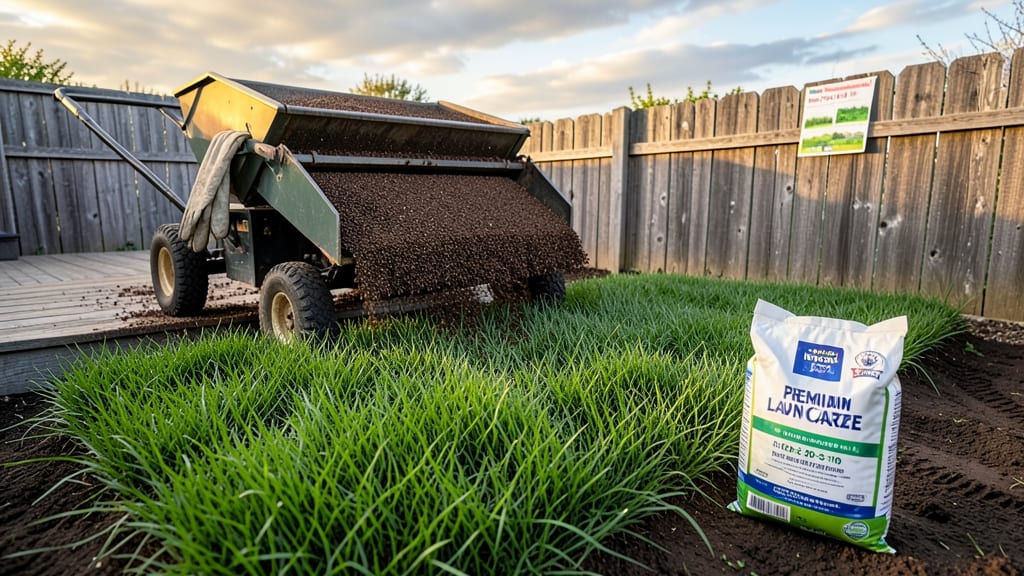
To fertilize your lawn at the best times, schedule applications in early spring and late fall for cool-season grasses or late spring and early summer for warm-season grasses, while testing soil every 2-3 years to fine-tune nutrient timing.
Timing matters because grass types have distinct growth cycles tied to temperature. Cool-season grasses like Kentucky bluegrass thrive when soil temperatures are between 50°F and 65°F, making early spring and fall ideal for feeding.
Warm-season varieties such as Bermuda grass, however, need nutrients when soil temps hit 75°F or higher, which typically aligns with late spring and summer. 🌱 Soil testing reveals what nutrients your lawn truly needs—most home tests check pH, nitrogen, phosphorus, and potassium—so you can avoid over-fertilizing, which wastes money and harms the environment.
For best results, I recommend using a slow-release fertilizer in early spring to support root growth before summer stress, then switching to a quick-release option in late summer for a quick boost before winter dormancy.
Local climate zones also play a role—northern regions may need an extra application in early fall, while southern lawns might benefit from a mid-summer feeding to combat heat stress.
💡 In This Article
- Seasonal Fertilizer Timing for Grass Types
- Soil Testing and Fertilizer Application Best Practices
Seasonal fertilizer timing for grass types
Cool-season grasses like Kentucky bluegrass and fescue enter their most active growth phase when soil temperatures drop below 65°F in early spring, signaling their roots to expand aggressively. This is when they need nitrogen most—typically 0.5-1 pound per 1,000 sq ft—to fuel leaf and root development before summer dormancy.
The key here is timing: applying fertilizer too early (when soil is still cold) wastes nutrients, while waiting too long misses the critical window for root strengthening before heat stress sets in.
Warm-season grasses, including Bermuda and Zoysia, behave completely differently. Their growth peaks when soil temperatures exceed 75°F, usually in late spring or early summer, when they naturally shift into high-gear photosynthesis. These grasses store nutrients in their roots during summer, then rely on those reserves for fall regrowth.
That's why late spring applications focus on phosphorus (0.25-0.5 pounds per 1,000 sq ft) to support root development, while summer feedings prioritize potassium to build heat tolerance.
What most homeowners overlook is how temperature triggers nutrient uptake. Cool-season grasses absorb nitrogen most efficiently when soil temps are between 50°F-65°F, while warm-season varieties need soil above 70°F for optimal phosphorus uptake.
This biological timing explains why a single fertilizer schedule won't work universally—your grass type dictates when nutrients become available for absorption. 🌱
Local climate zones add another layer. In USDA Zone 5, early spring fertilization might begin in April, while Zone 8 lawns can start as early as February.
The rule of thumb is to fertilize when your grass shows 25-50% green coverage after winter dormancy for cool-season types, or when new growth appears in warm-season varieties. This visual cue often correlates with soil temperatures reaching the optimal ranges for each grass type.
Seasonal timing also affects weed control. Early spring applications for cool-season grasses coincide with crabgrass germination periods, allowing you to combine fertilizer with pre-emergent herbicides for maximum effectiveness. Meanwhile, warm-season lawns benefit from late spring feedings that coincide with their natural growth surge, reducing competition from summer weeds.
The synchronization of grass growth cycles with fertilizer timing creates a feedback loop where proper nutrition enhances natural resilience against pests and environmental stress.
For example, Kentucky bluegrass in the Pacific Northwest might need 4 applications per year (early spring, late spring, early fall, late fall), while Bermuda grass in Texas could thrive with just 2 applications (late spring, early summer).
The difference comes down to growth patterns: cool-season grasses have two distinct growth peaks (spring and fall), while warm-season varieties focus their energy on summer growth with fall recovery.