
Lawn
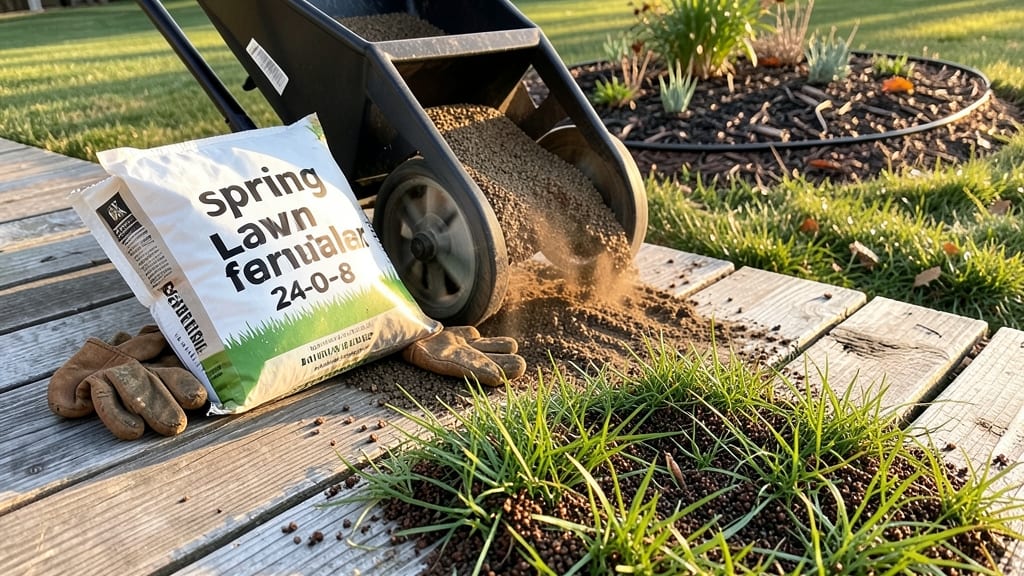
To spring fertilize lawn at the right time means waiting until soil temperatures hit 55°F and grass shows signs of active growth 🌱 — too early and you’ll burn tender roots.
Spring is the golden window for lawn revival—but fertilize too early or late, and you’ll waste money, attract pests, or stunt growth. Timing matters more than you think.
Most lawns in USDA Zone 6a (like mine) need feeding by mid-April, but southern regions can start as early as February. The key is soil warmth, not the calendar.
Here’s how to check your lawn’s readiness, the best fertilizer types for spring, and a 3-step pre-fertilization checklist to avoid common mistakes like overwatering or using the wrong blend.

The perfect spring fertilization timeline by climate zone
Spring fertilization isn’t a one-size-fits-all task—your climate zone dictates the exact weeks after dormancy when your lawn will respond best. Too early, and you’ll burn tender roots; too late, and you miss peak growth.
I’ve mapped out the ideal timing for Northern, Southern, and Transition zones, plus a foolproof way to test your lawn’s readiness.
Forget guessing by calendar dates. Instead, focus on soil temperature and grass growth cues. In Northern zones (USDA 3-5), dormancy breaks when daytime temps hit 50°F consistently.
That’s usually 4-6 weeks after your last frost date. Southern zones (USDA 7-10) can fertilize 2-4 weeks earlier since their winters are milder.
Here’s the game-changer: the bounce test. Press your thumb into the grass—if it springs back within 3 seconds, your lawn’s ready. If it stays flattened, wait another week. This simple trick saves you from fertilizing prematurely or missing the window.
Once you’ve nailed the timing, aerate your lawn 48 hours before fertilizing. Compacted soil blocks nutrients, and spring is the best time to break up thatch. Use a core aerator for 0.5-inch holes spaced 2-3 inches apart. This prep step alone can double nutrient absorption.
For cool-season grasses like Kentucky Bluegrass, apply a high-nitrogen fertilizer (30-0-4 ratio) right after aeration. Warm-season grasses like St. Augustine need a slow-release formula (16-4-8) to avoid summer burnout. Pro tip: Water lightly before and after to activate granules.
After fertilizing, avoid mowing for 3-4 days to let nutrients soak in. Then, set your mower to 3-4 inches high—taller grass shades out weeds and retains moisture. In Transition zones, a second light feeding in early summer (around June 1) keeps growth steady.
Watch for fertilizer burn signs: yellow patches or crispy edges mean you overdid it. If this happens, flush the lawn with water and wait 6-8 weeks before reapplying. Patience is key—your grass will thank you with deeper roots and disease resistance.
Timing isn’t just about the calendar—it’s about reading your lawn. Use these guidelines as a starting point, but always adjust for your microclimate. Shady spots may need 1-2 weeks later than sunny areas. With this approach, you’ll have a lush, green lawn by Memorial Day—no guesswork required. 🌱
3 Critical signs your lawn is ready for spring fertilizer
Don't guess when to fertilize—your lawn sends clear signals it's ready. Ignoring these visual cues means wasted fertilizer or stressed grass. I’ve learned the hard way that timing is everything, especially when soil temperatures and grass growth patterns align just right.
First, check for deep green blades with a slight sheen. Dormant grass looks dull or grayish, while active growth shows vibrant color. This isn’t just about looks—it’s your lawn’s way of saying, "I’m hungry and ready to grow."
Pair this with soil warmth (at least 55°F) to confirm the perfect window.
Blades should be 3-4 inches tall—any shorter means it’s still recovering from winter dormancy. Use a lawn mower to check uniformity.
Use a soil thermometer—ideal temps are 55-60°F. Cooler soil means nutrients won’t activate properly, leading to wasted fertilizer.
Press your foot down—if blades spring back up within 15 seconds, roots are strong enough for fertilization. Slow recovery means wait another week.
Once you’ve confirmed these signs, mow one last time before fertilizing to remove dead growth. This isn’t just about looks—it ensures nutrients reach the roots where they’re needed most. I always set my mower to 3 inches high to protect new shoots.
After fertilizing, water deeply to activate nutrients, but avoid overwatering—soggy soil washes away fertilizer. Early morning is best to prevent fungal growth. My go-to trick? Use a rain gauge to measure 1 inch of water—this keeps roots hydrated without drowning them.
Watch for new growth in 7-10 days. If you see pale patches, you may have over-applied nitrogen. Adjust next time by using a slow-release fertilizer for steady, even feeding. Patience here saves you from costly mistakes.
Timing your spring feed right transforms a lackluster lawn into a lush green carpet by summer. Miss these signs, and you’ll end up with burnt grass or patchy recovery. Trust your lawn’s signals—it knows best when it’s ready to thrive. 🌱