
Lawn
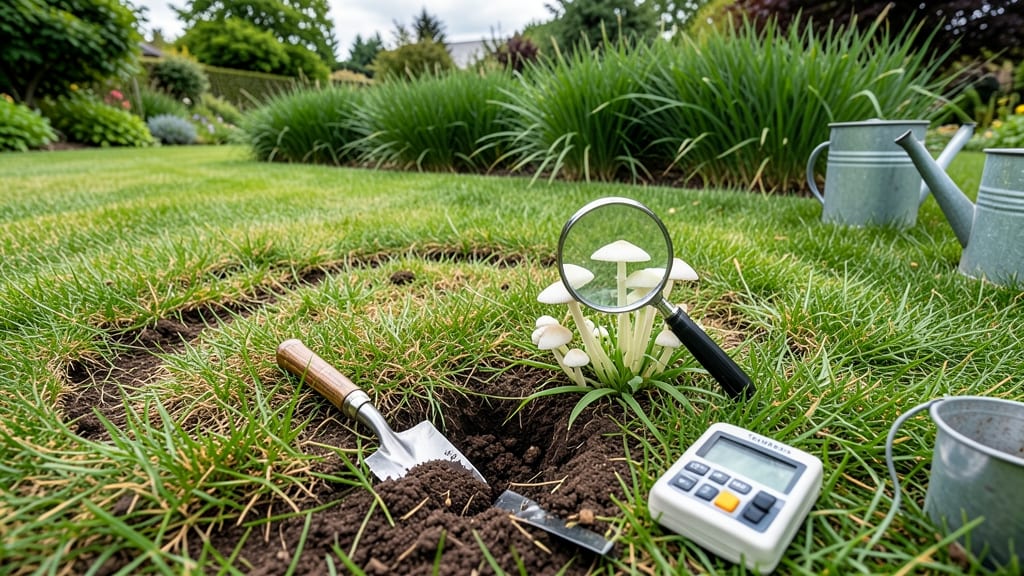
Why have I got mushrooms in my lawn?—don’t panic! It’s actually nature’s way of recycling nutrients. 🌱 I’ve seen this happen after heavy rains or when old tree roots decay underground, and it’s far more common than most gardeners realize. These toadstools are just the fruiting bodies of fungi breaking down organic matter, often where grass is thin or soil stays damp.
The real mystery isn’t why they appear—it’s how to keep them from becoming a permanent lawn feature. Most mushrooms thrive in compacted or waterlogged soil, so improving drainage and aerating can make a huge difference.
Raking them up (and their roots) when they appear is often enough to discourage regrowth, though they’ll likely return if the conditions stay the same.
What you’ll end up with is a healthier lawn that naturally resists mushroom growth over time. The key is addressing the underlying issues—whether that’s excess moisture, poor soil structure, or too much organic debris. With the right approach, your lawn will stay lush and mushroom-free, without harsh chemicals.
This works for any lawn type, from shady backyards to sunny front yards. The secret is patience—mushrooms may return for a season or two as the soil balances out, but consistent care makes all the difference. Let’s get your lawn back to normal!
The Hidden Triggers Behind Lawn Mushrooms
If your lawn has suddenly sprouted mushrooms—or those mysterious toadstools—you’re not alone. These fungal friends (or foes?) pop up for specific reasons, often tied to your soil’s health, moisture levels, or even past landscaping choices.
Understanding the root causes (literally!) helps you address the problem effectively. Let’s break down why your yard has become a mushroom buffet.
Mushrooms thrive in damp, shaded conditions because their spores need moisture to germinate and grow. If your lawn retains water—whether from heavy rainfall, overwatering, or compacted, clay-heavy soil—you’re creating the perfect petri dish. Poor drainage is a common culprit, especially in low-lying areas where water pools after rain.
💡 Pro Tip: Test your soil’s drainage by digging a small hole, filling it with water, and timing how long it takes to drain. If it sits for more than 6 hours, your lawn may need aeration or amendments like sand or compost to improve airflow.
Mushrooms are nature’s recyclers—they break down dead plant material, wood chips, or buried roots. If your lawn has hidden compost piles, fallen leaves, or even old tree stumps, fungal spores will latch onto these nutrient-rich sources.
Even buried mulch or grass clippings left to decompose can trigger a mushroom outbreak.
🔍 Actionable Fix: Rake up leaf litter, remove buried wood, and avoid piling organic matter directly on the soil. If you’ve recently added compost, spread it thinly and water it in to speed up decomposition.
Turned-up soil—whether from planting, aerating, or even animal activity—exposes buried spores to sunlight and oxygen, kickstarting mushroom growth. Construction, new landscaping, or even mole tunnels can disrupt the soil’s natural balance, allowing dormant fungi to wake up and sprout.
⚠️ Warning: If mushrooms appear after digging, avoid tilling the area further. Instead, focus on improving soil health to discourage future outbreaks.
Mushrooms love shade because it keeps the ground cool and moist. If your lawn has thick grass, overhanging trees, or dense shrubs, sunlight struggles to reach the soil, creating ideal conditions for fungal growth. Even a newly seeded area with slow-growing grass can become a mushroom hotspot.
🌞 Solution: Thin out overgrown patches, trim back branches, or consider partial sun-loving grass varieties if shade is unavoidable.
Mushroom spores are everywhere—they hitch rides on wind, animals, and even your shoes! While most spores remain dormant, they’ll germinate when conditions (like moisture and organic matter) align. Newly constructed lawns or gardens are particularly vulnerable because the soil lacks established microbial competition.
🛡️ Prevention Tip: If you’re starting a new lawn, use mycorrhizal-friendly soil amendments to encourage beneficial fungi that outcompete mushroom spores.
Quick Fixes for Mushroom Problem
Now that you know why those mysterious mushrooms popped up in your lawn, it’s time to tackle them—without harming your grass or the local ecosystem. The good news?
Most solutions are simple, cost-effective, and eco-friendly. Below, we’ve mapped out practical fixes based on the most common causes, plus prevention tips to keep your lawn mushroom-free long-term.
If your lawn is soggy or packed down, mushrooms thrive in the damp, oxygen-poor conditions. Here’s how to dry it out and improve drainage:
🔥 Step 1: Reduce Watering (But Don’t Drown Your Grass)
- Check soil moisture before watering: Stick your finger 2 inches deep—if it’s damp, skip watering.
- Water deeply but less often: Aim for 1–1.5 inches per week (including rain) and water early in the morning to allow evaporation.
- Avoid puddles: If water pools after rain, your lawn may need better drainage (see next step).
👨🍳 Step 2: Aerate to Break Up Compacted Soil
Compacted soil traps moisture and blocks airflow—perfect for mushrooms.
Rent a core aerator (or hire a pro) to pull small plugs from your lawn. - When to do it: Early fall or spring, when soil is slightly moist. - How often: Once a year for high-traffic areas, every 2–3 years for light use.
🥘 Step 3: Top-Dress with Sand or Compost
After aerating, spread a ¼-inch layer of:
- Coarse sand (for drainage) OR
- Compost (to improve soil structure and absorb excess moisture).
- Rake lightly to blend in.
💡 Pro Tip: If mushrooms keep returning, test your soil’s pH (ideal for lawns: 6.0–7.0). Too acidic? Add lime; too alkaline? Use sulfur to balance it.
If your lawn is a buffet for mushrooms, it’s likely overloaded with decaying plant material, thatch, or buried debris. Here’s how to clean house:
🔪 Step 1: Rake Out Debris
- Remove leaves, twigs, and thick thatch (more than ½ inch thick) with a lawn rake or dethatching tool.
- Focus on shady, damp spots where mushrooms love to hide.
⏰ Step 2: Mow Higher (But Less Often)
- Set your mower to 3–4 inches—taller grass shades out mushrooms and encourages deeper roots (which dry out soil faster).
- Never remove more than ⅓ of the grass blade at once to avoid stressing the lawn.
🌡️ Step 3: Improve Airflow
Mushrooms adore stagnant air. Break up their party by:
- Thinning out dense grass with a sharp lawn knife (for stubborn patches).
- Planting clover or moss in shady areas—these tolerate moisture better than grass and outcompete mushrooms.
✨ Prevention Hack: Spread corn gluten meal (a natural pre-emergent) in early fall to starve fungal spores before they sprout.
If mushrooms are part of a larger fungal issue (like fairy rings or lawn diseases), you’ll need a two-pronged attack:
💡 Step 1: Spot-Treat with Fungicide (If Needed)
For stubborn cases (like fairy rings or lawn diseases), use a non-toxic fungicide like:
- Neem oil (natural, safe for pets/kids)
- Baking soda spray (1 tbsp baking soda + 1 quart water + a drop of dish soap)
- Commercial fungicides (e.g., BioAdvanced Fungus Control) for severe outbreaks.
⚠️ Warning: Avoid copper-based fungicides—they can harm soil microbes and nearby plants.
🎯 Step 2: Boost Lawn Health to Outcompete Fungi
A strong lawn = fewer mushrooms. Follow these steps: 1. Fertilize properly: Use a slow-release, nitrogen-rich fertilizer in early spring and fall (avoid over-fertilizing—it feeds mushrooms too!).
- Overseed bare spots: Fill thin areas with disease-resistant grass seed (like tall fescue or Kentucky bluegrass).
- Improve drainage: If water sits for >24 hours, consider French drains or sanding low spots.
🔥 Emergency Fix: For fairy rings (those ring-shaped mushrooms), dig out the infected soil (6–12 inches deep) and replace it with clean topsoil mixed with compost.
Once you’ve banished the mushrooms, lock them out with these habits:
| Problem | Solution | How Often |
|---|---|---|
| Excess moisture | Aerate + improve drainage | Once a year |
| Thatch buildup | Dethatch in spring/fall | Every 2–3 years |
| Poor airflow | Mow high, thin dense grass | Seasonally |
| Organic debris | Rake leaves/twigs regularly | Weekly (fall) |
| Weak grass | Fertilize + overseed | Spring & fall |
💡 Bonus Tip: Chickens love mushrooms! If you have backyard chickens, let them free-range on your lawn—they’ll peck up spores and eggs, reducing future outbreaks.
Final Reminder: Patience is key—some fixes (like soil drainage) take weeks to months to show results. But with these steps, your lawn will go from mushroom magnet to lush, fungus-free paradise! 🌿✨
Frequently asked questions
Are mushrooms in my lawn harmful to grass or pets?
Most lawn mushrooms are harmless to grass and pets, but they indicate poor soil conditions. While they don’t directly damage grass, their presence suggests excess moisture or decaying matter. For pets, avoid letting them eat wild mushrooms—some can be toxic. Focus on improving drainage and soil health instead of removing the mushrooms themselves.
Why do mushrooms keep coming back after I remove them?
Mushrooms return because their spores remain dormant in the soil until conditions (moisture, shade, organic matter) are right again. Simply pulling them out won’t solve the problem—you need to address the root cause, like compacted soil or poor drainage. Aerating, reducing watering, and removing debris are key to breaking the cycle.
Can I use vinegar or bleach to kill lawn mushrooms?
No, vinegar or bleach are too harsh and will damage your grass. Instead, use natural solutions like neem oil or a baking soda spray (1 tbsp baking soda + 1 quart water). These target the fungi without harming your lawn. For stubborn cases, focus on improving soil health—mushrooms thrive where grass struggles.
Are those ring-shaped mushrooms (fairy rings) dangerous?
Fairy rings aren’t dangerous but signal deeper soil issues. The mushrooms grow in circular patterns because their mycelium spreads underground, depleting nutrients in a ring. To fix it, aerate the affected area, improve drainage, and overseed with disease-resistant grass. The rings will fade as soil health improves.
How long does it take to eliminate mushrooms from a lawn?
Results vary, but with consistent care, you’ll see improvement in 4–8 weeks. Quick fixes like raking debris and reducing watering may show changes faster, while deeper fixes (aeration, soil amendments) take longer. Patience is key—mushrooms may return for 1–2 seasons as the soil balances, but a healthy lawn will eventually outcompete them.