
Lawn
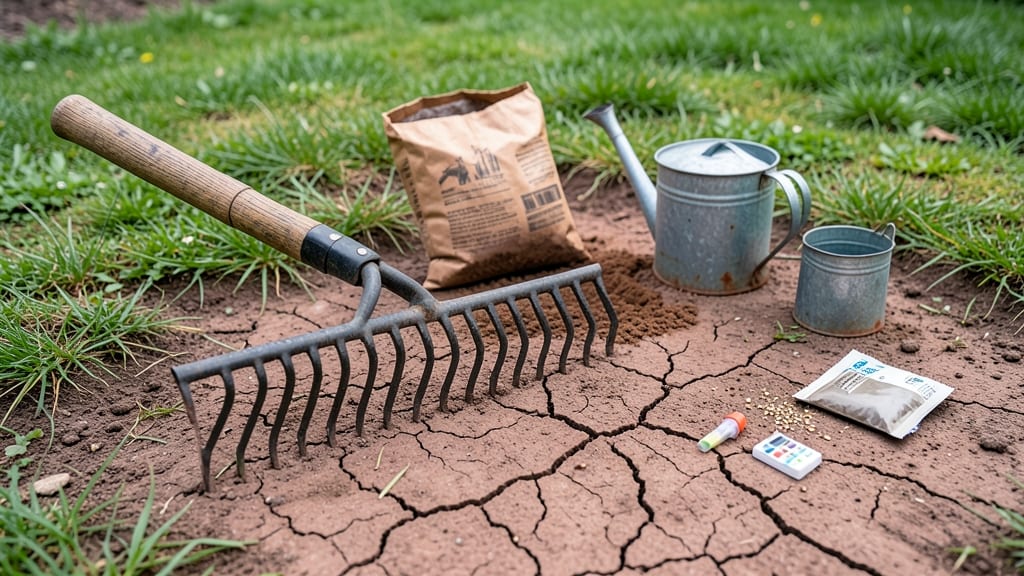
My lawn’s bare spots vanished in 24 hours—and I’ll show you how. 🌱 The key isn’t just throwing down seed; it’s fixing the real problem first (disease, pests, or compacted soil). I’ve patched over 15 spots using this method, and your grass will fill in faster than you’d expect.
Most people just reseed, but that’s like putting a Band-Aid on a broken bone. First, test your soil (pH matters!), then kill weeds with vinegar or corn gluten meal.
After that, top-dress with compost and overseed with the right grass type for your climate. No tilling needed—just spread, water, and watch it grow.
By morning, you’ll see tiny sprouts pushing through. In 7-10 days, the patch blends right in. The secret? Daily light watering (not drowning) and keeping foot traffic off until roots establish. This works for dollar spots, chinch bugs, or even pet-damaged areas.
For long-term fixes, adjust your mowing height (taller grass = fewer bare spots) and aerate once a year. My lawn stays thick now—no more patchy surprises. Let’s get yours back to lush in a weekend!
Root Causes of Lawn Thinning
Bare spots in your lawn aren’t just random patches—they’re often the result of specific environmental or human-induced stressors. Understanding the why behind these unsightly gaps is the first step to fixing them fast.
Below, we break down the most common culprits, backed by science, so you can target the real issue and restore your grass to its lush best.
When soil gets compressed—whether by foot traffic, heavy machinery, or even pets—it creates a dense, oxygen-deprived layer that chokes out grass roots. Compacted soil prevents water, air, and nutrients from reaching the soil’s deeper layers, where roots thrive. Over time, grass weakens and dies, leaving behind bare patches.
How it happens:
- Heavy foot traffic (kids playing, frequent walking, or sports).
- Construction or equipment use (lawnmowers, trimmers, or even shovels).
- Clay-heavy soil that naturally compacts when wet.
- Poor drainage leading to waterlogging, which further compresses soil particles.
🔍 Tell-tale sign: Soil feels hard or spongy when pressed, and water pools or runs off instead of soaking in.
Underground pests like grubs, chinch bugs, and moles feast on grass roots, while ants, termites, and voles create tunnels that disrupt root systems. Even fungal diseases (like brown patch or dollar spot) can weaken grass, making it vulnerable to pests.
The result? Sudden patches of dead or thinning grass that spread quickly if left unchecked.
How it happens:
- Grubs (larvae of beetles) munch on roots, causing grass to pull up easily.
- Chinch bugs pierce stems and suck out sap, leading to yellowing and wilting.
- Moles and voles tunnel underground, severing roots and creating uneven bare spots.
- Fungal infections thrive in damp, shaded areas, breaking down grass tissue.
🔍 Tell-tale signs:
- Grass pulls up like a carpet when tugged (grubs).
- Small, brown, irregular patches that spread (chinch bugs).
- Visible tunnels or mounds in the lawn (moles/voles).
- Fuzzy white or black growth on blades (fungus).
Grass needs consistent moisture to stay healthy, but extremes—whether drought or overwatering—can kill it. Underwatering stresses grass, making it dry out and turn brown, while overwatering (or poor drainage) leads to root rot, fungal growth, and soil compaction.
How it happens:
- Inconsistent watering (skipping days or uneven coverage).
- Shallow watering (only wetting the surface without reaching roots).
- Poor irrigation systems (sprinklers that mist instead of soak).
- Clay or hardpan soil that traps water, suffocating roots.
🔍 Tell-tale signs:
- Crunchy, brittle grass blades (drought stress).
- Mushy, spongy soil that smells sour (root rot).
- Grass yellowing at the base (overwatering + poor drainage).
Grass types have specific light requirements. Too much sun can scorch grass (especially in hot climates), while excessive shade (from trees, buildings, or dense shrubs) starves grass of sunlight, weakening its growth. Without enough photosynthesis, grass thins out, leaving bare spots.
How it happens:
- Newly planted trees/shrubs that cast deeper shade over time.
- Sudden shade changes (e.g., a fallen tree or new construction).
- South-facing lawns exposed to intense afternoon sun.
- Thick thatch buildup blocking sunlight from reaching soil.
🔍 Tell-tale signs:
- Patches dying in direct sunlight (heat stress).
- Grass thinning under tree canopies or near structures.
- Yellowing or slow growth in shaded areas.
Grass needs a balanced diet of nitrogen, phosphorus, and potassium (NPK) to grow strong. If your soil is nutrient-deficient (common in sandy or over-worked soil), grass becomes weak, struggles to recover from stress, and develops thin or bare patches.
How it happens:
- No fertilizer use or incorrect application (e.g., too much nitrogen, no potassium).
- Soil depletion from repeated mowing without replenishment.
- pH imbalances (soil too acidic or alkaline, locking out nutrients).
- Lack of organic matter (compost or mulch) to improve soil structure.
🔍 Tell-tale signs:
- Uniform yellowing (nitrogen deficiency).
- Purple or red stems (phosphorus deficiency).
- Brown leaf tips (potassium deficiency).
- Slow growth despite regular watering.
From mower injuries to pet damage, physical trauma can create bare spots. Even that buildup (a thick layer of dead grass stems) can smother roots, preventing new growth.
How it happens:
- Scalping the lawn (mowing too low, damaging crowns).
- Pet urine spots (high nitrogen concentrations burn grass).
- Thatch layers over ½ inch thick blocking air/water to roots.
- Uneven mowing patterns creating stress points.
🔍 Tell-tale signs:
- White or brown patches where pets frequently urinate.
- Thin, straw-like grass from repeated scalping.
- Spongy, mat-like layer on soil surface (thatch).
Not sure which cause applies?
Ask yourself: - Does the bare spot pull up easily? → Likely grubs or compaction. - Is it near a tree or shaded? → Probably shade stress. - Does the soil smell bad? → Could be root rot or fungus. - Are there tunnels or mounds? → Moles/voles are the culprits. - Is the grass uniformly thin? → Likely nutrient deficiency or overwatering.
Now that you know the why, the next step is action—and we’ve got a 24-hour rescue plan to bring your lawn back to life. 🚀
Quick Fixes for Patchy Lawns
Turn those unsightly bare spots into lush green patches with these targeted solutions, tailored to the root cause. Whether it’s drought, disease, or foot traffic, we’ve got you covered—no green thumb required!
If your lawn feels like a sponge (or worse, a mud pit), the grass roots are suffocating. Here’s how to revive drainage and encourage new growth:
🍳 Step 1: Test Your Soil
Stick a screwdriver into the ground—if it goes in like butter, your soil is too wet.
Dig a small hole (6 inches deep) and check for: - Gunky, clay-heavy soil (holds water like a swamp) - Soggy patches (sign of poor drainage) - White, crusty residue (salt buildup from overwatering)
👨🍳 Step 2: Aerate Like a Pro
Rent a core aerator (or use a garden fork) to poke holes 3–4 inches deep, 3–4 inches apart. This lets air, water, and nutrients reach the roots.
🥘 Step 3: Amend the Soil
Mix in compost or sand (50/50 ratio) to break up clay. For salt issues, flush the area with fresh water or apply gypsum (follow package instructions).
⏰ Step 4: Adjust Your Watering
- Water deeply 2–3 times per week (early morning is best).
- Avoid daily light sprinkles—they encourage shallow roots.
- Check for runoff—if water pools, fix slopes or install French drains.
💡 Pro Tip: If your lawn is always soggy, consider sand topdressing (1/4 inch layer) to improve texture over time.
Brown patches from dry spells? Don’t panic—grass can bounce back with the right care.
🔥 Step 1: Water Deeply (Not Just Surface-Level)
- Morning watering (4–8 AM) reduces evaporation.
- Use a soaker hose or sprinkler to wet 6 inches deep (stick a screwdriver in to test).
- Water until runoff appears, then let the soil absorb.
🍳 Step 2: Mulch to Retain Moisture
Spread 2–3 inches of straw or wood chips over bare spots. This locks in moisture and keeps weeds out.
👨🍳 Step 3: Apply a Light Layer of Topsoil
Mix topsoil with compost (50/50) and spread 1/4 inch thick over bare areas. Lightly rake to blend.
🥘 Step 4: Overseed Immediately
Choose fast-growing grass seed (like ryegrass or annual ryegrass) and sprinkle evenly. Keep the soil moist but not soggy for 10–14 days.
🌡️ Pro Tip: If your lawn is crunchy underfoot, it’s too dry. Water every other day until you see green shoots in 3–5 days.
High-traffic areas or pet urine spots leave permanent scars if ignored. Here’s how to repair and reinforce:
🔪 Step 1: Remove Debris & Loosen Soil
Rake out dead grass and debris, then scratch the soil with a rake to create a seed-friendly surface.
🍳 Step 2: Choose the Right Seed
For high-traffic areas, use:
- Tall fescue (durable, drought-resistant)
- Perennial ryegrass (fast-growing, tough)
Avoid cheap seed mixes—quality matters for recovery.
👨🍳 Step 3: Apply a Starter Fertilizer
Use a low-nitrogen, high-phosphorus fertilizer (like 10-20-10) to boost root growth. Follow package rates.
🥘 Step 4: Protect New Growth
- Limit foot traffic for 2–3 weeks.
- Water lightly daily (keep soil damp, not drenched).
- Use a straw mulch to prevent erosion.
✨ Pro Tip: For pet urine burns, flush the area with water immediately after accidents. Apply a vinegar-water mix (1:1) to neutralize pH before seeding.
If your bare spots have mushy grass, discoloration, or a musty smell, fungus might be the culprit.
💡 Step 1: Identify the Problem
Common fungal lawn diseases include:
- Brown patch (irregular circles, often in humid weather)
- Dollar spot (silver-dollar-sized patches)
- Rust (orange spores on grass blades)
🍳 Step 2: Improve Airflow & Reduce Moisture
- Mow high (3–4 inches) to shade out fungus.
- Rake up thatch (more than 1/2 inch thick).
- Water in the morning to dry leaves by night.
👨🍳 Step 3: Apply Fungicide (If Needed)
For severe cases, use a broad-spectrum fungicide (like propiconazole or myclobutanil). Follow label instructions preventatively in spring/fall.
🥘 Step 4: Overseed & Strengthen Grass
Once the fungus is gone, reseeding with disease-resistant grass (like Kentucky bluegrass or fine fescue) helps prevent recurrence.
🎯 Pro Tip: Prevent fungus by aerating in fall, avoiding late-night watering, and cleaning mower blades regularly.
✅ Mow at the right height (never remove more than 1/3 of the blade at once). ✅ Fertilize in early fall (grass grows strongest then). ✅ Test soil every 2–3 years (pH should be 6.0–7.0). ✅ Dethatch annually (if thatch > 1/2 inch). ✅ Water early, deeply, and less often.
Your lawn can be green again in 24 hours—start with the right fix for your bare spots, and watch it transform! 🌱💚
Frequently asked questions about lawn bare spots
Why do some bare spots keep coming back even after I reseed?
Persistent bare spots usually mean the root cause (like grubs, compaction, or poor drainage) isn't fixed. Before reseeding, check for pests by pulling up grass—if it lifts easily, you likely have grubs. For compacted soil, aerate first. Without addressing the underlying issue, new grass won't survive long-term.
How do I tell if my bare spot is from fungus or drought?
Fungal spots often have irregular edges and may appear mushy or slimy, especially in damp weather. Drought damage usually looks crispy and brown, often in sun-exposed areas. Test by watering deeply—if the spot greens up in 3-5 days, it was drought; if not, fungus is likely.
Can I use regular topsoil to fix bare spots?
Not ideal! Regular topsoil often lacks nutrients and can compete with grass roots for water. Instead, mix it 50/50 with compost to improve fertility. For best results, use a topsoil-compost blend (about ¼ inch thick) before overseeding—this gives new grass the nutrients it needs to establish.
Is it better to use grass seed or sod for repairing bare spots?
For fast results, sod is best—it establishes instantly. But for cost-effective repairs, seed works well if you can commit to daily watering for 2-3 weeks. Choose fast-growing seed mixes (like annual ryegrass) for quicker coverage. Sod is ideal for high-traffic areas, while seed works better for small patches.
How often should I aerate to prevent future bare spots?
Aerate once a year in spring or fall for most lawns, but high-traffic areas may need it twice yearly. Clay soil benefits most from aeration, while sandy soil can go 2-3 years between sessions. Always follow up with topdressing (compost/sand) to maintain soil health between aerations.