
Pests and Diseases
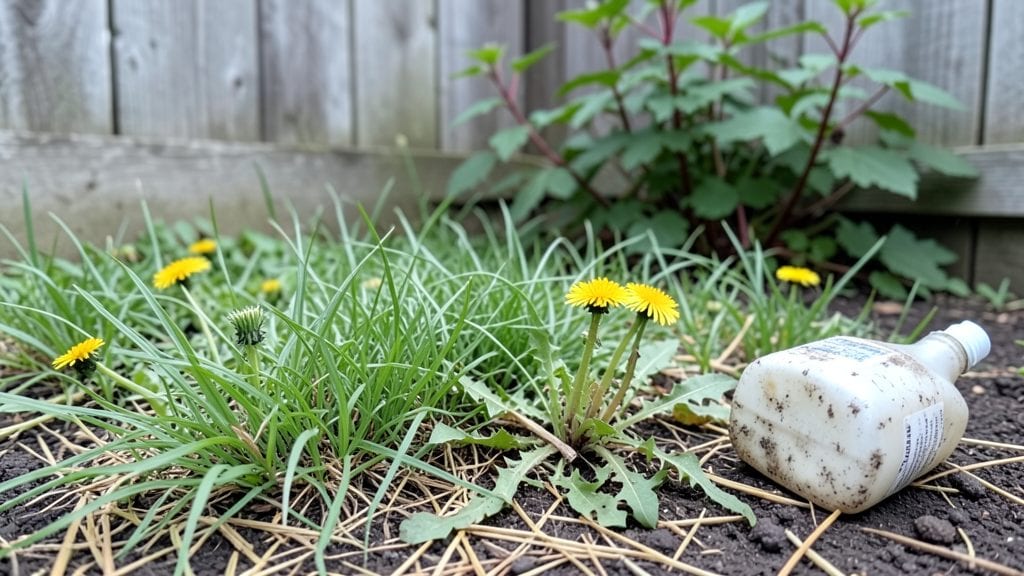
Bleach and grass create severe damage by burning plant cells, killing roots, and disrupting soil microbes, leaving lawns yellowed, brittle, and unable to recover without proper treatment. Even diluted bleach alters soil pH and harms beneficial fungi. Safe alternatives like vinegar-based herbicides or natural weed killers exist for targeted removal.
When you mix bleach with grass, the sodium hypochlorite in bleach breaks down chlorophyll and destroys cell membranes, essentially suffocating the plant. 🌱 This chemical attack doesn't just kill weeds—it also harms your lawn's roots and the helpful bacteria in the soil that keep grass healthy.
The damage often appears as patchy, yellowed areas that struggle to recover, even with watering. For a healthier lawn, consider targeted solutions like vinegar-based sprays or manual removal instead of relying on bleach.
If you're dealing with stubborn weeds, timing matters. Apply natural weed killers on a dry, sunny day when weeds are actively growing. For example, a 20% vinegar solution works best on broadleaf weeds like dandelions, while corn gluten meal prevents new weeds from sprouting by disrupting their growth cycle.
These methods are gentler on your lawn and won't leave behind toxic residue like bleach does.
Another key difference is that bleach doesn't discriminate—it kills everything it touches, including your desired grass. Natural alternatives allow you to target specific weeds without harming the rest of your lawn. Plus, they're safer for pets and children, making them a smarter long-term choice for maintaining a lush, green yard.
💡 In This Article
- How Bleach Kills Grass at a Cellular Level
- Non-Toxic Weed Control Methods for Lawns
How bleach kills grass at a cellular level
Bleach—specifically sodium hypochlorite—works as a powerful oxidizer that disrupts grass at the molecular level. When applied, it immediately breaks down chlorophyll, the green pigment responsible for photosynthesis. This causes the grass to lose its ability to convert sunlight into energy, leading to rapid yellowing.
The chemical also oxidizes cell membranes, creating holes that allow vital nutrients and water to leak out, effectively dehydrating the plant from within. 🔥
At the soil level, bleach raises the pH dramatically—often from the ideal 6.0-7.0 range to 11.0 or higher—which destroys beneficial microbes and fungi that help grass roots absorb nutrients. These microorganisms form symbiotic relationships with plants, and their loss leaves grass vulnerable to disease and stress.
Even diluted bleach can persist in soil for months, continuing to disrupt microbial ecosystems long after the surface damage appears.
What most people don't realize is that bleach doesn't just kill weeds—it also harms your lawn's roots. The sodium ions in bleach interfere with osmotic regulation, causing root cells to swell and burst.
This process is irreversible, meaning affected grass won't regrow even with proper care. The bleach's broad-spectrum toxicity makes it ineffective as a targeted weed killer, as it damages everything it touches indiscriminately.
The damage isn't just immediate. Long-term exposure to bleach residues can lead to soil compaction and reduced porosity, preventing water and air from reaching grass roots. Studies show that bleach-treated soil can remain inhospitable to new plant growth for up to 2 years without remediation.
This is why many lawns treated with bleach develop permanent brown patches that refuse to recover, even with fertilization and watering.
For comparison, consider how vinegar-based herbicides work differently. While vinegar also disrupts cell membranes, its acetic acid targets specific weeds without altering soil pH. This allows your lawn's grass to remain unaffected while the unwanted plants wither.
The key difference lies in selectivity—bleach is a non-selective herbicide, while natural alternatives can be more precise in their damage.
If you've ever seen bleach-treated grass turn crispy and brittle within hours, that's the result of protein denaturation. The bleach unravels the complex protein structures in grass cells, causing them to lose structural integrity.
This is why the damage appears so sudden and severe—it's not just wilting, but a complete breakdown at the cellular level. 💫