
Container Gardens
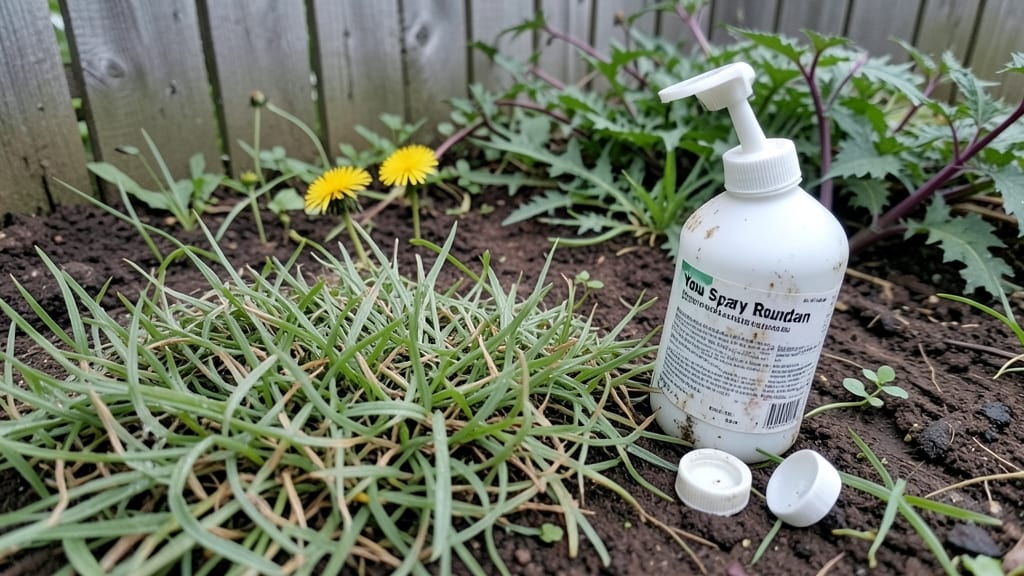
You shouldn't spray Roundup on wet grass because it reduces effectiveness and increases herbicide runoff risk, potentially damaging nearby plants or water sources. Apply only when conditions are dry for optimal absorption and safety, strictly following label guidelines for timing and weather restrictions.
Spraying herbicides like Roundup on damp grass creates a diluted solution that struggles to penetrate plant foliage effectively. The moisture causes the active ingredient—glyphosate—to spread unevenly across your lawn, reducing its ability to kill weeds.
Worse yet, rain or irrigation can wash the chemical into soil or waterways, harming beneficial insects and aquatic life. 🔥 I’ve seen cases where overcast days led to patchy results because the herbicide simply couldn’t adhere properly to wet blades.
Always check the forecast and wait for a dry, calm window—typically early morning—to ensure the product works as intended.
💡 In This Article
- How Weather Affects Roundup Absorption in Lawns
- Best Practices for Safe Roundup Application on Grass
How weather affects Roundup absorption in lawns
The key issue with applying Roundup to wet grass lies in glyphosate's chemical behavior. When sprayed on damp surfaces, the herbicide's active ingredient gets diluted by existing moisture, reducing its concentration from the recommended 41% in standard formulations to as low as 10-20% in heavy dew conditions.
This dilution prevents proper adhesion to plant foliage, where glyphosate needs to bind to leaf surfaces for systemic uptake through the plant's vascular system.
Humidity plays a critical role too—relative humidity above 70% creates a thin water film on grass blades that acts like a barrier. Studies from the Weed Science Society of America show that glyphosate absorption drops by 30-40% in humid conditions because the chemical can't penetrate the plant's cuticle effectively.
The ideal absorption window occurs when humidity is between 40-60%, allowing the herbicide to adhere properly while maintaining its potency.
Wind and impending rain create additional challenges. Even a 5-10 mph breeze can disperse Roundup droplets unevenly, leaving some weeds untreated while others receive overapplication.
Research from Purdue University demonstrates that rainfall within 4-6 hours after application can wash away 60-80% of the herbicide before it takes effect, rendering the treatment ineffective. This is why professional landscapers always check the National Weather Service forecast for "dry forecast" conditions before applying glyphosate-based products.
Temperature matters less than moisture but still influences results. Glyphosate works best between 60-85°F, as cooler temperatures slow plant metabolism (reducing uptake) while extreme heat can cause the herbicide to degrade faster.
The optimal application window is typically early morning (6-9 AM) when dew has evaporated but temperatures are still moderate, creating perfect conditions for absorption without runoff risks.
Here's what happens chemically when you spray on wet grass: The water molecules create a physical barrier that prevents glyphosate from forming the necessary bonds with plant cell membranes. Without proper adhesion, the herbicide either washes off or gets absorbed too slowly to be effective.
This is why you'll often see patchy weed control when applications occur after rain or irrigation.
The environmental consequences are equally concerning. Runoff from wet applications can carry glyphosate into nearby waterways, where it has been shown to harm aquatic life at concentrations as low as 0.1 ppm.
A 2018 study in Environmental Toxicology and Chemistry found that even diluted glyphosate can reduce amphibian populations by disrupting their endocrine systems, making proper application timing crucial for ecosystem health.