
How To
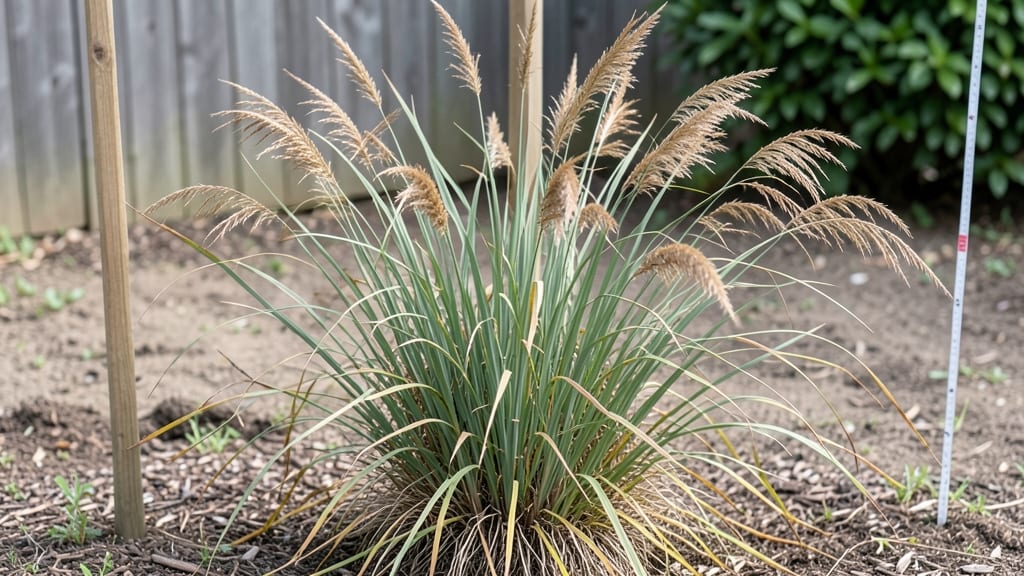
Understanding how tall ornamental grass grows helps you choose the right variety for your space. 💫 Many gardeners pick shorter types like Carex for borders or containers, while taller grasses such as Miscanthus make dramatic focal points.
What’s fascinating is how some varieties respond to pruning—cutting back aggressively in late winter can encourage denser growth, while leaving them untrimmed lets them develop their natural, airy forms.
Climate plays a huge role too: cold-hardy grasses like Feather Reed Grass thrive in zones 5-9, while tropical types need warmer conditions to reach their full height potential.
💡 In This Article
- Factors Influencing Ornamental Grass Height
- Best Tall Ornamental Grasses for Privacy Screens
Factors influencing ornamental grass height
Genetics set the foundation for ornamental grass height, but environmental conditions determine how close they reach their potential. For example, Miscanthus sinensis has a natural height range of 6-12 feet, but in poor soil conditions, it may only reach 4-6 feet.
The key factor is the plant's growth habit—whether it's clumping (like Carex) or spreading (like Pennisetum). Clumping varieties grow vertically from a central crown, while spreading types send out rhizomes that create wider, bushier plants. 🌱
Sunlight exposure dramatically affects height potential. Most ornamental grasses thrive in full sun (6+ hours daily), where they can grow 20-30% taller than in shade. For instance, Feather Reed Grass typically reaches 5-6 feet in full sun but may only hit 3-4 feet with partial shade.
The reason? Photosynthesis drives vertical growth—more light means more energy for stem elongation. Tropical varieties like Cortaderia selloana (pampas grass) actually grow taller in warmer climates where sunlight intensity is higher year-round.
Soil quality impacts height through nutrient availability and drainage. Well-draining, slightly acidic soil (pH 6.0-7.0) supports optimal growth, while compacted or waterlogged soil stunts root development.
For example, Blue Fescue (Festuca glauca) stays compact at 1-2 feet when soil is poor, but can reach 3 feet in rich, loamy conditions.
Cold-hardy varieties often grow more slowly in northern climates due to shorter growing seasons, while tropical types may grow faster but require consistent warmth to maintain their height.
Water availability creates another critical divide between cold-hardy and tropical grasses. Drought-tolerant varieties like Little Bluestem (Schizachyrium scoparium) grow 2-3 feet tall even with minimal water, while tropical Giant Reed (Arundo donax) can reach 15 feet when given ample moisture.
The difference lies in their root systems—tropical grasses develop deep, fibrous roots that access more water, while cold-hardy types have shallower roots adapted to seasonal moisture fluctuations. 💧
Seasonal growth cycles further complicate height predictions. Most ornamental grasses experience a 2-3 month dormant period in winter, during which growth halts completely. Spring brings rapid vertical growth as temperatures rise above 50°F, with peak elongation occurring between May and July.
Pruning timing matters too—cutting back in late winter encourages new growth, while waiting until spring may result in lost height potential for that season.
Here's what most people overlook: wind exposure can actually increase height in some varieties. Pampas grass and Maiden Grass often grow taller in windy conditions because the constant movement stimulates cell elongation in their stems.
The trade-off? Wind-prone areas may require staking for taller varieties to prevent flopping. For container-grown grasses, root restriction can limit height by 30-40% compared to in-ground plantings.