
How To
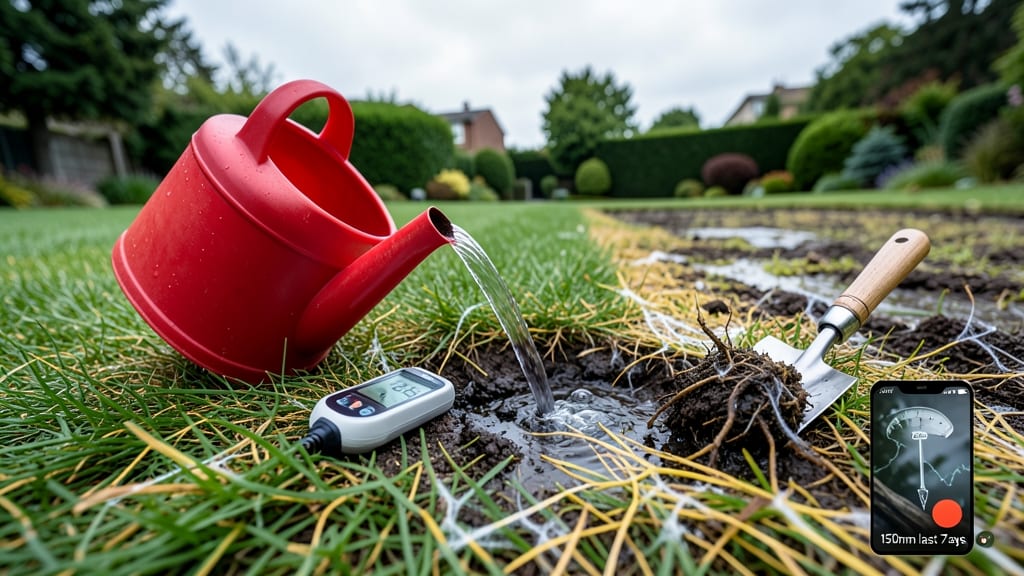
How to tell if your lawn is overwatered—it might be drowning in water instead of just thirsty for more. 🌱 Overwatering creates a soggy, unhealthy mess that looks like yellowing grass, mushroom spikes, and soil that smells like wet socks—all signs your turf is struggling more than growing. The good news? You can turn this around with simple adjustments.
Look for these dead giveaways: grass blades turning pale yellow or brown, a spongy feel underfoot, or that telltale mushroom growth popping up like unwanted guests. Runoff after watering or a musty odor from the soil are other red flags.
These aren’t just cosmetic issues—they’re signs of root rot and poor air circulation, which weaken your lawn over time.
Fix it fast by cutting back on watering (deep, infrequent sessions work better than daily light sprinkles) and improving drainage with sand or compost. Aeration helps too—it lets oxygen reach the roots and breaks up compacted soil. Within a few weeks, you’ll see greener grass and fewer fungus problems.
The key is balance: water deeply but let the top inch of soil dry out between sessions. A simple soil test with your finger can tell you if it’s time to water again. Your lawn will thank you with stronger roots and a healthier look all season long.
The Hidden Triggers Behind Wet Woes
Overwatering isn’t just a matter of turning the hose on too long—it’s a complex dance of soil science, weather patterns, and human habits. Understanding the root causes helps you avoid turning your lawn into a soggy swamp. Here’s why your grass might be drowning in its own downpour.
When Mother Nature delivers a drenching downpour, your watering schedule can easily clash with the skies. Many homeowners assume their sprinklers can "catch up" after rain, but soil saturation is cumulative.
Even if it rains heavily one day, a light sprinkle the next can push moisture levels past the tipping point.
Why it matters:
- Soil porosity (the tiny air pockets between soil particles) fills up with water, suffocating grass roots.
- Runoff becomes impossible—water pools instead of draining, creating anaerobic (oxygen-free) zones where roots rot.
- Fungal growth thrives in persistently wet conditions, leading to diseases like dollar spot or brown patch.
Actionable fix: Use a rain sensor on your sprinkler system to halt watering automatically during or after rainfall. Aim for 1 inch of water per week (including rain) as a general guideline.
Not all soil drains the same way. Clay-heavy soils act like sponges, holding onto water for days, while sandy soils dry out quickly but can’t retain moisture long enough for deep root growth. If your lawn sits on a sloped or compacted area, water pools instead of percolating down.
Why it matters:
- Clay soils can stay waterlogged for weeks, even after rain stops.
- Sandy soils may seem dry on top but can have hidden wet layers just below the surface.
- Compacted soil (from foot traffic or heavy equipment) crushes pores, blocking drainage.
Actionable fix: Test your soil’s drainage by digging a 6-inch hole, filling it with water, and timing how long it takes to drain:
- Fast (under 1 hour): Sandy soil—needs deeper, less frequent watering.
- Slow (4+ hours): Clay soil—amend with organic matter (compost) to improve aeration.
Timing is everything. Watering late in the day (after sunset) or during high winds leads to evaporation loss and uneven distribution. Meanwhile, short, frequent waterings (like daily light sprinkles) encourage shallow root growth, making grass more dependent on surface moisture.
Why it matters:
- Evening watering keeps grass damp overnight, inviting fungal spores to multiply.
- Wind disperses water unevenly, leaving some areas soggy while others dry out.
- Shallow roots (from light watering) can’t access deeper moisture, so they wiltingly beg for more—leading to overwatering cycles.
Actionable fix:
- Water early morning (4–9 AM) to reduce evaporation and fungal risk.
- Deep water 2–3 times per week (1–1.5 inches per session) to encourage roots to grow 6+ inches deep.
- Use a rain gauge to track actual water applied—many sprinklers overestimate coverage.
Misaligned sprinkler heads, clogged nozzles, or broken timers can turn your irrigation system into a water-wasting nightmare. Even a single malfunctioning head can drench a small patch while the rest of the lawn stays dry—leading to uneven moisture stress.
Why it matters:
- Overlapping sprinkler patterns create hot spots where grass gets 2–3x more water than needed.
- Clogged emitters (from debris or mineral buildup) spray fine mist that evaporates before reaching the soil.
- Manual timers often run longer than intended, especially if forgotten.
Actionable fix:
- Check sprinkler heads monthly for clogs, misalignment, or broken parts.
- Use smart controllers (like Rain Bird or Rachio) that adjust watering based on weather forecasts and soil moisture sensors.
- Walk your lawn after watering—look for puddles, dry spots, or misting (signs of inefficiency).
Too much nitrogen-rich fertilizer (common in fast-acting lawn foods) can stimulate rapid growth, which demands more water. Meanwhile, thatch layers (a dense mat of dead grass and roots) act like a waterproof blanket, preventing moisture from reaching the soil below.
Why it matters:
- Excess nitrogen makes grass thirstier, as it prioritizes leaf growth over root development.
- Thatch thicker than ½ inch blocks water and oxygen, creating anaerobic conditions where roots suffocate.
- Weeds like crabgrass thrive in overwatered, nutrient-rich soil, outcompeting your lawn.
Actionable fix:
- Test soil pH and nutrients before fertilizing—aim for a balanced NPK ratio (e.g., 24-4-8).
- Dethatch in early fall if your layer exceeds ½ inch (use a rake or vertical mower).
- Aerate compacted soil to break up thatch and improve water penetration.
If your lawn has low spots, depressions, or obstructions (like tree roots or buried pipes), water pools in those areas while the rest of the lawn stays dry. Even a slight grade change can redirect water toward certain zones.
Why it matters:
- Water seeks the lowest point, creating permanent soggy zones where grass yellows or dies.
- Tree roots absorb massive amounts of water, leaving surrounding areas parched while the tree’s base stays drenched.
- Buried downspouts or drains can back up water into your lawn.
Actionable fix:
- Reseed or sod low areas with drought-tolerant grasses (like tall fescue or zoysia).
- Install French drains or swales (shallow trenches) to redirect water away from problem spots.
- Mulch around trees to reduce evaporation and aerate the root zone to help with water absorption.
How to Fix Overwatered Grass
If your lawn is suffering from too much water, don’t panic—there’s a clear path to recovery. The key is to act quickly, adjust your watering habits, and give your grass the right conditions to bounce back.
Below, we’ll break down solutions based on the most common signs of overwatering, from yellowing patches to mushroom invasions. Each fix is designed to be practical, cost-effective, and easy to implement, even for busy homeowners.
Yellowing grass is often the first sign of overwatering, but it’s usually reversible with the right steps.
🔥 Step 1: Stop Watering Immediately
This might seem counterintuitive, but cutting off the excess water is the fastest way to prevent further damage. Let the soil dry out completely before watering again.
🍳 Step 2: Aerate Compacted Soil
Overwatering compacts soil, making it hard for roots to breathe. Rent or buy a core aerator to pull small plugs of soil, allowing air, water, and nutrients to penetrate deeper.
- When to do it: Early morning on a slightly damp day.
- How often: Once a year for most lawns; twice if your soil is clay-heavy.
👨🍳 Step 3: Adjust Your Watering Schedule
Replace deep, frequent watering with deep, infrequent sessions. Aim for 1–1.5 inches of water per week, including rainfall. Use a rain gauge or tuna can to measure accurately.
| Time of Day | Best Practice |
|---|---|
| Morning (6–10 AM) | Ideal—allows grass to dry before evening, reducing fungal risks. |
| Afternoon (12–4 PM) | Avoid—intense sun can cause rapid evaporation and burn. |
| Evening (After 6 PM) | Risky—keeps grass wet overnight, promoting disease. |
🥘 Step 4: Improve Drainage
If water pools on your lawn after rain, you may need to fix drainage issues. Try these fixes:
- Grade your lawn: Ensure a slight slope (1–2%) away from your home to redirect water.
- Add sand or compost: Mix coarse sand or organic matter into heavy clay soil to improve drainage.
- Install French drains: For severe waterlogging, buried perforated pipes can channel excess water away.
⏰ Step 5: Fertilize Smartly
Overwatered grass often lacks nutrients. Use a slow-release, balanced fertilizer (16-4-8 or similar) to help recovery. Avoid high-nitrogen fertilizers, which can worsen stress.
Pro tip: 💡 Test your soil first! A simple home test kit (or lab test) can tell you if your lawn needs nitrogen, phosphorus, or potassium adjustments.
Mushrooms thrive in damp, shaded conditions—classic overwatered lawn symptoms. Here’s how to get rid of them and prevent a comeback.
🔪 Step 1: Remove Mushrooms Completely
Don’t just chop them at the base; mushrooms regrow from their root networks. Dig them out with a shovel or fork, ensuring you get the entire underground mycelium.
🌡️ Step 2: Dry Out the Soil
Mushrooms need moisture to survive. Let the lawn dry out completely between waterings. If your yard stays soggy, consider:
- Installing a soil moisture meter to track dampness.
- Planting drought-tolerant grasses (like tall fescue or zoysia) in problem areas.
🎯 Step 3: Improve Airflow and Sunlight
Mushrooms love shade and humidity. Thin out dense grass or trim nearby trees/shrubs to increase sunlight and airflow.
✨ Step 4: Use Fungicides (If Needed)
For persistent mushroom problems, apply a non-toxic fungicide like copper-based sprays or horticultural vinegar. Follow label instructions carefully.
Pro tip: 🔥 Prevent recurrence: After treating, monitor soil moisture and adjust watering habits to keep the lawn drier.
Once your lawn recovers, keep these habits to avoid overwatering in the future:
- Check soil moisture: Stick your finger 2–3 inches into the soil. If it’s damp, wait before watering.
- Water deeply but less often: Encourage deep root growth by watering 2–3 times per week (instead of daily light sprinkles).
- Use a sprinkler timer: Automate watering to avoid overdoing it when you’re busy.
- Mulch properly: A 2–3 inch layer of mulch retains moisture without suffocating grass roots.
- Choose the right grass: Cool-season grasses (like Kentucky bluegrass) need more water than warm-season types (like Bermuda grass). Match your grass type to your climate.
With these fixes, your lawn can recover from overwatering in as little as 2–4 weeks, depending on the damage. Stay consistent, and soon you’ll have a lush, healthy yard that’s resilient to future watering mistakes!
Frequently asked questions
What does soggy grass feel like when you walk on it?
Soggy grass feels spongy or squishy underfoot, almost like walking on a damp mattress. If you press your foot down and see water seep up or hear a squelching sound, that’s a clear sign your lawn is overwatered. Healthy grass should feel firm but springy, not mushy or waterlogged.
How often should I water my lawn to avoid overwatering?
Water deeply 2-3 times per week (early morning) for 1-1.5 inches total per week, including rainfall. Let the top 2-3 inches of soil dry out between waterings. Daily light sprinkles encourage shallow roots and waste water—deep, infrequent sessions train roots to grow deeper.
Are mushrooms always a sign of overwatering?
Almost always! Mushrooms thrive in damp, shaded conditions created by excess moisture. While they’re not harmful to grass, their presence confirms your lawn stays too wet for too long. Remove them by digging out the entire fungus (including roots) and let the soil dry out completely to prevent regrowth.
Can I still save my lawn if it's already yellow from overwatering?
Yes! Stop watering immediately and let the soil dry out. Aerate compacted areas to improve airflow, then adjust your watering schedule to deep, infrequent sessions. Within 2-4 weeks, you should see green patches return as roots recover. Avoid high-nitrogen fertilizers until the lawn shows signs of recovery.
What's the best way to test if my soil is too wet?
Use the finger test: Stick your finger 2-3 inches into the soil. If it feels damp or you can squeeze water out, it’s overwatered. For a more precise check, dig a 6-inch hole, fill it with water, and time how long it takes to drain—under 1 hour means sandy soil (dries fast), 4+ hours means clay soil (holds too much water).