
Lawn
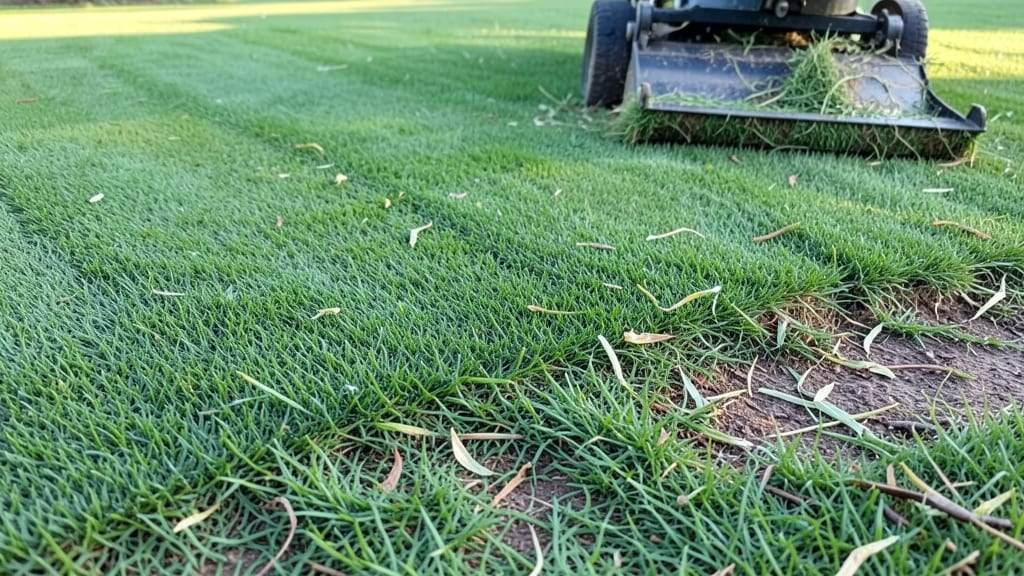
Mulched grass clippings act as a natural fertilizer by decomposing quickly, returning nitrogen and nutrients to soil while suppressing weeds and retaining moisture—ideal for healthy lawns with minimal effort. Always use clippings from chemical-free grass for best results.
When you mulch grass clippings instead of bagging them, you're essentially recycling nutrients back into your lawn ecosystem. The blades break down rapidly into organic matter, enriching the soil with nitrogen and other essential minerals that support root growth.
This process also creates a protective layer that locks in moisture and blocks sunlight from reaching weed seeds. 🌱 For best results, I always mow when the grass is dry and adjust my mower's height—never cut more than one-third of the blade length at once.
What makes mulching so effective is how it mimics nature's own nutrient cycle. Unlike bagging, which removes valuable organic material, mulching keeps everything in place, reducing waste and saving time.
Just be mindful of grass type—cool-season grasses like Kentucky bluegrass handle mulching better than warm-season varieties, which may need occasional bagging to prevent thatch buildup.
💡 In This Article
- How Mulched Grass Clippings Enhance Soil Fertility
- Best Practices for Mulching Grass Clippings Safely
How mulched grass clippings enhance soil fertility
Here's what's actually happening when you mulch grass clippings: the blades decompose through microbial activity, releasing nutrients back into the soil within 24-48 hours under ideal conditions. This rapid breakdown happens because grass clippings contain about 4-5% nitrogen by dry weight, making them a nitrogen-rich "green manure."
The microbes break down cellulose and other organic compounds, converting them into forms plants can absorb—like ammonium (NH₄⁺) and nitrate (NO₃⁻)—which are essential for chlorophyll production and root development.
The decomposition process also creates a protective mulch layer that blocks 90% of sunlight from reaching weed seeds, while the fine texture of clippings allows moisture to penetrate the soil without evaporating.
This is why mulched lawns stay greener longer during dry spells—the clippings act like a natural moisture barrier, reducing water loss by up to 25% compared to bagged lawns.
The texture changes as they decompose: initially coarse and fibrous, they transform into a fine, almost powdery consistency within 1-2 weeks, creating an ideal environment for earthworms and beneficial soil microbes.
What most people don't realize is how mulching affects soil pH over time. Grass clippings are slightly acidic (pH 5.5-6.5), which helps neutralize overly alkaline soils common in many lawns. This gradual pH adjustment creates optimal conditions for beneficial bacteria that further break down organic matter.
Unlike bagging, which removes these natural amendments, mulching maintains the soil's microbial ecosystem—think of it as a closed-loop system where nutrients cycle continuously rather than being lost to landfills.
There's a scientific reason mulching works better than bagging: the carbon-to-nitrogen (C:N) ratio of fresh grass clippings is about 20:1, which is perfect for microbial decomposition. When you bag clippings, you're removing this carbon source, forcing your lawn to rely on synthetic fertilizers.
The microbes in mulched lawns also produce humic acids as byproducts, which improve soil structure and water retention—similar to how compost tea works but without the extra effort. This is why professional turf managers often recommend mulching as part of sustainable lawn care practices.
For comparison, consider this: a 1,000 sq ft lawn produces about 50 lbs of clippings per year when mulched. If bagged instead, that's 50 lbs of potential fertilizer removed from your ecosystem. The clippings would contain roughly 2-2.5 lbs of nitrogen, enough to fertilize the lawn naturally.
This natural cycle reduces the need for chemical fertilizers by up to 25-50% while improving soil health long-term.
The key difference between mulching and bagging becomes clear when you examine the soil's organic matter content. Studies show mulched lawns develop 1.5-2 times more organic matter in the top 2 inches of soil compared to bagged lawns.
This organic layer acts like a sponge, holding 3-4 times more water than conventional lawns, which explains why mulched lawns recover faster from drought. The visual difference is striking too—mulched lawns often have a deeper green color because the continuous nutrient supply supports more robust root systems.