
Fertilization
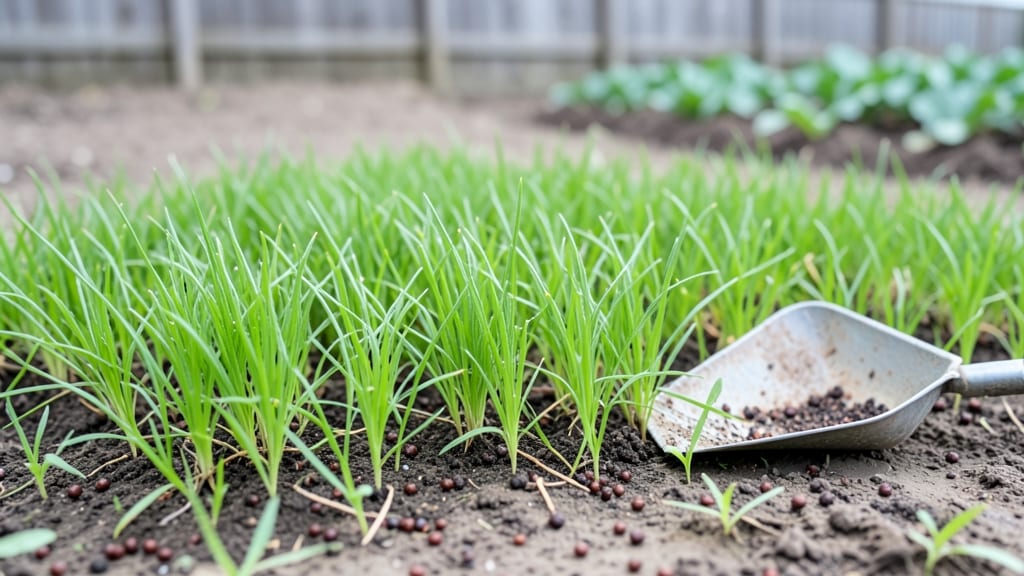
You can fertilize new grass when soil temperatures hit 55–65°F (13–18°C), seedlings reach 3–4 inches tall, or roughly 6–8 weeks after seeding—but only before summer heat arrives. Extreme heat or drought will scorch delicate roots, so timing matters most.
Timing your first fertilizer application depends on two key factors: soil warmth and seedling strength. 🌱 Grass roots need consistent temperatures above 55°F to absorb nutrients efficiently, while 3–4 inch blades signal enough leaf surface to support growth.
I’ve seen homeowners rush this step in early spring only to watch their grass yellow from shock—always double-check soil temps with a thermometer if you’re unsure.
For best results, use a starter fertilizer (higher phosphorus) to encourage root development, then switch to a balanced formula once the lawn is established. Water thoroughly after application to help nutrients penetrate, and avoid mowing for 2–3 days to prevent stress.
Regional climates vary, so adjust your schedule: Northern lawns may wait until late May, while Southern zones can fertilize as early as March.
💡 In This Article
- Soil Temperature and Grass Growth Stages for Fertilizing
- Step-by-Step Guide: Safely Fertilizing New Lawns
Soil temperature and grass growth stages for fertilizing
Grass roots become metabolically active when soil temperatures consistently stay above 55°F (13°C), which is when they can efficiently absorb nitrogen and phosphorus from fertilizer. Below this threshold, microbial activity slows dramatically—roots grow sluggishly, and applied nutrients simply sit unused in the soil.
The ideal range of 55–65°F (13–18°C) aligns with optimal enzyme activity in grass roots, where cell division accelerates and nutrient uptake reaches peak efficiency. This is why early spring applications often fail: cool soils mean wasted fertilizer and potential nutrient runoff.
Root depth also plays a critical role in fertilizer readiness. At 3–4 inches of blade height, most cool-season grasses (like Kentucky bluegrass) have developed roots reaching 2–3 inches deep, while warm-season varieties (like Bermuda) may have roots extending 4–6 inches.
These roots create a larger surface area for nutrient absorption. Fertilizing too early—when roots are shallow—means nutrients concentrate near the surface, risking leaching or burning tender root tips. Think of it like feeding a toddler: small portions are better than overwhelming them.
Seasonal timing varies dramatically by region. In USDA Zones 3–5 (northern climates), soil temps may not reach 55°F until late May, while Zones 7–9 (southern climates) can fertilize as early as March. The key is to monitor 6-inch soil temperatures (not air temps) using a digital thermometer.
In drought-prone areas, even meeting the temperature threshold isn't enough—soil moisture must also be adequate to prevent fertilizer salts from concentrating and burning roots. This is why many experts recommend waiting until after the first 1-inch rainfall following seeding.
What most people overlook is how heat stress affects fertilizer sensitivity. Once soil temps exceed 85°F (29°C), grass roots produce protective compounds that actually reduce nutrient uptake by up to 40%. This is why late-spring applications in hot climates often backfire—what should be growth fuel becomes a stressor.
The window for first fertilization is typically 6–8 weeks after seeding, but this shrinks to just 4–6 weeks in cooler northern regions where summer arrives later. Always check your local USDA Plant Hardiness Zone for precise timing.
Here’s a quick comparison of how different grass types respond to timing:
- Cool-season grasses: Fertilize when soil temps are 55–65°F and blades reach 3 inches (usually late spring)
- Warm-season grasses: Wait for 65–75°F soil temps and 4-inch blades (typically early summer)
- Overseeding ryegrass: Can tolerate 45–55°F soils but needs high phosphorus to establish quickly
The science behind why early fertilization burns grass lies in salt index—the concentration of soluble salts in fertilizer. When tender seedlings can't dilute these salts through rapid growth, they accumulate in root zones, disrupting water uptake.
This is why starter fertilizers use slow-release nitrogen (like sulfur-coated urea) to prevent shock. Always water in fertilizer immediately after application to help move salts deeper into the soil profile. 🌱