
Fertilization
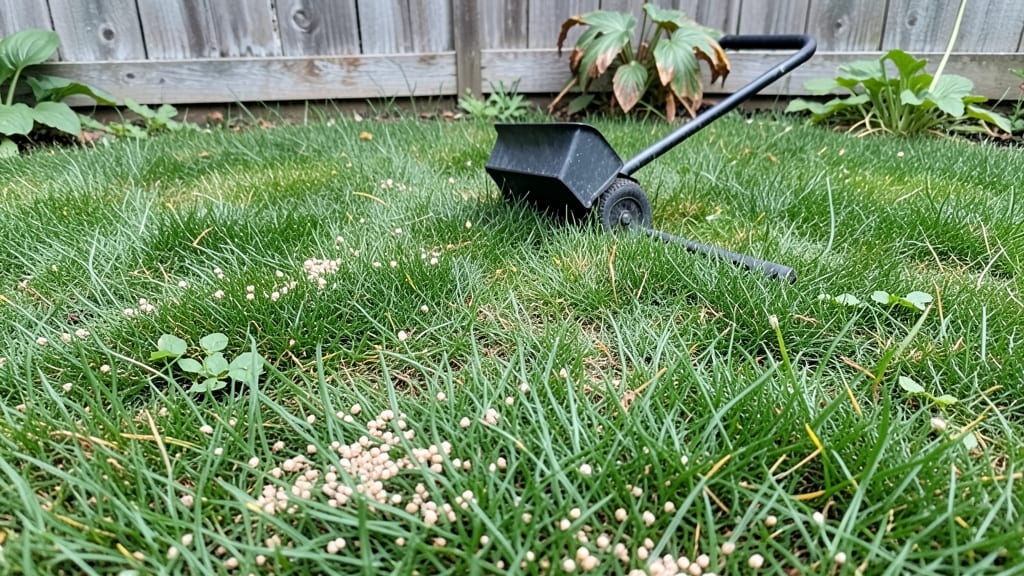
To fertilize your grass, time it for early spring (late March to April) and late summer (August to September), when soil temperatures hit 50–60°F for cool-season grasses or 75–85°F for warm-season varieties, maximizing nutrient uptake and root development.
Timing matters because grass growth cycles align with soil warmth and moisture levels.
Cool-season grasses like Kentucky bluegrass wake up in spring, while warm-season types such as Bermuda grass thrive when summer heat kicks in. 🌱 I always check soil temps with a simple thermometer—it’s the best way to avoid over- or under-fertilizing, which can stress your lawn.
For example, applying fertilizer too early in cold soil wastes nutrients, while waiting too late in summer can stunt late-season growth.
Beyond seasons, your grass type dictates the exact window. Cool-season varieties need their first feeding in early spring to jumpstart growth after winter dormancy, while warm-season grasses benefit from late summer applications to strengthen roots before fall.
This two-step approach ensures year-round health, whether you're dealing with fescue in the North or Zoysia in the South.
💡 In This Article
- Grass Fertilizer Timing Based on Climate Zones
- Pre-Fertilizer Soil Prep and Nutrient Needs
Grass fertilizer timing based on climate zones
Here's what's actually happening underground: grass growth cycles are triggered by soil temperatures, not just calendar months. Cool-season grasses like Kentucky bluegrass and fescue enter their active growth phase when soil temperatures consistently reach 50-60°F, typically in late March through April in most northern regions (USDA Zones 3-6).
This warmth signals their roots to resume nutrient uptake after winter dormancy. Warm-season varieties such as Bermuda and Zoysia, however, only become metabolically active when soil hits 75-85°F, usually in late May to June in southern zones (7-10).
The key factor is how these grasses respond to temperature shifts. Cool-season types grow best when days are cool and nights are warm—a pattern that peaks in spring and fall. Warm-season grasses, meanwhile, thrive in consistent summer heat and actually go dormant when soil temps drop below 60°F.
This is why fertilizing Bermuda grass in early spring would be counterproductive—it's still dormant and can't utilize nutrients until summer arrives. 🌡️ What most people don't realize is that a 10°F variation in soil temperature can shift your optimal fertilization window by 2-3 weeks depending on your specific microclimate.
Your USDA hardiness zone determines these windows with remarkable precision. In Zone 5, for example, you might fertilize cool-season grass in early April when soil hits 52°F, while in Zone 8, warm-season grass needs feeding in mid-August at 80°F soil.
Regional adjustments are crucial too: drought-prone areas may need to delay summer applications until after the first significant rainfall, while northern climates might extend spring feeding into May if frost risks persist.
This is why I always recommend testing soil temps at 4-inch depth—surface temps can be misleading by 15-20°F.
Special cases require even more nuance. In transition zones (like Zone 7), you might have both cool and warm-season grasses competing for resources. Here, a two-phase approach works best: apply nitrogen-heavy fertilizer for cool-season grasses in early spring, then switch to potassium-focused feeds for warm-season varieties in late summer.
For frost-prone areas, avoid fertilizing within 6 weeks of first frost—new growth is vulnerable to cold damage. 🌬️ The science behind this involves understanding that grass roots need 10-14 days of consistent warm soil to properly metabolize nutrients before dormancy sets in.
Consider these practical adjustments by region:
- Northern climates (Zones 3-5): Focus spring feeding on high nitrogen (25-30%) to repair winter damage, with a second application in early September for fall root strengthening
- Southern climates (Zones 8-10): Prioritize potassium-rich fertilizers in late summer to improve drought resistance and disease tolerance
- Transition zones (6-7): Use a split application strategy—half in early spring, half in late summer—to accommodate both grass types
What most lawn care professionals agree on is that proper timing isn't just about seasons—it's about matching your grass's biological clock with soil conditions. This precision prevents nutrient runoff (which harms waterways) and ensures your lawn gets exactly what it needs when it needs it most.
The result? A lawn that's not just green, but resilient against pests, drought, and disease. 💪