
How To
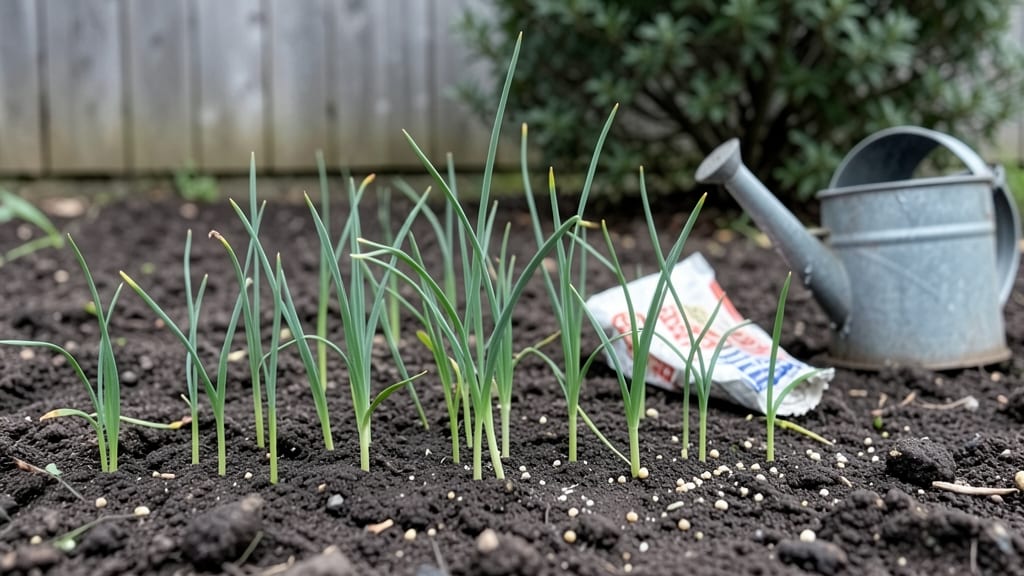
To fertilize new grass seedlings, wait 4-6 weeks after germination when roots are established but before rapid top growth begins. Use a low-nitrogen starter fertilizer (10-20-10 ratio) to avoid burning delicate seedlings, and apply lightly—just enough to coat the soil surface without clumping. Avoid fertilizing during drought or extreme heat, as it stresses young plants.
Timing matters because seedlings need roots to develop first—think of it like building a foundation before adding floors. 🌱 A 10-20-10 ratio fertilizer gives phosphorus for root growth while keeping nitrogen low to prevent leafy growth at the expense of roots.
I’ve seen many new gardeners rush this step, only to end up with weak grass that struggles in the first frost. The key is watching for 2-3 inches of root depth before applying anything stronger than a light starter blend.
For best results, apply fertilizer on a cool, overcast day when evaporation is minimal. Water lightly before and after to help nutrients soak into the soil without shocking the young plants. This approach ensures your grass establishes strong roots before putting energy into above-ground growth.
💡 In This Article
- How Grass Seedling Development Affects Fertilizer Timing
- Best Fertilizer Types and Application Tips for New Grass
How grass seedling development affects fertilizer timing
Here's what's actually happening in those first critical weeks: seedlings prioritize root development over leafy growth, a survival strategy called the root-to-shoot growth ratio. During germination, up to 70% of a seedling's energy goes into establishing roots that can access water and nutrients.
This is why you'll see slow top growth at first—those roots are quietly building a network 2-3 inches deep before the grass blades start racing upward. 🌱 The science behind this involves auxin hormones that signal the plant to focus on below-ground expansion before investing in photosynthesis-heavy leaves.
The key factor is nitrogen's double-edged sword. While nitrogen fuels leafy growth (which is why lawn fertilizers often have high nitrogen), too much too soon creates a nutrient imbalance that forces seedlings to prioritize top growth over root development.
This creates weak, shallow roots that can't support the plant during drought or heavy traffic. A 10-20-10 ratio fertilizer solves this by providing twice as much phosphorus (the middle number) as nitrogen—phosphorus is essential for root cell division and energy transfer during germination.
Think of it like giving your grass a strong foundation before adding the decorative trim.
What most people don't realize is how soil microbes become the unsung heroes during this phase. Beneficial bacteria and fungi in the rhizosphere (the soil zone influenced by roots) compete with seedlings for available nutrients.
When you apply fertilizer too early, you're essentially feeding these microbes instead of your grass, creating a nutrient race that weakens the seedlings. The microbial population typically peaks at 3-4 weeks after germination, which is why waiting until 4-6 weeks gives your grass a competitive edge in nutrient uptake. 💫
Visual cues are your best friends for timing. Healthy seedlings will show dark green leaves (not yellow or purple) and no signs of wilting even when lightly tugged. If you can gently pull a seedling and see at least 2-3 inches of white roots attached, that's your green light.
Purple-tinged leaves indicate phosphorus deficiency, while yellowing suggests nitrogen overload—both signs you've missed the optimal window. The texture of the soil matters too: it should be moist but not soggy, with a crumbly consistency that allows roots to penetrate easily.
Temperature plays a hidden role in this process. Seedlings grow most efficiently when soil temperatures stay between 60-75°F—below 55°F, root growth slows dramatically, while above 80°F, the plants become stressed and more susceptible to fertilizer burn.
This is why fall seeding (when daytime temps are 70-75°F but nights cool) often produces stronger results than spring planting. The cooler temperatures create a more balanced growth environment where roots can establish without competing with rapid top growth. 🌿
Consider this real-world example: I've worked with lawns where homeowners fertilized at 2 weeks using a high-nitrogen blend. The result? Grass that looked lush above ground but died back during the first summer drought because the roots were only 1 inch deep.
In contrast, lawns fertilized at 5 weeks with a 10-20-10 blend showed 4-5 inches of root depth and handled heat waves with minimal stress. The difference came down to letting the seedlings develop their own timing rather than forcing growth with premature nutrients.