
Fertilization
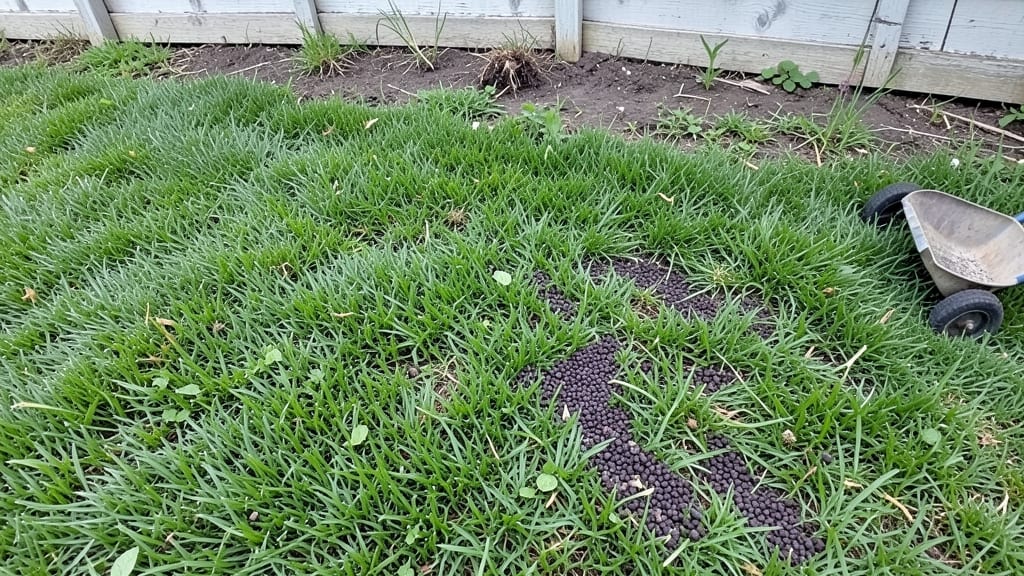
To fertilize new St. Augustine sod, wait 4-6 weeks after installation and use a slow-release, low-nitrogen fertilizer (like 10-10-10) to protect tender roots. Follow up every 6-8 weeks during spring through fall, finishing with a late-summer feeding to strengthen roots before winter.
Timing matters because young St. Augustine sod needs gentle nutrition to establish strong roots without stress. 🌱 The first feeding jumpstarts growth when roots are shallow, while later applications support thicker blades as the grass matures.
I’ve seen sod recover poorly when fertilized too early—roots can’t handle high nitrogen before they’re ready. For best results, stick to the 6-8 week schedule and avoid fall fertilizing, which can encourage late-season growth vulnerable to cold damage.
Your climate plays a role too: coastal areas may need slightly earlier spring feedings due to milder winters, while inland regions can wait until soil warms consistently.
Always choose a fertilizer with low nitrogen (like 10-10-10) until the sod is fully rooted—high nitrogen now can burn delicate blades and invite fungal issues. 💫
💡 In This Article
- St. Augustine Sod Growth Stages and Fertilizer Needs
- Seasonal Fertilizing Schedule for St. Augustine Grass
St. augustine sod growth stages and fertilizer needs
Here's what's actually happening beneath your new sod: St. Augustine grass goes through three critical rooting phases after installation. First, the establishment phase (0-4 weeks) focuses on shallow root spread (about 1-2 inches deep) to anchor the sod and access surface moisture.
During this time, the grass relies on stored energy from the nursery and minimal new nutrients—too much fertilizer now can actually burn tender roots and stress the plant.
The active growth phase (4-12 weeks) is when roots deepen to 3-6 inches and begin competing for nutrients. This is why your first fertilizer application at 4-6 weeks should be low-nitrogen (10-10-10 ratio)—the grass needs phosphorus for root development and potassium for stress resistance, not just leafy top growth.
Think of it like a baby learning to walk: you wouldn't give a toddler a full meal's worth of protein when they're just learning balance. 🌱
What most people don't realize is how nitrogen levels must decrease over time to prevent disease. Early feedings use low nitrogen (10-10-10) to protect young roots, but as the grass matures (after 3 months), you can gradually increase nitrogen to 15-0-15 or 20-0-10 ratios for thicker blades.
The key factor is timing: high nitrogen too early creates lush blades with weak roots, making the sod more susceptible to Brown Patch fungus or take-all root rot—both common in humid climates.
This works because St. Augustine's natural growth habit is spreading via stolons, not just vertical roots. Stolons (horizontal stems) need consistent but moderate nutrition to develop strong connections between plants. When you see those 1-2 inch runners spreading across your lawn, that's your sod establishing its own support system.
Fertilizer timing supports this by ensuring stolons have enough energy to root at new nodes while maintaining overall plant health. 💫
The science behind this involves understanding how grass absorbs nutrients. Young sod has limited root surface area (about 0.5 square inches per square foot initially), so high nitrogen concentrations can't be properly diluted.
As roots grow, they develop mycorrhizal fungi relationships that help absorb nutrients more efficiently—this typically happens by 8-12 weeks post-installation, which is why you can then safely increase fertilizer strength.
Consider these key factors when adjusting your approach: In coastal regions, where humidity is higher, reduce nitrogen by 25% to prevent fungal issues. For inland areas, you might extend your final summer feeding into early September if temperatures stay above 75°F.
Always water deeply (1-1.5 inches) after fertilizing to help nutrients reach developing roots—shallow watering concentrates salts at the surface, which can further stress young plants. 💧
Here's a pro tip: After your first feeding, watch for dark green blades with no yellowing—this indicates proper nitrogen levels. If you see dark brown edges or mushy patches, you've overdone it.
The goal is steady growth, not rapid expansion that outpaces root development. This balanced approach is what turns your new sod into a resilient lawn that can handle Florida's heat and humidity. ✨