
Lawn
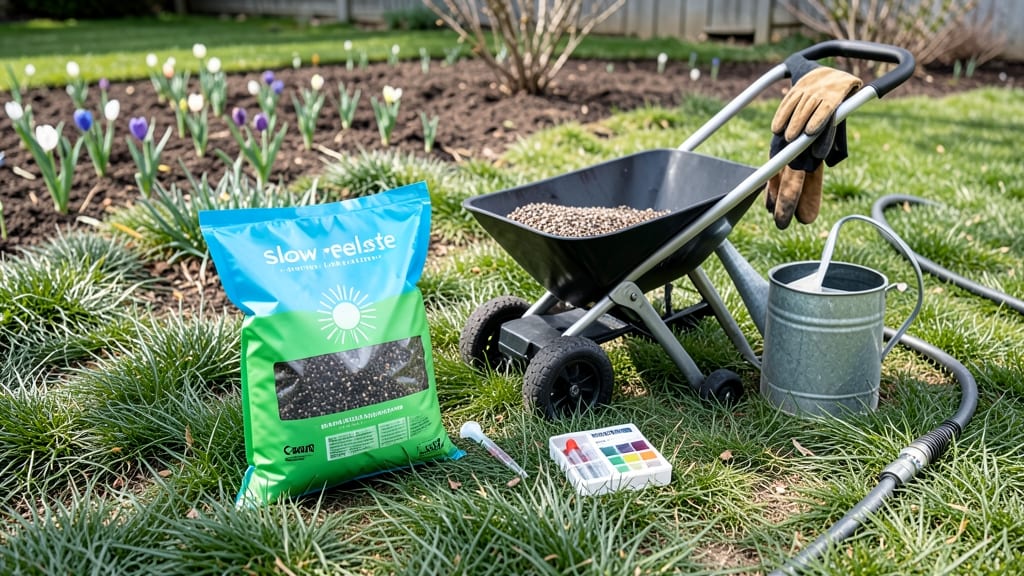
To first fertilize lawn in spring, wait until soil temperatures hit 55–60°F (13–16°C), usually landing between mid-March and early May in most U.S. regions. Opt for slow-release formulas to protect young grass roots from chemical burns while fueling early growth after dormancy. Always check soil pH first to fine-tune nutrient absorption.
Timing your spring fertilization this precisely isn't just about following a calendar—it's about syncing with nature's pace. 🌱 When soil warms to 55–60°F, beneficial microbes wake up and start breaking down organic matter, making nutrients available just as grass roots begin their spring surge.
I've seen firsthand how fertilizing too early can scorch tender blades, while waiting too long means missing that critical 6-week window when grass is most receptive to nutrients. For cooler climates, aim for late April to early May, while Southern regions might start as early as February.
Pro tip: Use a soil thermometer to verify temperatures—surface temps can mislead you. Pair your first application with a slow-release formula containing 25–30% nitrogen to feed grass steadily without overloading it. This is especially important if you're overseeding, as new grass needs consistent nutrition to establish roots.
💡 In This Article
- How Soil Temperature Affects Spring Fertilizer Timing
- Choosing the Right Spring Lawn Fertilizer Type
How soil temperature affects spring fertilizer timing
The magic happens at 55–60°F (13–16°C) because that's when soil microbes—especially bacteria and fungi—become active again after winter dormancy. These microorganisms break down organic matter and convert it into forms grass roots can absorb, like ammonium and nitrate.
Below 50°F (10°C), microbial activity slows to nearly 50%, meaning nutrients sit unused in the soil. 🌱 This temperature threshold also aligns with when grass roots begin elongating after months of dormancy, creating the perfect window for nutrient uptake.
Regional climate plays a huge role in timing. In the Northern U.S. (Zones 3-5), you might not hit 55°F until late April or early May, while Southern states (Zones 7-9) could see it as early as February.
A cold snap can delay fertilization by weeks—soil temps can drop 20°F (11°C) overnight, halting microbial activity. I once saw a lawn in Zone 6 where the homeowner fertilized in early April, only to have a cold front burn the grass because the soil was still at 48°F (9°C).
Fertilizing too early risks chemical burns on tender new growth. Synthetic fertilizers release nitrogen as ammonia, which can scorch grass blades when soil microbes aren't ready to convert it. The damage looks like yellow patches that spread rapidly.
Conversely, waiting too long means missing the 6-week growth window when grass is most receptive to nutrients. This is why slow-release fertilizers are ideal—they provide steady nutrition even if you miss the perfect timing by a few days.
Here's what's happening under your lawn: At 55°F, grass roots grow 2–3 times faster than at 45°F (7°C), creating more surface area for nutrient absorption. The roots also produce more exudates—sugary compounds that feed beneficial microbes, creating a feedback loop.
This is why a 1-inch soil probe (not surface temp!) is your best tool—it reveals the real temperature where roots are active.
Consider this comparison: Fertilizing at 50°F (10°C) gives you 30% nutrient uptake efficiency, while at 60°F (16°C), it jumps to 70–80%*. The difference comes from microbial activity and root growth rates.
For best results, pair your first application with a slow-release formula (like polymer-coated urea) that lasts 6–8 weeks, giving grass time to establish before needing another boost.