
Mower
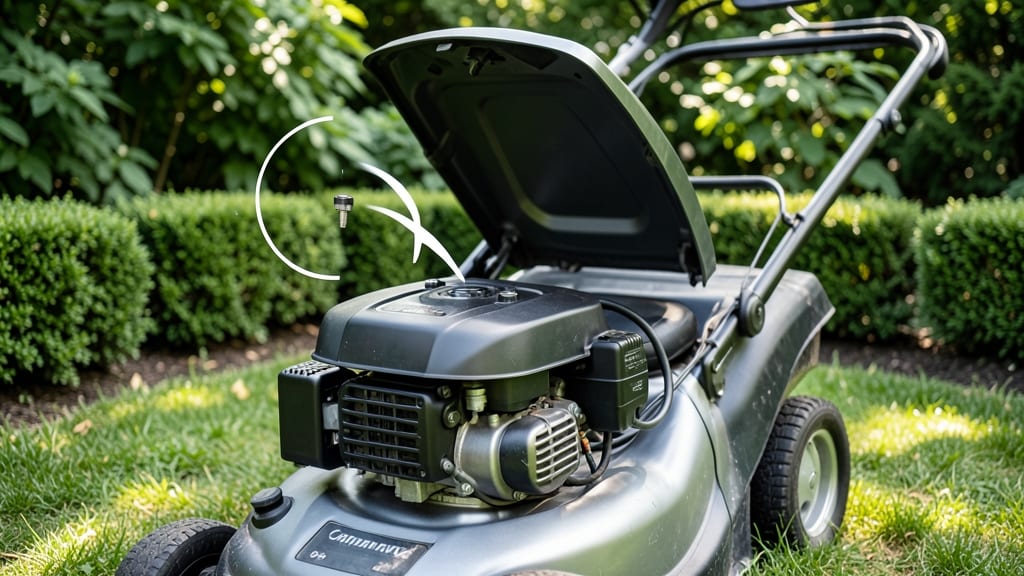
To find the spark plug on a lawn mower, look under the black or white plastic cover on the engine’s side, usually near the air filter housing or flywheel. Always consult your owner’s manual for brand-specific details like Honda, Briggs & Stratton, or Toro models.
The spark plug's location varies slightly depending on your mower's brand and engine model, but most follow a similar pattern. 🔧 For example, on Briggs & Stratton engines, you'll often find it near the top of the engine block, covered by a plastic cap that snaps off easily. Honda engines typically position it closer to the flywheel, while Toro models may have it near the air filter housing.
Pro tip: If you're unsure, trace the spark plug wire backward—it always leads directly to the plug itself.
Once you locate the cover, you'll need a 1/4-inch or 5/16-inch socket wrench (depending on your model) to remove the plug. Always disconnect the spark plug wire first to avoid accidental engine starts. This step is critical for safety—never skip it, even if the mower is off.
Most covers are secured with screws or clips, so a flathead screwdriver or pliers might come in handy for stubborn fasteners.
💡 In This Article
- How to Identify Lawn Mower Spark Plug Locations by Engine Brand
- Step-by-Step Guide to Accessing Spark Plugs Safely
How to identify lawn mower spark plug locations by engine brand
Lawn mower spark plugs are strategically placed to optimize ignition efficiency, and their exact location depends on the engine manufacturer.
For Briggs & Stratton engines—the most common in residential mowers—the spark plug is usually positioned near the top of the engine block, often under a black plastic cover that snaps off with gentle pressure.
This cover is typically secured with two screws or clips, and you’ll notice the spark plug wire (a thick, insulated cable) leading directly to it. The wire’s bright yellow or black color makes it stand out against the engine’s metallic components.
On Honda engines, which are known for their durability, the spark plug is often located closer to the flywheel—the heavy, circular component that spins when the engine runs. You’ll find it under a white or translucent plastic cover that may require a flathead screwdriver to pry off.
The flywheel’s distinctive magneto housing (a raised, cylindrical part) helps identify this area. Meanwhile, Kawasaki engines tend to place the spark plug near the air filter housing, which is usually on the engine’s right side when viewed from the rear.
Look for a small, rectangular cover with a single screw or clip securing it.
For Toro models, the spark plug location can vary slightly, but it’s almost always near the carburetor or air filter housing. The cover is often gray or black and may have a small label with the engine model number.
Pro tip: If you’re still unsure, trace the spark plug wire backward—it’s the only thick, insulated wire connected to the ignition system. This wire is usually 12-18 inches long and terminates at the spark plug with a rubber boot that snaps on securely. 🔧
Visual cues are your best friend here. Most spark plug covers have a raised or textured surface where the plug sits, making it easier to spot. If your mower’s engine has a side panel, removing it will often reveal the spark plug location more clearly.
Always check the owner’s manual for your specific model, as some newer or commercial-grade mowers may have non-standard placements. For example, Kohler engines sometimes position the spark plug on the opposite side of the engine compared to other brands.
Understanding these brand-specific placements isn’t just about convenience—it’s about safety and efficiency. A misplaced spark plug can lead to poor engine performance, hard starts, or even damage if not serviced correctly.
For instance, a dirty or worn spark plug can cause misfires, while a gap that’s too wide or too narrow (measured in 0.025-0.030 inches) can prevent proper ignition.
Always inspect the plug when you remove it—look for black soot (indicating a rich fuel mix) or white deposits (a sign of overheating).
If you’re still struggling to locate the spark plug, consider using a flashlight to shine light into the engine compartment. The spark plug’s metallic, hexagonal base will reflect light differently than the surrounding plastic or metal parts.
Some mowers also have a small, circular rubber gasket around the plug—this is another visual clue. Remember, the spark plug is always the only component in the engine that requires a socket wrench to remove, making it uniquely identifiable. 💡