
Lawn
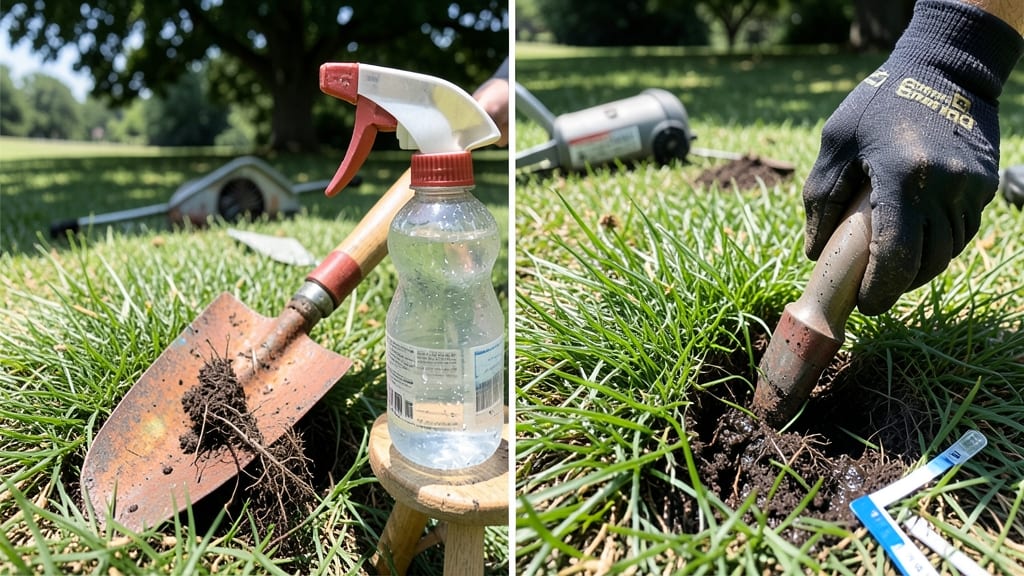
Why does my lawn have these dark green patches? That lush, velvety look might seem healthy, but it’s actually a red flag—hinting at over-fertilizing, fungal feasts, or hidden grubs gnawing away underground. 🌱 I’ve seen this "perfect" disguise mask everything from nutrient overload to dollar spot fungus, and the fixes couldn’t be more different. The first step? Stop guessing and start testing your soil and inspecting the patches closely.
Over-fertilizing is the most common culprit, turning your grass into a chemical buffet that attracts fungus or burns roots. Grubs munching underground or poor drainage can also create those thick, velvety spots.
The good news? A simple soil test (or DIY at-home kit) reveals the truth in 10 days, and most fixes—like adjusting watering or aerating—take just a weekend.
If it’s fungus, you’ll spot thread-like strands in the morning dew. Organic options like neem oil or baking soda sprays work for mild cases, but stubborn patches need targeted fungicides.
For grubs, milky spore or beneficial nematodes turn your lawn into their worst nightmare. The key? Act before the patches spread to your whole yard.
When in doubt, call a pro—especially if the problem covers more than 10% of your lawn. But for most of us, a little detective work and the right tools turn “why?” into “fixed!” faster than you’d think. Let’s get your grass back to its best, not just its boldest.
The Real Culprits Behind Dark Spots
Dark green patches in your lawn aren’t just an aesthetic nuisance—they’re often a sign that something’s off beneath the surface. Whether it’s an overabundance of nutrients, hidden fungal growth, or even environmental stressors, understanding the root cause is the first step to fixing it.
Let’s break down the most common reasons your lawn is showing these vibrant (but potentially problematic) patches.
---
🌱 What’s happening? When you apply too much nitrogen-rich fertilizer—or fertilize too frequently—your lawn can develop dark green patches that look lush but are actually stressed. Excess nitrogen promotes rapid, weak growth, making grass blades soft and prone to disease.
Over time, this can lead to thatch buildup (a dense layer of dead grass and roots) and fungal infections like dollar spot or brown patch, which thrive in overly fertile conditions.
🔬 The science behind it: Nitrogen is a key nutrient for chlorophyll production, but in excess, it disrupts the carbon-to-nitrogen ratio in the soil. This imbalance forces grass to grow faster than it can develop strong root systems, leaving it vulnerable to pests and pathogens.
Additionally, high nitrogen levels can raise soil pH, creating an environment where harmful microbes flourish.
💡 Pro tip: If you suspect over-fertilization, test your soil (DIY kits are affordable and easy). If nitrogen levels are high, switch to a slow-release, balanced fertilizer (like a 16-4-8 or 12-12-12 ratio) and reduce application frequency to every 6–8 weeks in warm seasons or 8–12 weeks in cool seasons.
---
🍄 What’s happening? Dark green patches can sometimes be a mask for fungal diseases like slime mold, gray leaf spot, or red thread. These fungi feed on organic matter in the soil and thrive in moist, shaded, or nutrient-rich conditions.
While some fungi cause yellowing or browning, others—like slime mold—create glossy, dark green, or even black patches that look almost like a slick of oil or algae.
🔬 The science behind it: Fungi spread via spores in water or soil. When conditions are right (high humidity, poor drainage, or compacted soil), spores germinate and form mycelium networks beneath the grass. Some fungi, like slime mold, produce spore cases that look like dark, slimy patches.
Others, like dollar spot, create small, circular dark green rings that eventually turn brown as the fungus kills the grass.
💡 Pro tip: - Improve airflow by mowing high (3–4 inches) and avoiding heavy foot traffic. - Water deeply but less frequently (early morning is best) to prevent prolonged moisture. - Apply a fungicide (like propiconazole or chlorothalonil) if patches persist, but identify the fungus first—some diseases (like red thread) respond better to copper-based treatments.
---
🧵 What’s happening? A thatch layer (a dense mat of dead grass stems, roots, and rhizomes) that’s over ½ inch thick can trap moisture, nutrients, and heat—creating the perfect conditions for dark green patches.
Thatch acts like a sponge, soaking up excess water and fertilizer, which can lead to anaerobic (oxygen-poor) soil and fungal growth.
🔬 The science behind it: Thatch is mostly made of partially decomposed organic matter. When it’s too thick, it blocks water and air from reaching the soil, suffocating roots. This stress weakens grass, making it more susceptible to disease and pests.
Dark green patches in thick thatch are often a sign of microbial activity (like bacteria or fungi breaking down the thatch) or excessive fertilizer salts burning the roots.
💡 Pro tip: - Core aerate your lawn in spring or fall to remove thatch and improve soil contact. - Top-dress with compost (¼ inch) to encourage beneficial microbes that break down thatch naturally. - Avoid high-nitrogen fertilizers if your thatch is already thick—opt for low-nitrogen, high-potassium (like 5-10-15) to strengthen roots.
---
💦 What’s happening? If your lawn has clay soil, low slopes, or heavy foot traffic, water can pool in certain areas, creating soggy, dark green patches. Poor drainage leads to oxygen deprivation in the roots, while compaction (from machinery or pets) crushes soil particles, reducing water infiltration.
🔬 The science behind it: When soil is waterlogged, microbes deplete oxygen quickly, leading to anaerobic conditions that produce hydrogen sulfide—a gas toxic to grass roots. Dark green patches in these areas often indicate stressed grass trying to survive in low-oxygen environments.
Compaction, meanwhile, reduces pore space, preventing roots from accessing water and nutrients evenly.
💡 Pro tip: - Test drainage by digging a 6-inch hole—if water doesn’t drain in 4–6 hours, you’ve got poor drainage. - Add organic matter (compost or peat moss) to clay soil to improve structure. - Aerate compacted areas with a spike or slit aerator, then overseed to encourage deep root growth.
--- 🌿 What’s happening? If your dark green patches feel slimy, slippery, or don’t brush away easily, they might be algae or moss—not grass at all. Algae thrives in shady, moist, and nutrient-rich conditions, while moss prefers acidic, compacted soil with poor drainage.
🔬 The science behind it: Algae (like blue-green algae) grows on the grass surface, not in the soil, and can smother grass by blocking sunlight. Moss, on the other hand, has rhizoids (root-like structures) that anchor it to the soil but don’t contribute to lawn health.
Both indicate underlying issues like excess moisture, low sunlight, or high organic buildup.
💡 Pro tip: - For algae: Reduce nitrogen fertilizer and improve sunlight by pruning trees or thinning dense foliage. - For moss: Top-dress with lime (to raise pH) and sand (to improve drainage), then reseeds with shade-tolerant grass like fine fescue. - Scrub off patches with a stiff brush (for algae) or rake away moss before treating the soil.
--- 🌡️ What’s happening? Extreme heat, shade, or pest activity can cause grass to turn dark green as it overcompensates for stress.
For example: - Shady patches may develop dark green grass as it stretches toward light, weakening roots. - Grubs or chinch bugs can create irregular dark green patches where grass is unevenly fed upon. - Heat stress (especially in drought-prone areas) can cause grass to go dormant and darken before turning brown.
🔬 The science behind it: Grass responds to stress by altering chlorophyll production—sometimes increasing it (dark green) as a survival mechanism. Pests like grubs (white larvae) feed on roots, causing patchy, uneven growth, while chinch bugs inject toxins that discolor grass in a V-shaped pattern.
💡 Pro tip: - Check for pests by digging up a small patch—look for grubs, larvae, or tiny black bugs. - Adjust mowing height—taller grass (3–4 inches) handles heat and shade better. - Water deeply in the morning to reduce heat stress and avoid evening watering (which promotes fungal growth).
Fix Your Lawn’s Dark Green Patches
Now that you’ve identified the root cause of those mysterious dark green patches, it’s time to take action! Whether it’s nutrient overload, fungal infections, or something else, here’s a step-by-step guide to restoring your lawn’s health—plus tips to keep it thriving long-term.
---
If your lawn is suffering from too much nitrogen, phosphorus, or potassium, the solution is simple: balance and moderation.
#### ✅ Step 1: Stop Fertilizing (Temporarily) - 🚫 Skip the fertilizer for at least 4–6 weeks to let the soil recover. - If you’ve been overdoing it, your grass may need time to adjust before absorbing nutrients properly.
#### ✅ Step 2: Test Your Soil - Grab a soil test kit (available at garden centers) to check pH and nutrient levels. - 💡 Pro Tip: Ideal lawn pH is 6.0–7.0. If it’s off, adjust with lime (to raise pH) or sulfur (to lower pH).
#### ✅ Step 3: Water Deeply & Less Frequently - 💧 Deep watering (1–1.5 inches per week) encourages deep root growth and reduces nutrient runoff. - Avoid light, frequent watering, which can wash excess fertilizer into the soil.
#### ✅ Step 4: Mow Higher (If Grass Is Soft & Spongy) - Set your mower to 3–4 inches to reduce stress on the grass and improve airflow. - ✂️ Sharp blades only! Dull mower blades tear grass, making it more susceptible to disease.
#### ✅ Step 5: Apply a Slow-Release Fertilizer (When Ready) - Once the lawn recovers, switch to a slow-release, organic fertilizer (like compost or a balanced 10-10-10). - 🎯 Best Practice: Follow the label instructions—never guess!
#### 🔄 Prevention Tips: ✔ Fertilize seasonally (spring & fall, not summer). ✔ Use a soil test before applying any amendments. ✔ Avoid synthetic fertilizers if possible—opt for organic options like bone meal or kelp meal.
---
If dark green patches are spongy, slimy, or have a musty smell, fungi (like dollar spot or brown patch) or moss could be the culprit.
#### ✅ Step 1: Improve Drainage Immediately - 🚧 Fix low spots with sand or compost to prevent water pooling. - ⚡ Aerate your lawn (rent a core aerator or use a garden fork) to help roots breathe.
#### ✅ Step 2: Apply a Fungicide (If Needed) - For mild cases, a copper-based fungicide or baking soda spray (1 tbsp per gallon of water) can help. - For severe infections, use a broad-spectrum fungicide (like propiconazole). - 💡 Pro Tip: Apply in the early morning or evening to avoid burning grass in sunlight.
#### ✅ Step 3: Adjust Watering Habits - 💧 Water early in the morning (before 10 AM) to allow grass to dry quickly. - ⏰ Avoid evening watering, which promotes fungal growth.
#### ✅ Step 4: Remove Thatch & Moss - 🪒 Dethatch if the layer is ½ inch or thicker (use a rake or power dethatcher). - For moss, sprinkle iron sulfate or vinegar (1 part vinegar to 3 parts water) and let it dry in the sun.
#### ✅ Step 5: Overseed Bare Spots - Once the infection clears, overseed with disease-resistant grass seed (like tall fescue or Kentucky bluegrass). - 🌱 Best Time to Seed: Early fall (cool, moist conditions help germination).
#### 🔄 Prevention Tips: ✔ Mow high (3–4 inches) to shade out fungi. ✔ Rake up debris (leaves, clippings) to reduce moisture buildup. ✔ Improve air circulation by spacing plants and trimming overgrown edges.
---
If the issue is shade, grubs, or soil compaction, here’s how to fix it:
#### 🌳 Shade-Loving Grass? - ✅ Switch to shade-tolerant grass like fine fescue or zoysia. - ✅ Thin out tree branches to allow 4–6 hours of sunlight per day.
#### 🐜 Grubs or Insect Damage? - 🪰 Apply a grub killer (like imidacloprid or benfuracarb) in early summer. - 🐛 Encourage beneficial nematodes (natural pest control) by watering deeply.
#### 🪨 Soil Compaction? - ⚡ Aerate in spring or fall to relieve pressure on roots. - 🌱 Top-dress with compost (¼ inch) to improve soil structure.
--- - 📅 Check patches weekly—if they persist, reassess the cause. - 🌡️ Keep a lawn care journal (note watering, fertilizing, and weather patterns). - 🌟 Aim for a lush, even green—not too dark, not too pale!
With the right approach, your lawn will bounce back healthier than ever. Happy lawn fixing!** 🌿✨
Frequently asked questions
Are dark green patches always a sign of over-fertilizing?
Not necessarily! While over-fertilizing is the most common cause, dark green patches can also indicate fungal infections, algae or moss growth, poor drainage, or even grub activity. Always check for spongy texture (fungus), sliminess (algae), or uneven growth (grubs) before assuming it's fertilizer-related.
How can I tell if my dark green patches are fungus or just healthy grass?
Look for these clues: Fungal patches often feel spongy, have thread-like strands in morning dew, or smell musty. They may also have irregular shapes or dark rings. Healthy grass feels firm and springs back when stepped on. If you're unsure, do a soil test—fungus thrives in nutrient-rich, moist conditions.
Will reducing fertilizer immediately fix the problem?
Not always! Stopping fertilizer helps, but existing nutrient buildup may need 4-6 weeks to dissipate. For severe cases, you'll also need to aerate the lawn, improve drainage, and possibly apply a fungicide if fungus is present. Think of it as detoxing your soil—patience is key!
Can I use household items to treat dark green patches?
Yes! For mild fungal issues, try a baking soda spray (1 tbsp per gallon of water) or hydrogen peroxide (3% solution). For algae, white vinegar (1:3 ratio with water) works well. However, these are temporary fixes—always address the root cause (like drainage or over-fertilization) for long-term results.
When should I call a professional lawn care service?
Consider professional help if: patches cover more than 10% of your lawn, the problem persists after 2-3 months of DIY treatment, or you suspect severe soil compaction or deep-rooted fungal infections. Pros can perform core aeration, soil testing, and targeted treatments that DIY methods can't match.