
Lawn
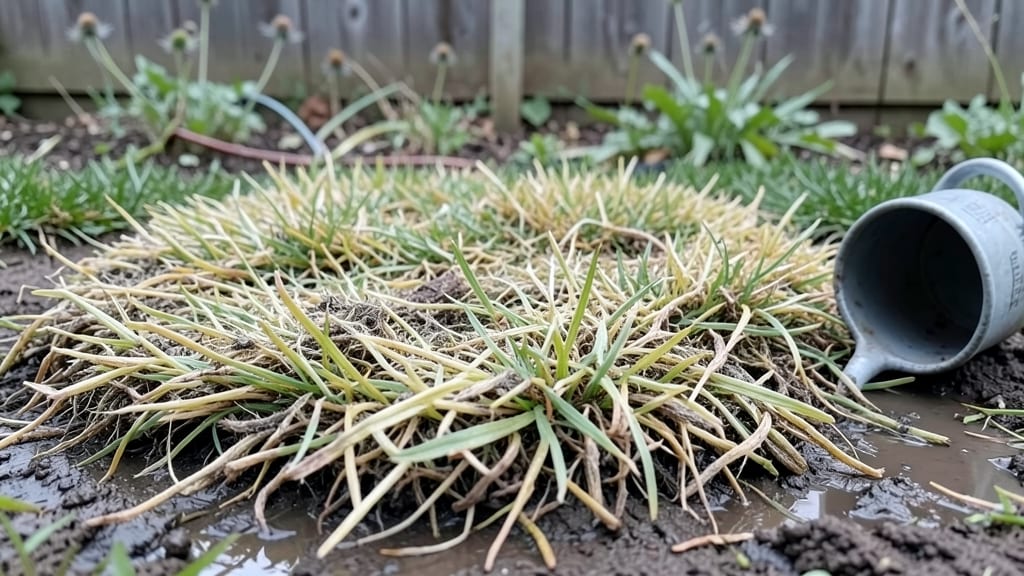
Your sod turns yellow from overwatering when roots suffocate in soggy soil, starving for oxygen. I’ve seen this happen after heavy rains or overzealous watering schedules—what looks like care can actually drown your lawn.
The key is recognizing the signs: spongy grass, a musty smell, and patches that stay yellow even after drying out. This isn’t just a cosmetic issue; it invites fungal growth and weakens roots long-term.
First, stop watering until the top 2–3 inches of soil feel dry. Most lawns only need 1–1.5 inches of water per week, including rain. If your yard drains poorly, consider aeration to break up compacted soil and let air reach the roots.
For severe cases, a soil test reveals if you need sand or organic matter to improve drainage—this prevents future yellowing and keeps grass resilient.
Within 2–3 weeks, you’ll see green return as roots recover and new growth fills in. The secret is consistency: water deeply but infrequently, and always in the morning so moisture evaporates by evening.
For extra protection, overseed thin spots with a shade-tolerant grass blend—this fills gaps and crowds out weeds before they take hold.
This works for any lawn, whether you’re dealing with clay soil or a sandy patch. The same principles apply to new sod installations too—don’t rush watering, or you’ll repeat the cycle. Once you adjust your routine, your lawn will bounce back faster each time, staying lush and green year-round.
Why it happens
When your once-vibrant lawn starts turning a dull, unappealing yellow after too much water, it’s not just a cosmetic issue—it’s a sign your grass is struggling. Overwatering may seem counterintuitive, but it disrupts the very processes that keep sod healthy.
Let’s break down the science behind why this happens and what’s really going on beneath the surface.
🌱 Oxygen Starvation in Soil
Grass roots need oxygen to breathe and function properly. When you overwater sod, excess moisture fills the soil pores, displacing the air that roots rely on. This creates an anaerobic environment—one without oxygen—which stresses the grass.
Without oxygen, roots can’t absorb nutrients efficiently, leading to chlorosis (yellowing) as chlorophyll production slows down. Think of it like suffocating a plant: too much water drowns the roots, cutting off their lifeline.
- Actionable fix: Let the top 1–2 inches of soil dry out between waterings. Use a soil probe or screwdriver to check moisture levels—if it slides in easily, you’re overdoing it.
- Pro tip: Aerate compacted soil in spring or fall to improve drainage and oxygen flow. 💡
🧪 Nutrient Leaching from Overwatering
Water is essential, but too much of it washes away critical nutrients like nitrogen, phosphorus, and potassium—the building blocks of healthy grass. These nutrients dissolve in excess water and drain away, leaving your sod malnourished.
Without nitrogen, for example, grass can’t produce the green pigments it needs, resulting in that unsightly yellow hue. It’s like flushing money down the drain—your lawn’s resources are literally being washed away.
- Actionable fix: Test your soil annually to identify deficiencies. Apply a slow-release fertilizer in early spring or fall to replenish lost nutrients.
- Pro tip: Water deeply but infrequently (1–1.5 inches per week) to encourage roots to seek nutrients deeper in the soil. 🌡️
🍄 Fungal Growth in Damp Conditions
Overwatered sod creates the perfect breeding ground for fungal diseases like brown patch, dollar spot, or even root rot. Fungi thrive in consistently wet conditions, attacking grass blades and roots. As fungi spread, they disrupt the grass’s ability to photosynthesize, leading to yellowing and thinning patches.
You might also notice a slimy or spongy texture in the soil—this is a red flag that fungi are at work.
- Actionable fix: Water early in the morning (before 10 AM) to allow foliage to dry quickly. Avoid overhead sprinkling, which can prolong leaf wetness.
- Pro tip: Improve drainage by grading your lawn to slope away from structures, or install French drains in low-lying areas. ✨
🌡️ Heat Stress from Poor Water Management
Paradoxically, overwatering can make grass more susceptible to heat stress. When sod is constantly soggy, it can’t regulate its temperature effectively.
During hot days, the excess moisture traps heat near the soil surface, cooking the roots and shocking the grass into a survival mode that prioritizes root health over leaf color—hence the yellowing. It’s like wrapping your lawn in a wet blanket on a scorching day.
- Actionable fix: Adjust your watering schedule to match seasonal needs. In summer, water deeply 2–3 times per week rather than daily shallow sessions.
- Pro tip: Mow higher (3–4 inches) in heat waves to provide shade for the roots and retain moisture. 🎯
Fixing Your Lawn’s Water Woes
Yellow, overwatered sod isn’t just an eyesore—it’s a sign your lawn is struggling to breathe. The good news? With the right fixes, you can revive your grass and prevent future damage.
Below, we’ve mapped out practical solutions based on the most common causes of yellowing from overwatering, along with prevention tips to keep your lawn lush and healthy.
💧 Overwatering or Poor Drainage? Adjust Your Watering Routine
If your sod is soggy and yellowing, it’s likely drowning in excess moisture. Here’s how to fix it:
🔥 Step 1: Let the Soil Dry Out
- Stop watering immediately for 3–5 days to allow excess moisture to evaporate.
- Test soil moisture by sticking a screwdriver into the ground. If it goes in easily, your soil is too wet. Wait until it feels dry 1–2 inches below the surface before watering again.
🍳 Step 2: Improve Drainage
- Aerate compacted soil with a core aerator (rent one if needed) to help water drain faster.
- Add organic matter: Mix in 2–3 inches of compost or sand (for sandy soils) to improve drainage.
- Grade your lawn slightly (1–2% slope) to encourage runoff away from low spots.
👨🍳 Step 3: Water Deeply but Less Often
- Water deeply 1–2 times per week (early morning, 6–10 AM) instead of daily light sprinkles.
- Use a rain gauge or tuna can to measure 1–1.5 inches of water per week (including rain).
- Adjust for grass type:
- Cool-season grasses (Kentucky bluegrass, fescue): 1–1.5 inches/week.
- Warm-season grasses (Bermuda, Zoysia): 0.5–1 inch/week (deep soak).
✨ Prevention Tip
- Install a smart sprinkler system with soil moisture sensors to avoid overwatering.
- Check sprinkler heads for leaks or misalignment—wasted water = wasted money and a soggy lawn.
🌡️ Fungal Issues from Excess Moisture? Treat & Prevent
Yellow patches with a mushy texture or white thread-like growth? Fungal infections thrive in wet conditions.
🔪 Step 1: Identify the Fungus
Common culprits:
- Dollar spot (straw-colored patches with dark margins).
- Brown patch (large, circular yellow-brown areas).
- Rhizoctonia (irregular, water-soaked spots).
💡 Step 2: Apply Fungicide (If Needed)
- For minor issues: Use a baking soda spray (1 tbsp baking soda + 1 gallon water + a drop of dish soap) as a natural fungicide.
- For severe infections: Choose a fungicide with propiconazole or azoxystrobin (follow label instructions).
- Reapply every 2–4 weeks if conditions stay damp.
🎯 Step 3: Improve Airflow & Reduce Humidity
- Mow higher (3–4 inches) to shade soil and reduce fungal spores.
- Rake up thatch (thin layer of dead grass) to improve airflow.
- Space plants/shrubs farther apart to prevent shade and moisture buildup.
💡 Prevention Tip
- Water in the morning so grass has time to dry before evening humidity sets in.
- Avoid watering at night—this traps moisture and encourages fungal growth.
🌱 Nutrient Deficiency from Overwatering? Feed Your Grass
Too much water leaches out essential nutrients, leaving grass weak and yellow.
📊 Step 1: Test Your Soil
- DIY test kit (available at garden centers) or send a sample to a local extension office for a full analysis.
- Look for low nitrogen (N), phosphorus (P), or potassium (K)—common in overwatered lawns.
💪 Step 2: Fertilize Correctly
- For nitrogen deficiency (pale yellow grass): Apply a slow-release nitrogen fertilizer (like 24-0-4) in early spring or fall.
- For potassium deficiency (yellow edges): Use a potassium-rich fertilizer (like 0-0-30) or wood ash (sparingly).
- Avoid over-fertilizing—this can burn roots and worsen water retention issues.
🥗 Step 3: Boost Soil Health Naturally
- Top-dress with compost (¼ inch layer) to replenish organic matter.
- Use a liquid seaweed or fish emulsion for a nutrient boost without salt buildup.
- Overseed bare spots with disease-resistant grass seed (like tall fescue or perennial ryegrass).
✨ Prevention Tip
- Apply fertilizer in small amounts (½ pound per 1,000 sq ft) every 6–8 weeks.
- Water lightly after fertilizing to help nutrients absorb without runoff.
🚨 Last Resort: Resod or Repair Damaged Areas
If large sections of sod are dead, spongy, or won’t recover, it may be time to replace or repair.
🔪 Step 1: Remove Dead Grass
- Dig out severely damaged patches (6–12 inches deep).
- Rake away thatch and debris to prep the soil.
🌱 Step 2: Patch or Resod
- For small areas: Use sod patches (sold in rolls) or plugs (small grass sections).
- For large areas: Reseed with the same grass type or lay new sod.
- Press edges firmly and water lightly to encourage rooting.
💡 Prevention Tip
- Choose drought-tolerant grass varieties (like Buffalo grass or Zoysia) if your area has poor drainage.
- Install French drains in chronically soggy spots to redirect water.
Remember: Reviving yellow, overwatered sod takes patience. Start with drainage fixes, then address nutrients and fungi. With consistent care, your lawn will bounce back greener than ever!
Frequently asked questions
How can I tell if my lawn’s yellowing is from overwatering vs. drought?
Overwatered sod feels spongy when walked on and often has a musty smell from poor drainage. Check the soil: if it’s soggy 1–2 inches down, you’re overwatering. Drought-stressed grass pulls up easily and feels dry like sandpaper. Both cause yellowing, but overwatered areas stay wet longer and may develop fungal spots.
Will my grass recover if I stop watering immediately?
Yes, but recovery takes 2–4 weeks depending on how long it was overwatered. Let the top 2–3 inches of soil dry completely before resuming watering. If yellowing persists after 3 weeks, check for fungal issues or nutrient deficiencies—those need extra treatment beyond just adjusting water.
Can I fix poor drainage myself, or do I need a professional?
You can start with DIY fixes like aerating ($50–$100 to rent a machine) or adding 2–3 inches of compost to improve soil structure. For severe drainage issues (like clay soil), consider a French drain system (DIY kits cost $200–$500) or consult a landscaper if your yard has major low spots or poor grading.
Why does my lawn stay yellow even after I’ve reduced watering?
Persistent yellowing often signals nutrient depletion or fungal growth from prolonged soggy conditions. Test your soil for nitrogen/phosphorus levels and apply a slow-release fertilizer (like 24-0-4). If you see white thread-like growth or slimy patches, treat with a baking soda spray (1 tbsp baking soda + 1 gallon water) or a fungicide.