
Lawn
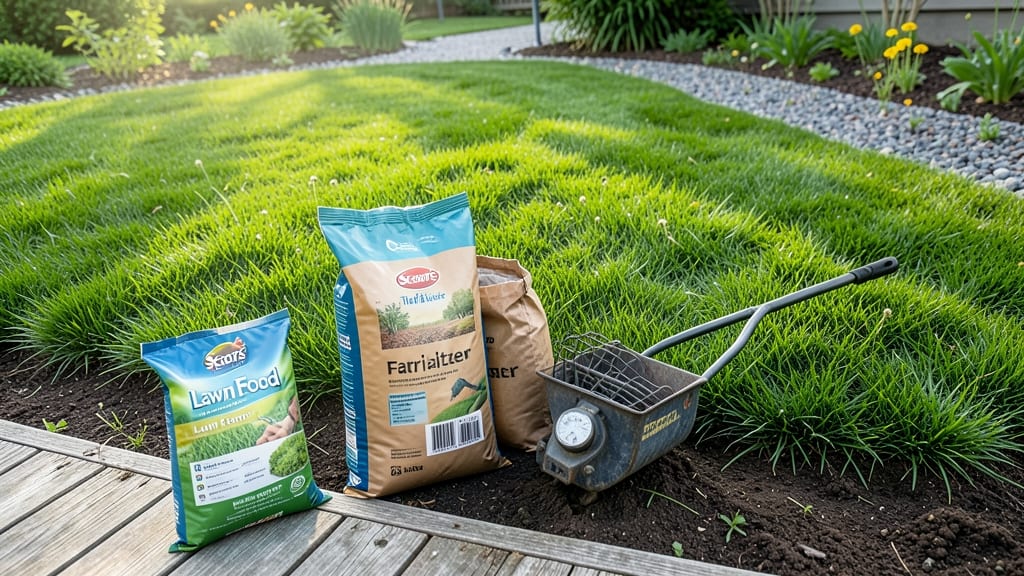
Lawn food is not the same as fertilizer: it includes fertilizer plus extra nutrients like iron and micronutrients, plus soil conditioners and slow-release compounds for steady grass growth. Standard fertilizer only provides NPK without these extras.
While both products feed your lawn, lawn food goes beyond basic fertilization by adding iron for greener color and micronutrients like zinc and manganese that standard fertilizers often lack.
The slow-release agents in lawn food create steady nutrient delivery over weeks, while regular fertilizer delivers a quick but shorter burst. 🌱 Think of it like the difference between a balanced meal and a sugar rush—lawn food provides long-term nourishment for healthier grass roots and foliage.
For example, if your grass looks pale or patchy despite regular fertilizer, it might need the extra iron and micronutrients that lawn food provides. Many gardeners use fertilizer for routine maintenance but switch to lawn food when preparing new lawns or repairing thin areas.
The added soil conditioners in lawn food also improve water retention and root development, which standard fertilizers don't address.
💡 In This Article
- Core Nutrient Differences Between Lawn Food and Fertilizer
- When to Use Lawn Food Versus Standard Fertilizer
Core nutrient differences between lawn food and fertilizer
The fundamental difference lies in what each product delivers to your lawn. Standard fertilizer focuses solely on the three primary nutrients: nitrogen (N), phosphorus (P), and potassium (K), often in ratios like 30-0-4 or 10-10-10.
These are the building blocks for leaf growth, root development, and overall plant health, but they don't address finer nutritional needs.
Lawn food, however, builds on this foundation by adding secondary nutrients like calcium and magnesium plus micronutrients such as iron, zinc, and manganese—elements that standard fertilizers typically omit. 🌱
Iron, for instance, is critical for chlorophyll production, which is why lawn food can transform pale, yellowing grass into a vibrant green. A single application of lawn food might include 0.5-1% iron by weight, while standard fertilizers rarely exceed 0.1%.
The micronutrients work synergistically: zinc supports enzyme activity, manganese aids photosynthesis, and sulfur improves disease resistance. This is why lawn food often produces more noticeable results in 4-6 weeks compared to the 2-3 weeks you might see with fertilizer alone.
Another key distinction is how these nutrients are released. Fertilizer typically uses quick-release salts that dissolve immediately, providing an instant but short-lived nutrient boost. Lawn food, however, incorporates slow-release polymers or coated granules that break down gradually over 3-6 months, ensuring a steady supply without the risk of overfeeding.
This controlled release mimics natural nutrient cycles, reducing the chance of runoff while promoting deeper root growth. Imagine the difference between a fast-food meal (fertilizer) and a balanced, home-cooked dinner (lawn food)—one gives temporary energy, while the other sustains you long-term.
Lawn food also includes soil conditioners like humic acid, which improves soil structure by enhancing water retention and microbial activity. These additives aren't present in standard fertilizers and can make a significant difference in compacted or clay-heavy soils, where nutrients might otherwise leach away.
For example, humic acid can increase water-holding capacity by up to 30%, helping your lawn stay resilient during droughts. This is particularly valuable in regions with clay soils or sandy loam, where moisture control is critical.
Let's break down a typical comparison between the two:
- Nutrient Focus: Fertilizer = NPK only; Lawn food = NPK + iron, zinc, manganese, sulfur, and soil conditioners
- Release Mechanism: Fertilizer = Quick-release (immediate but short-term); Lawn food = Slow-release (gradual, long-lasting)
- Soil Benefits: Fertilizer = Basic nutrition; Lawn food = Enhanced soil structure, water retention, and microbial activity
- Ideal Use Case: Fertilizer = Routine maintenance; Lawn food = Revitalization, new lawns, or nutrient-deficient areas
For instance, if you're establishing a new lawn, the extra micronutrients and slow-release nutrients in lawn food can help young grass roots develop more robustly, reducing the need for frequent applications. In contrast, a well-maintained lawn might only require standard fertilizer for monthly touch-ups during the growing season.
The choice often comes down to your lawn's current health and your long-term goals—whether you're aiming for quick results or sustainable growth. 💫