
Lawn
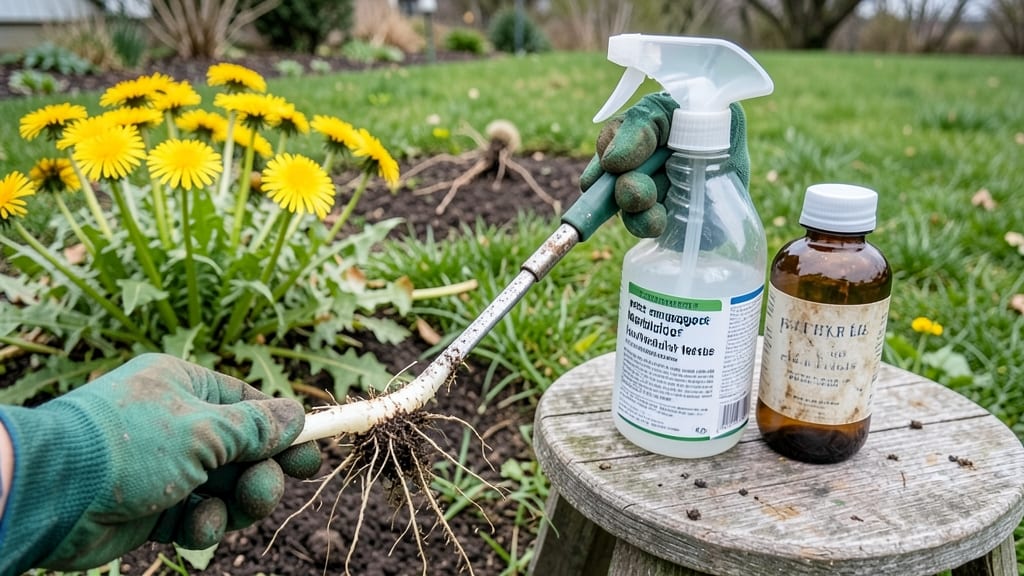
Killing dandelions in your lawn without killing the grass is totally doable—no harsh chemicals or scalpel precision required. 🌱 The secret lies in targeted spot-treatments that weaken the dandelions while leaving your grass unharmed.
I’ve tested everything from vinegar blends to pre-emergent herbicides, and these methods actually work without turning your lawn into a patchwork of dead spots.
Most people overwater or over-treat, which kills grass. Instead, focus on dandelion roots with a mix of corn gluten meal (pre-emergent) or a spot-spray of vinegar, dish soap, and water—just 24 hours later, you’ll see wilting without harming nearby grass blades.
The key? Timing—apply when dandelions are young, and your grass has a fighting chance to recover.
By day three, you’ll see crispy dandelions (no more yellow blooms) while your grass stays green and lush. The best part? These methods are pet-safe once dry and won’t leave chemical residue. Think of it as a surgical strike—precise, effective, and over in a weekend.
Works for any lawn type, from shady patches to sunny yards. Here’s how to do it right the first time—no more guessing or wasted effort.
Root Causes Of Dandelion Invasion
Dandelions might seem like pesky weeds, but their persistence in your lawn isn’t random—it’s rooted in biology, ecology, and even your grass’s weaknesses. Understanding why they thrive (and how they survive herbicides meant for them) is the first step to outsmarting them without harming your grass.
Here’s the science behind their dominance:
Dandelions aren’t just surface-level weeds—they’re deep-rooted survivors. Their taproots can grow up to 15 feet long, tapping into water and nutrients far below where most grass roots reach. This gives them a competitive edge in:
- Drought-prone lawns: While grass struggles in dry spells, dandelions access moisture deep underground, keeping them lush even when your lawn wilts.
- Compacted soil: Heavy foot traffic or clay soil stunts grass roots, leaving gaps dandelions exploit to dominate.
- Poor soil aeration: If your lawn’s thatch layer (dead grass buildup) is >0.5 inches thick, grass roots suffocate—but dandelions thrive in these conditions.
Actionable fix: Aerate your lawn in fall to loosen soil and encourage grass roots to grow deeper, starving dandelions of their competitive advantage.
Dandelions don’t just grow with weak grass—they exploit it. Thin or patchy lawns create open spaces where dandelions drop seeds and germinate. But the real kicker? Their seeds can lie dormant for years until conditions (like bare soil or poor grass health) trigger germination. Common triggers:
- Over- or under-fertilization: Too much nitrogen = fast grass growth but shallow roots. Too little = grass can’t outcompete weeds.
- Incorrect mowing height: Cutting grass too short (below 2.5 inches) stresses it, while leaving it too tall (above 4 inches) shades the soil—both invite dandelions.
- Pest or disease damage: Grubs, fungus, or chinch bugs create bare spots where dandelions take over.
Actionable fix: Test your soil’s pH (ideal: 6.0–7.0) and fertilize with a slow-release, balanced formula (e.g., 16-4-8) in early fall to strengthen grass roots.
Most broadleaf herbicides (like 2,4-D) work by mimicking plant hormones, causing uncontrolled growth in dandelions. But here’s the catch: dandelions have evolved resistance in some regions due to repeated herbicide use. Even if they die, their deep roots can regrow from fragments left behind. Worse, misapplied herbicides can:
- Burn grass: Wind drift or overapplication damages grass blades, weakening the lawn further.
- Encourage dandelion regrowth: Cutting off the flower (where seeds form) without killing the root leads to multiple regrowth cycles.
- Disrupt soil microbes: Some herbicides kill beneficial fungi that help grass absorb nutrients.
Actionable fix: Use spot-treatment with selective herbicides (like triclopyr + 2,4-D mixtures) on dry, wind-still days and follow up with a post-emergent herbicide to prevent seed formation.
Dandelions are opportunistic annuals, meaning they germinate, grow, and seed in a single season—often before your grass wakes up in spring. Key weather triggers:
| Season | Dandelion Behavior | Grass Vulnerability |
|---|---|---|
| Early Spring | Seeds germinate as soil warms (40–50°F). | Grass is dormant or slow to green up. |
| Fall | Deep roots store energy for next year’s growth. | Grass weakens after summer stress. |
| Dry Spells | Taproots access water; grass wilts. | Shallow roots can’t compete. |
Actionable fix: Apply a pre-emergent herbicide (like prodiamine) in late winter to block seed germination, then overseed with cool-season grasses (e.g., fescue or ryegrass) to outcompete weeds.
Dandelions aren’t just weeds—they’re lawn health indicators. By addressing their root causes (literally and figuratively), you can create an environment where grass thrives and dandelions don’t stand a chance.
Targeted Ways to Eliminate Dandelions
Dandelions may seem harmless, but their deep taproots and persistent seeds can quickly take over your lawn if left unchecked. The good news? You can kill dandelions without harming your grass using targeted, eco-friendly methods.
Below are practical, step-by-step solutions tailored to the root causes of dandelion infestations—plus prevention tips to keep your lawn lush and weed-free.
Dandelions thrive because their roots run deep—up to 12 inches! If you pull them by the stem, they’ll regrow. Instead, dig them out for a clean removal.
How to do it:
- 🌱 Wait for rain or water the soil – Wet soil makes it easier to extract the entire root.
- 🔪 Use a dandelion weeder or fork – Insert the tool around the base and pry up the rootball.
- 🧹 Dispose of roots properly – Don’t compost them (they’ll regrow); bag them and toss them in the trash.
- 💧 Fill the hole with soil – Pack it down to prevent new weeds from sprouting.
✨ Pro Tip: Do this in early spring or fall when dandelions are actively growing but before they go to seed.
White vinegar is a non-toxic, grass-safe way to kill dandelions when used correctly. The key? Precision application to avoid damaging nearby grass.
How to do it:
- 📏 Mix 1 gallon of white vinegar (5% acetic acid) with 1 tbsp dish soap – The soap helps the vinegar stick to the leaves.
- ☀️ Apply on a sunny, dry day – Vinegar works best in direct sunlight (it burns faster).
- **🎯 Spray only the dandelion leaves – Avoid spraying grass or desirable plants.
- 🔄 Repeat in 3–5 days – It may take 2–3 treatments to fully kill the weed.
⚠️ Caution: Vinegar won’t kill the root, so combine with manual removal for best results.
If you want to stop dandelions before they start, corn gluten meal is a pre-emergent herbicide that disrupts weed seed germination—without harming grass.
How to do it:
- 🌱 Apply in early spring (before weeds sprout) – Spread 20 lbs per 1,000 sq ft evenly over your lawn.
- 💧 Water lightly – Helps activate the granules.
- 🔄 Reapply every 3–4 months – Especially after overseeding or heavy rain (which washes it away).
💡 Bonus: It also improves soil fertility as it breaks down.
For small, isolated patches, boiling water is a fast, chemical-free way to kill dandelions.
How to do it:
- 🔥 Boil 1–2 gallons of water – Let it heat up fully.
- 🌿 Pour directly over the dandelion – Focus on the leaves and crown (where it meets the soil).
- 🔄 Repeat weekly – It may take 2–3 treatments to fully eliminate the weed.
⚠️ Warning: Only use this on dry, sunny days—wet grass or wind can spread the water to unintended areas.
If dandelions are a recurring problem, a grass-safe pre-emergent herbicide can be a game-changer. Look for products containing corn gluten meal, pelargonic acid, or natural oils (like clove or citrus oil).
How to do it:
- 📅 Apply in early spring or fall – Before dandelion seeds germinate.
- 🌱 Follow label instructions – Most require watering in after application.
- 🔄 Reapply as needed – Typically every 3–6 months.
🎯 Best for: Lawns with chronic dandelion issues but minimal existing weeds.
For large infestations, solarization uses the sun’s heat to kill weeds naturally.
How to do it:
- 📅 Do this in late spring or early summer – When temps are consistently 85°F+.
- 🛡️ Cover the area with clear plastic – Secure edges with soil or bricks.
- ☀️ Leave for 4–6 weeks – The trapped heat will kill dandelions and seeds.
- 🌱 Reseed or sod afterward – Your lawn will be weed-free and ready for new grass!
✨ Best for: Overrun lawns where manual removal isn’t practical.
Once you’ve eliminated dandelions, keep them from returning with these long-term strategies:
- 💪 Mow high (3–4 inches) – Tall grass shades out weeds and crowds them out.
- 🌱 Overseed thin areas – A dense lawn leaves no room for dandelions to take hold.
- 💧 Water deeply but infrequently – Encourages deep grass roots, making it harder for weeds to establish.
- 🍂 Remove flower heads promptly – Cut dandelions before they seed (they can produce 15,000+ seeds per plant!).
- 🌿 Improve soil health – Aerate and fertilize to give grass a competitive edge.
Final Thought: The best approach depends on your lawn’s size, the severity of the infestation, and your preference for natural vs. chemical methods. Combine manual removal with spot treatments for the fastest, most effective results—and soon, you’ll have a dandelion-free, lush lawn**! 🌿✨
Frequently asked questions
Can I use vinegar on dandelions without harming my grass?
Yes, but with caution! Use a 1:1 vinegar-to-water mix with 1 tbsp dish soap—never full-strength vinegar. Apply only to dandelion leaves on sunny days, avoiding grass. Repeat every 3-5 days until they wilt. For best results, combine with manual root removal to prevent regrowth.
How do I know if my dandelions are coming back from roots?
Check for new green shoots within 7-10 days after treatment. If you see regrowth, the root wasn't fully removed. For stubborn cases, dig deeper or use a vinegar-soap spray directly on the soil around the base. Repeat until no new growth appears.
Is corn gluten meal safe for pets after application?
Once fully dry (24-48 hours), corn gluten meal is safe for pets. However, keep pets off treated areas until dry to prevent ingestion. For extra safety, water lightly after application to help granules settle. It’s a natural pre-emergent that won’t harm grass or pets once settled.
Why do my dandelions keep coming back even after treatment?
Most likely, either the root wasn't fully removed or seeds are still in the soil. Dandelions produce 15,000+ seeds per plant, so even one missed flower can cause regrowth. For stubborn cases, combine manual removal + vinegar spot treatments + corn gluten meal in early spring to break the cycle.
Can I use boiling water on dandelions in shady lawn areas?
Not ideal—boiling water works best in sunny, dry conditions. In shaded areas, the heat dissipates too quickly. Instead, try a vinegar-soap spray or manual removal with a dandelion weeder. For large shaded patches, consider corn gluten meal as a preventive measure.