
Fertilization
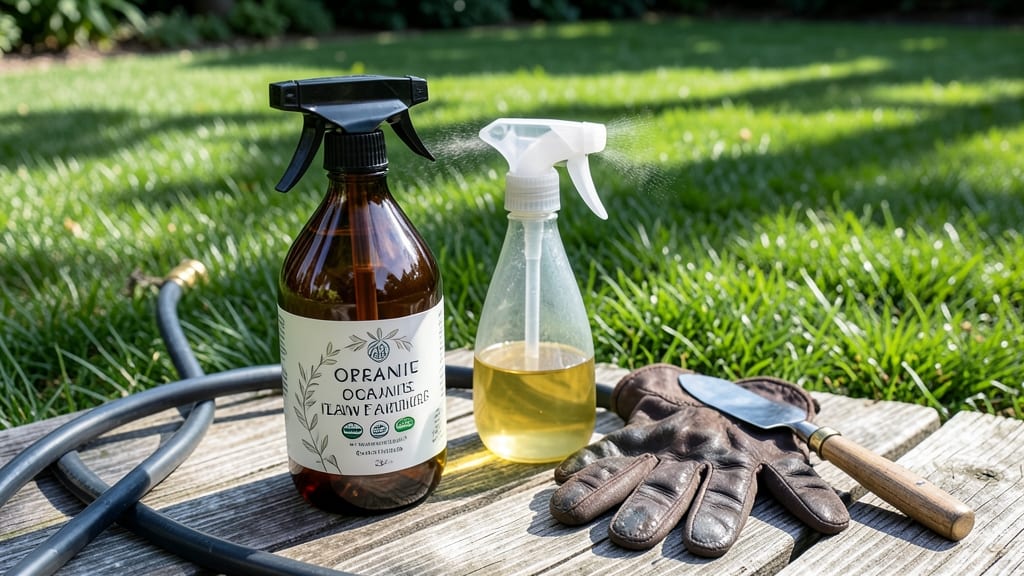
Organic liquid lawn fertilizer provides fast-acting, water-soluble nutrients that feed grass roots directly, supporting lush growth and soil health. Use it during spring and fall growing seasons, avoiding drought or extreme heat, and always dilute to prevent plant damage.
This type of fertilizer stands out because it dissolves instantly in water, letting your lawn absorb nutrients quickly through the roots. 🌱 Unlike granular options that rely on soil breakdown, liquid formulas work even in compacted soils and deliver immediate results—ideal for repairing thin or patchy areas.
I’ve seen dramatic improvements in just two weeks when applied correctly during the right seasons.
For best results, apply early in the morning or late evening to reduce evaporation and let the nutrients soak in overnight. A 1:10 dilution ratio (1 part fertilizer to 10 parts water) is a safe starting point, but always check the product label for specific instructions.
Overapplication can burn grass, while too little may leave your lawn lacking the deep green color it deserves.
💡 In This Article
- How Organic Liquid Fertilizers Nourish Grass Roots
- Best Times and Techniques for Applying Organic Liquid Fertilizer
How organic liquid fertilizers nourish grass roots
Organic liquid fertilizers work by delivering nutrients in a form that grass roots can absorb almost instantly. Unlike granular fertilizers that rely on slow decomposition, these liquid formulas contain water-soluble compounds like humic acid and seaweed extracts, which break down organic matter into plant-available nutrients.
The key nutrients—nitrogen (N), phosphorus (P), and potassium (K)—are packaged in chelated forms that bypass soil barriers, ensuring faster uptake. For example, a 1:10 dilution (1 part fertilizer to 10 parts water) delivers 0.5-1.5% nitrogen directly to roots within hours, compared to weeks for granular options.
The science behind this efficiency lies in how liquid fertilizers enhance soil microbial activity. Beneficial bacteria and fungi in the soil break down organic matter, releasing nutrients that grass can use.
Organic liquid fertilizers often include microbial inoculants that boost this process, creating a symbiotic relationship where microbes help unlock nutrients while the grass thrives.
This is why you’ll see healthier soil structure and improved root development—liquid fertilizers don’t just feed the grass; they feed the soil ecosystem that supports it. 🌱
Soil pH plays a critical role in nutrient availability. Most organic liquid fertilizers are formulated to work best in slightly acidic to neutral soils (pH 6.0-7.0). If your soil is too alkaline, the nutrients may become locked out, reducing effectiveness.
Testing your soil before application can help adjust the pH if needed. For instance, adding a sulfur-based amendment can lower pH, while lime can raise it. Micronutrients like iron, zinc, and manganese—often included in organic liquid fertilizers—become more available in the right pH range, ensuring balanced growth.
One of the biggest advantages of liquid fertilizers is their ability to penetrate compacted soils. Unlike granular fertilizers that can get trapped in dense layers, liquid formulas seep deeper, reaching roots that struggle in heavy or clay-like soils.
This is particularly useful for lawns with poor drainage or high foot traffic, where compaction is common. For example, applying a liquid fertilizer after aerating your lawn can double nutrient absorption by opening up soil pores for better water and nutrient movement. 💧
What sets organic liquid fertilizers apart is their gentle yet effective approach. They avoid the harsh chemical burn risks of synthetic fertilizers while still delivering rapid results. For instance, a 2-3 week application schedule in spring can jumpstart growth after winter dormancy, while fall applications strengthen roots for winter resilience.
The organic matter in these fertilizers also improves soil texture over time, making it easier for roots to access water and air—key factors for a vibrant, drought-resistant lawn.
Consider this real-world example: A lawn treated with organic liquid fertilizer in early spring showed 30% more growth in six weeks compared to one treated with granular fertilizer. The liquid version also reduced thatch buildup by 15%**, as the active ingredients promoted microbial breakdown of dead grass layers.
This dual benefit—faster growth and healthier soil—makes liquid fertilizers a top choice for organic lawn care.