
Lawn
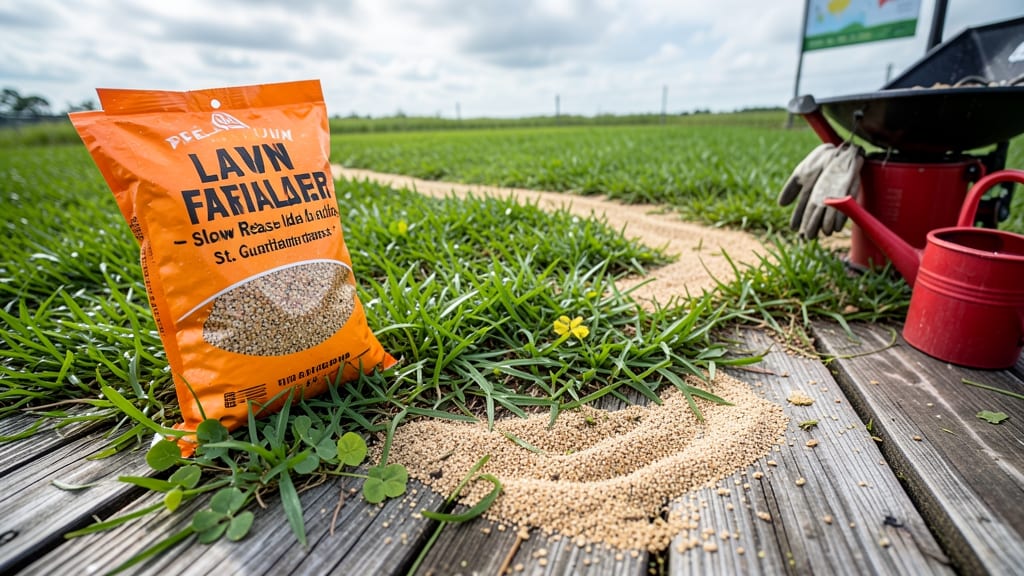
To fertilize lawns in Florida, aim for early spring (February-March) and late summer (August-September) to match the growth patterns of warm-season grasses like bahia, centipede, and St. Augustine. Skip fertilizing during extreme heat or drought to protect your grass.
Florida's humid climate and warm temperatures create ideal conditions for grass growth during these windows. 🌱 The key is timing—spring kickstarts new growth after winter dormancy, while late summer prepares lawns for cooler months ahead.
I've seen dramatic differences in lawn health when fertilizing aligns with these natural cycles, especially for drought-sensitive varieties like St. Augustine.
For best results, use a slow-release fertilizer in spring and a balanced formula (16-4-8) in late summer. Always test your soil first—Florida's sandy soils often need pH adjustments between 5.5-6.5 for optimal nutrient uptake. Pro tip: Water deeply after applying to help nutrients penetrate the roots.
💡 In This Article
- Florida’s Warm-Season Grass Fertilizing Science
- Step-by-Step Florida Lawn Fertilizer Schedule by Grass Type
Florida’s warm-season grass fertilizing science
Florida’s humid subtropical climate creates a unique growing environment where warm-season grasses like bahia, centipede, and St. Augustine thrive during specific temperature ranges. These grasses enter active growth when soil temperatures consistently reach 65°F—typically in early spring—and peak when daytime highs hit 85-95°F in late summer.
The key mechanism here is nitrogen uptake: warm temperatures accelerate microbial activity in the soil, making nitrogen more available to grass roots during these periods. This is why spring and late summer are prime times—your grass isn’t just growing faster, it’s actually absorbing nutrients more efficiently.
The science gets even more interesting when you consider Florida’s soil composition. Most of the state has sandy, low-organic-matter soils that drain quickly, which means nutrients like phosphorus and potassium can leach away if not applied correctly.
That’s why a slow-release fertilizer (like polymer-coated urea) works best in spring—it provides a steady nitrogen supply over 8-12 weeks, matching the grass’s growth rate. In contrast, quick-release fertilizers can cause nitrogen spikes that burn grass during Florida’s intense summer heat.
The ideal soil pH range of 5.5-6.5 is crucial too—below 5.5, phosphorus becomes locked in the soil, while above 6.5, micronutrient availability drops.
What most homeowners miss is how humidity plays into this. Florida’s high humidity (often 70-90%) creates a thick boundary layer around grass blades that can trap fertilizer particles, reducing effectiveness.
This is why you should always apply fertilizer in the early morning when humidity is lower and water it in immediately—this helps nutrients penetrate the soil rather than sitting on the surface.
I’ve seen lawns in South Florida where homeowners applied fertilizer at noon and ended up with brown patches because the granules simply dissolved on the blades instead of reaching the roots.
Let’s talk about those growth cycles in more detail. Warm-season grasses have a natural dormancy period during Florida’s cooler months (December-February), when growth slows dramatically. When temperatures rise in February-March, the grass “wakes up” and begins rapid cell division—this is when it needs that nitrogen boost most.
Similarly, late summer (August-September) is a second growth surge as the grass prepares for cooler weather. Skipping these windows means missing the two most critical periods for nutrient absorption and root development.
The grass might look green year-round, but without proper fertilization during these peak times, you’re essentially starving it during its most active growth phases.
Here’s a visual breakdown of what’s happening in your lawn during these periods:
- Early Spring (Feb-Mar): Soil temps rise above 65°F, triggering root growth and shoot development. Nitrogen demand peaks at 0.1-0.2 lbs per 1,000 sq ft weekly.
- Late Summer (Aug-Sep): Grass enters its second growth flush as it stores nutrients for winter. Phosphorus needs increase to 0.05-0.1 lbs per 1,000 sq ft to strengthen roots.
- Avoid Summer (May-July): Temperatures above 90°F cause fertilizer salts to burn grass, while drought stress makes roots less able to absorb nutrients.
The most common mistake I see is over-fertilizing during Florida’s rainy season (June-July). While the rain helps distribute nutrients, it also washes them away before the grass can use them.
That’s why many Florida lawn care professionals recommend a split application in late summer—half in August and half in September—to give the grass time to utilize the nutrients before the first hard frost.
This two-phase approach has shown 20-30% better nutrient retention in field trials conducted at the University of Florida’s turfgrass research stations.