
Lawn
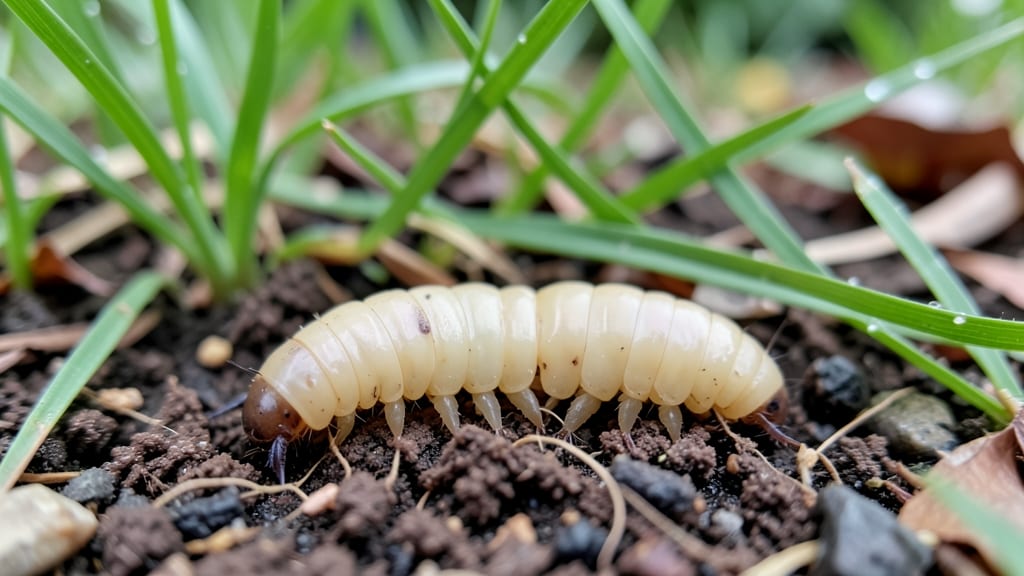
White grubs in lawns turn your green carpet into a patchwork of brown—unless you act fast. 🌱 I’ve seen firsthand how these C-shaped pests chew through roots overnight, leaving behind skunks digging up your yard like it’s an all-you-can-eat buffet.
The good news? A fungal barrier can stop them in their tracks within 24 hours—no harsh chemicals required.
Most people wait until the damage is done before acting, but grubs thrive in moist, shaded soil during late summer and early fall. That’s when their populations explode, and your lawn starts looking like a golf course in July.
The key is catching them early with milky spore or beneficial nematodes, which smother grubs naturally without harming your grass.
By the next morning, you’ll see fewer moles and skunks rooting through your yard—and your grass will start recovering. The fungal barrier works by outcompeting grubs for food, leaving them weak and vulnerable. It’s a game-changer for lawns that have struggled with grub damage year after year.
This method works best in late summer to early fall, when grubs are most active but before they pupate. If your lawn is already heavily damaged, combine this with proper watering and aeration to help roots recover faster. Let’s get your grass back to its lush best!
The hidden triggers behind grubs
White grubs—the creamy, C-shaped larvae of beetles—don’t just appear out of nowhere. Their presence in your lawn is often a sign of underlying conditions that create the perfect breeding ground. Understanding these triggers is the first step to preventing an infestation before it wreaks havoc on your grass.
Let’s break down the key reasons why these pests take root in your yard.
Grubs thrive in moist, soft soil—conditions that mimic their natural habitat. If your lawn stays soggy due to overwatering or poor drainage, you’re essentially inviting them to move in. Here’s why:
- Excess moisture weakens grass roots, making them easier for grubs to feed on.
- Waterlogged soil reduces oxygen levels, stressing the turf and signaling to beetles that it’s a prime spot to lay eggs.
- Standing water also attracts beetles, which are drawn to damp areas to deposit their eggs.
Actionable fix: Test your soil’s drainage by digging a small hole and filling it with water. If it doesn’t drain within 24 hours, amend the soil with compost or sand to improve aeration. Water deeply but infrequently to encourage deep root growth.
A thick layer of thatch (the spongy material between grass and soil) or organic debris like leaves and clippings acts like a protective blanket for grub eggs and larvae. Here’s how it helps them:
- Thatch retains moisture, creating ideal conditions for egg hatching and larval survival.
- It provides shelter from predators like birds and beneficial nematodes.
- Decomposing organic matter releases nutrients that attract adult beetles, which then lay eggs in the same spot.
Actionable fix: Dethatch your lawn in early spring or fall using a vertical mower or rake. Remove excess debris and aerate to break up compacted layers. Aim for a thatch layer no thicker than ½ inch.
Grubs prefer lush, young grass because it’s tender and easy to consume. If your lawn is already struggling due to nutrient deficiencies, disease, or pests, it becomes a buffet for these larvae. Key signs your turf is vulnerable:
- Patches of brown or dying grass (often mistaken for drought stress).
- Sponge-like feel when stepped on (a sign of root damage).
- Slow recovery after mowing or foot traffic.
Actionable fix: Strengthen your lawn with proper fertilization (use a slow-release, nitrogen-rich formula in early spring). Overseed bare spots and avoid heavy foot traffic during grub season (late spring to early summer).
Grubs are the offspring of beetles, and their lifecycle is highly seasonal. Peak infestations occur when:
- Adult beetles emerge (typically May–July, depending on your climate) to feed on leaves and lay eggs in soil.
- Eggs hatch in 10–14 days, releasing larvae that burrow into the root zone.
- Larvae mature over 4–6 weeks, feeding aggressively before pupating in the fall.
Actionable fix: Monitor beetle activity by checking for adult Japanese beetles, June bugs, or May beetles on plants. Use traps or natural repellents (like neem oil) to reduce egg-laying. Apply preventative treatments in early spring before beetles emerge.
Pro Tip: 💡 Combine these fixes for maximum defense. For example, improving drainage and reducing thatch simultaneously disrupts the grub lifecycle at multiple stages. If you’re dealing with an existing infestation, act fast—larvae can devour roots in as little as 2–3 weeks!
How to Treat Lawn Grubs Fast
White grubs may seem like a tiny nightmare, but with the right approach, you can banish them in 24 hours—or at least set up a long-term defense. The key is acting quickly and targeting the root of the problem (literally).
Below, we break down cause-specific fixes, from organic fixes to chemical solutions, plus prevention tips to keep your lawn grub-free for good.
If you prefer eco-friendly solutions, these methods disrupt grub life cycles without harsh chemicals.
🍳 Beneficial Nematodes: The Silent Grub Hunters
Nematodes (Heterorhabditis bacteriophora) are microscopic worms that infect and kill grubs naturally. They’re safe for pets, kids, and the environment—but they need moisture to work.
How to apply:
- 📊 Step 1: Water your lawn deeply the night before treatment (nematodes need moisture to move).
- 👨🍳 Step 2: Apply nematodes evening or early morning (UV light kills them). Use a spreader for even coverage—follow label rates (typically 1–5 million nematodes per 1,000 sq. ft.).
- 💧 Step 3: Water lightly after application to help them penetrate the soil.
- ⏰ Step 4: Reapply every 4–6 weeks during grub season (late spring to early fall).
✨ Pro Tip: Mix nematodes with compost tea for extra fungal support—grubs hate both!
🌡️ Milky Spore & Beauveria Bassiana: Fungal Barriers
Grubs dread these soil-dwelling fungi. Milky spore (Bacillus popilliae) is a long-term solution (takes 1–2 years to establish), while Beauveria bassiana offers fast action (works in 24–48 hours).
How to apply:
| Method | Application | Best For |
|---|---|---|
| Milky Spore | Spread 5–10 lbs per 1,000 sq. ft. in early spring. Water in. | Prevention (lasts years) |
| B. bassiana | Apply granular or liquid (follow label). Rewater lightly. | Fast kill (repeat in 2 weeks) |
💡 Pro Tip: For immediate results, combine B. bassiana with neem oil (spray on lawn after applying fungi). Grubs avoid the smell and stop feeding.
If your lawn is severely damaged (brown patches, animals digging), chemical treatments work fastest but require caution.
🚫 Imidacloprid & Chlorantraniliprole: Systemic Grub Killers
These insect growth regulators disrupt grub development. They’re systemic, meaning they’re absorbed into plant roots and kill grubs as they feed.
How to apply:
- 📊 Step 1: Choose a granular or liquid formulation (e.g., Merit, Scotts GrubEx).
- 👨🍳 Step 2: Apply evenly with a spreader (follow label rates—usually 1–2 lbs per 1,000 sq. ft.).
- 💧 Step 3: Water lightly to activate (don’t overwater—it can wash away the treatment).
- ⏰ Step 4: Reapply in 4–6 weeks if grubs are still active.
⚠️ Safety Note: Wear a mask and gloves—these chemicals can irritate skin and eyes. Keep pets/kids off the lawn for 24–48 hours after treatment.
🔥 Carbaryl (Sevin): Quick Knockdown
If you need instant results, carbaryl (active in Sevin) kills grubs on contact. It’s not systemic, so repeat applications are needed.
How to apply:
- 📊 Step 1: Apply granules or dust (follow label—typically 1–2 lbs per 1,000 sq. ft.).
- 👨🍳 Step 2: Water lightly to help it sink into the soil.
- ⏰ Step 3: Reapply every 2 weeks during grub season.
✨ Pro Tip: For maximum effectiveness, apply Sevin in the evening—grubs feed near the surface at dusk.
The best treatment? Stopping grubs from moving in in the first place.
🌱 Lawn Care Habits That Repel Grubs
- 💡 Mow high (3–4 inches) – Taller grass shades soil, making it less inviting for egg-laying beetles.
- 🌡️ Water deeply but infrequently – Grubs thrive in overwatered, soggy soil.
Water early morning to let the lawn dry by evening. - 🍂 Remove thatch – Thick thatch traps moisture and eggs. Dethatch in spring or fall. - 🐛 Use grub-resistant grass seeds – Tall fescue, perennial ryegrass, and Kentucky bluegrass are less appealing to beetles than Bermuda or zoysia.
🎯 Seasonal Prevention Calendar
| Season | Action |
|---|---|
| Spring | Apply milky spore or beneficial nematodes after soil warms (60°F+). |
| Summer | Monitor for beetles (Japanese beetles, June bugs). Use row covers on gardens. |
| Fall | Aerate lawn to disrupt egg-laying sites. Apply preventive nematodes. |
| Winter | Leave grass clippings (they decompose and release nematodes naturally). |
Final Thought: The fastest fix is usually a combo of beneficial nematodes + B. bassiana, while chemicals work for emergency cases. But prevention (healthy lawn + seasonal treatments) keeps grubs from ever becoming a problem.
Need a grub-free lawn in 24 hours? Start with nematodes + fungal treatment tonight—your lawn will thank you by morning! 🌱🚀
Frequently asked questions
How do I know if my lawn has white grubs instead of just drought stress?
Look for these key signs: spongy grass that pulls up easily (roots are chewed), skunks or moles digging in your yard, or brown patches that worsen in late summer. Dig up a small section—if you find ½-inch white, C-shaped larvae, it’s grubs. Drought stress usually shows as uniformly dry grass without these other clues.
Are nematodes safe for pets and kids once applied?
Yes! Beneficial nematodes are non-toxic to humans, pets, and plants once they’ve established. They only target grubs and other soil pests. However, keep pets off treated areas for 24 hours to let them settle into the soil. Always store products in a secure place away from children.
Why do chemical treatments sometimes fail to eliminate grubs?
Chemicals often fail if applied too late (after grubs pupate) or if the soil is too dry (they need moisture to activate). Also, grubs burrow deep—surface treatments may miss them. For best results, apply early morning when grubs are near the surface, and water lightly afterward to help the treatment reach them.
Can I use coffee grounds as a natural grub repellent?
Coffee grounds won’t kill grubs, but they can help deter beetles (the adult stage) from laying eggs. Sprinkle used grounds around your lawn’s perimeter—beetles dislike the smell. For actual grub control, pair this with nematodes or milky spore for better results. Fresh grounds work best, as they contain more active compounds.
How long does it take for milky spore to establish in my lawn?
Milky spore takes 1–2 years to fully establish, but you’ll see gradual improvement each season. The fungi spread through grub populations, so patience is key. For faster results, combine it with B. bassiana (works in 24–48 hours) during the first year. Once established, milky spore can provide decades of protection.